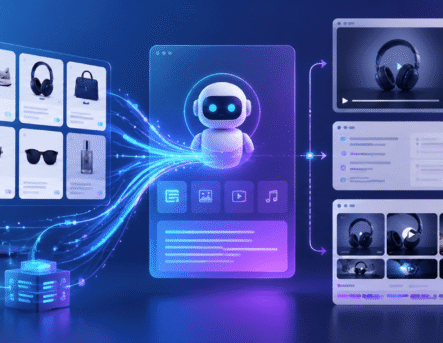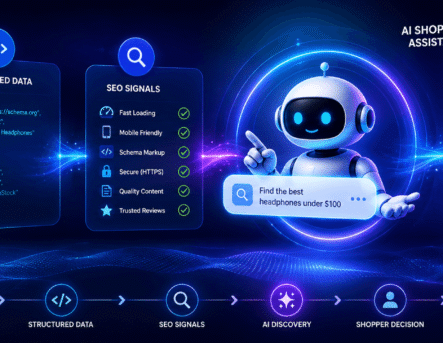
The way consumers find and engage with online stores is changing fast. In 2025, AI-first search engines and AI Overviews are shaping the new rules of ecommerce visibility. If you’re not adapting your product content, site structure, and strategy to align with this shift, you’re likely to fall behind.That’s why mastering AI optimized ecommerce 2025 is essential for staying ahead.
Welcome to the world of AI optimized ecommerce—a model built for discoverability and performance in the AI age.
What is AI Optimized Ecommerce in 2025?
AI optimized ecommerce refers to the practice of creating and structuring ecommerce websites specifically to serve AI-powered search experiences. Unlike traditional search optimization, which focused heavily on keywords and links, AI optimization is about clarity, context, and structured information that helps large language models (LLMs) understand and recommend your content.
In 2025, Google’s AI Overviews, multimodal assistants, and shopping-focused LLMs are driving consumer discovery. Brands must now optimize for:
- Structured data for rich search snippets
- Contextual language aligned with buyer intent
- Visual and video content that supports AI answers
- Authority and freshness indicators (E-E-A-T)
Tip from Zeroradius:
Use JSON-LD structured data across all your key product and category pages to win Featured Snippets and AI cards.
Why AI-First Search Changes Product Content Strategy
Generic product descriptions won’t cut it anymore. In AI-first search, machines decide what shows up in the overview box—so your content must answer real user intent.
What that means for you:
- Include full product specs, materials, sizing guides, and use-case scenarios
- Use customer FAQs and reviews to support product pages
- Optimize for intent-based queries (e.g. “best hiking boots for cold weather”)
- Use JSON-LD markup for schema (Product, FAQ, Review)
Tip from Zeroradius:
Add user-generated Q&A or reviews directly on your PDPs (Product Detail Pages) to boost authority signals.
Structuring AI Optimized Ecommerce Websites for 2025
A well-structured website is your secret weapon. Here’s how to make sure AI can crawl, parse, and surface your content correctly:
- Use a flat site architecture (fewer clicks from homepage)
- Implement proper heading hierarchy (H1, H2, H3)
- Include breadcrumbs and internal linking
- Submit updated sitemaps and use robots.txt to control indexing
- Use llms.txt to guide AI crawlers (new in 2025)
Tip from Zeroradius:
Avoid duplicate or shallow content—consolidate similar pages and focus on depth.
Visual SEO in AI Optimized Ecommerce 2025: Product Images and Video
AI search now understands images and video. That means you can boost discoverability with visual content that complements your text.
- Use descriptive filenames and alt text (e.g. “ai optimized ecommerce 2025 product demo”)
- Embed short videos explaining product features
- Create AR/VR previews or 3D product viewers where possible
- Include lifestyle images that support context
Tip from Zeroradius:
Always compress and lazy load media files for faster page speed—speed matters in AI rankings.
Personalization and Sentiment: AI Signals That Matter
Google’s algorithms increasingly rely on behavioral signals—especially sentiment and personalization. Your ecommerce site should:
- Adapt product messaging based on behavior (via cookies or AI segmentation)
- Use sentiment analysis to adjust tone or highlight positive reviews
- Offer dynamic recommendations based on real-time data
Authority Signals in AI Optimized Ecommerce 2025: Mentions and Backlinks
Just like traditional SEO, backlinks still matter—but AI Overviews now also scan for brand mentions, citations, and expert context.
- Collaborate with industry blogs and creators
- Get featured in product roundups and buying guides
- Align with influencers and affiliate platforms that build credibility
Keeping Content Fresh in 2025
AI systems prefer recent, relevant content. Refresh your ecommerce pages by:
- Updating FAQs based on real customer questions
- Regularly reviewing and updating product descriptions
- Adding new visuals or videos as seasons/products change
- Including a changelog or update date on product pages
Final Thoughts: Win Visibility with AI Optimized Ecommerce 2025
In 2025, being number one on Google isn’t enough. You need to be structured, authoritative, and AI-friendly to win the top spot and the AI Overview snippet.
An AI optimized ecommerce strategy ensures your brand stays visible, clickable, and competitive in the evolving digital landscape.
Tip from Zeroradius:
SEO in 2025 is not a checklist—it’s a continuous conversation between your brand and AI systems. Build trust over time with content that evolves.
What makes ecommerce content AI optimized?
How is AI search different from traditional search?
Do I need to change my product descriptions?
Yes. Generic product blurbs must be replaced with detailed, FAQ-driven, benefit-focused content tailored to buyer queries.
What’s llms.txt and why does it matter?
How often should I update ecommerce content?