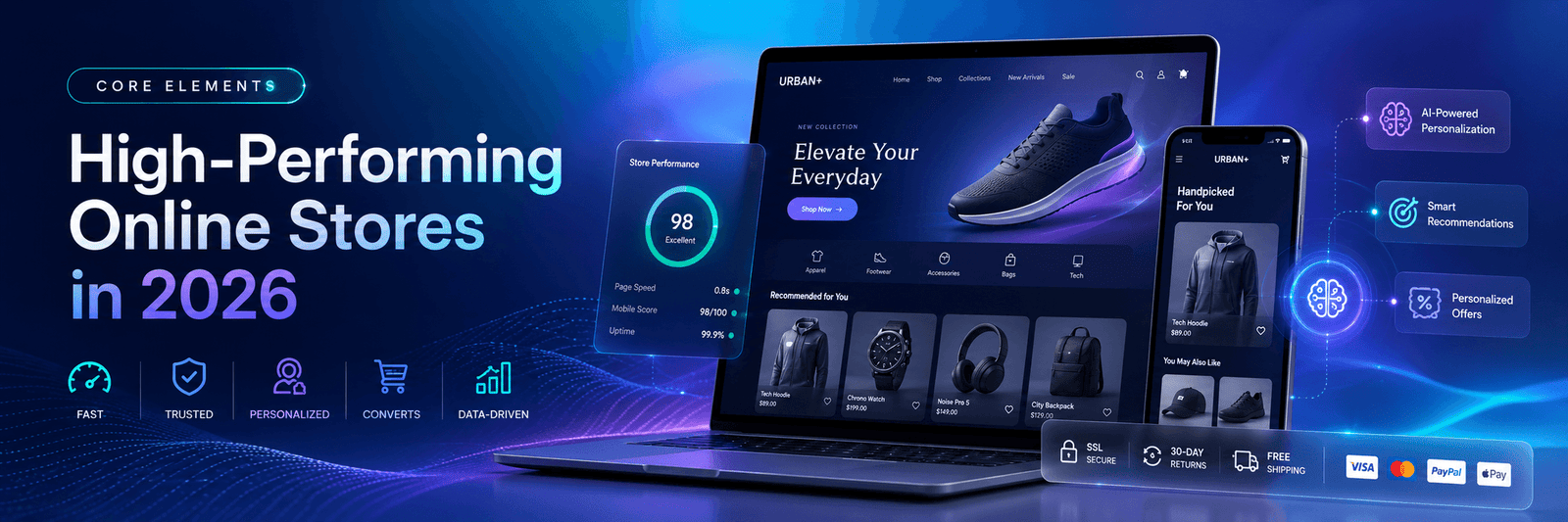
In 2026, building a successful online store is no longer just about listing products and adding a checkout button. Customers expect fast loading speed, smooth mobile shopping, secure payments, personalized experiences, and trustworthy brand communication.
Whether you are planning a new ecommerce website or improving an existing one, focusing on the right elements can help increase traffic, conversions, and customer loyalty.
Why Online Store Performance Matters in 2026
The ecommerce market is becoming more competitive every year. Customers now compare brands quickly, read reviews before purchasing, and expect a seamless shopping experience across mobile and desktop devices.
A high-performing online store combines strong design, fast performance, SEO, product clarity, trust signals, and an easy checkout process. If your store is slow, confusing, or difficult to use, visitors may leave before completing a purchase.
If you are planning to build a professional ecommerce website, explore our eCommerce website development services to create a store designed for performance and growth.
1. Fast Loading Speed
Website speed is one of the most important factors for ecommerce success. Customers do not want to wait for product pages, images, filters, or checkout pages to load.
A fast-loading online store improves user experience, reduces bounce rate, and can support better search engine performance.
- Compress product images
- Use fast and reliable hosting
- Reduce unnecessary plugins and scripts
- Use lazy loading for images
- Optimize code and database performance
If your website feels slow, our page speed optimization services can help improve loading time and overall performance.
2. Mobile-First Shopping Experience
Most online shoppers browse products using mobile devices. That means your ecommerce store should be designed with mobile users in mind from the beginning.
A mobile-first store should have clear navigation, readable text, easy-to-tap buttons, fast product pages, and a simple checkout experience.
- Use responsive design
- Keep buttons large and easy to tap
- Make product images clear on smaller screens
- Use sticky add-to-cart buttons
- Simplify mobile checkout
3. Clear Product Pages
Product pages play a major role in converting visitors into customers. A strong product page should clearly explain what the product is, why it is useful, and why the customer should buy it.
Every product page should include product images, descriptions, price, size or feature details, delivery information, return policy, reviews, and a clear call-to-action button.
- Use high-quality product images
- Write benefit-focused descriptions
- Add product specifications
- Include customer reviews
- Display delivery and return information clearly
4. Simple Navigation and Search
Customers should be able to find products quickly. Poor navigation can make users frustrated and increase the chance of them leaving your store.
Use clear categories, filters, sorting options, breadcrumbs, and a visible search bar to help customers move through your store easily.
- Organize products into clear categories
- Add filters for price, size, color, and brand
- Use breadcrumb navigation
- Place the search bar in a visible position
- Show related and recently viewed products
5. AI-Powered Personalization
In 2026, personalization is becoming more important for ecommerce growth. Customers prefer shopping experiences that feel relevant to their needs and interests.
AI can help online stores show personalized product recommendations, smart search results, dynamic offers, and relevant upsell or cross-sell suggestions.
- Personalized product recommendations
- Recently viewed product sections
- Smart product search
- AI chatbot support
- Personalized email campaigns
6. Strong Trust Signals
Trust is one of the biggest reasons customers decide whether to buy from an online store. A professional store should make customers feel safe and confident.
Trust signals help reduce buyer hesitation and improve conversion rates.
- Customer reviews and ratings
- Secure payment badges
- Clear return and refund policy
- Contact details
- Warranty or guarantee information
- Real testimonials
7. Easy and Secure Checkout
A complicated checkout process can lead to cart abandonment. Customers want a checkout experience that is quick, simple, and secure.
Remove unnecessary steps and make it easy for customers to complete their purchase.
- Offer guest checkout
- Show clear shipping charges
- Support multiple payment methods
- Use secure payment gateways
- Keep the checkout form short
- Display order summary clearly
8. SEO-Friendly Store Structure
SEO is still one of the most valuable ways to bring high-intent traffic to your online store. In 2026, ecommerce SEO should focus on product pages, category pages, content, internal linking, and structured data.
A properly optimized store can attract customers who are already searching for products or solutions.
- Optimize product titles and descriptions
- Create SEO-friendly category pages
- Add internal links between related pages
- Use image alt text
- Add FAQ sections
- Use schema markup for products
To improve your search visibility, check our digital marketing and SEO services.
9. High-Quality Content That Helps Customers Buy
Content is not only for blogs. Ecommerce content helps customers understand products, compare options, and make confident buying decisions.
Useful content can also help your store rank for informational and commercial search queries.
- Buying guides
- Product comparison articles
- Size guides
- How-to guides
- FAQs
- Gift guides
10. Clean UI/UX Design
A good ecommerce design should look attractive, but it should also guide users toward action. Every section of your store should have a clear purpose.
Clean design improves readability, product discovery, and overall shopping experience.
- Use consistent colors and typography
- Keep enough white space
- Make CTA buttons clear
- Avoid cluttered layouts
- Keep product sections easy to scan
For better customer experience and modern design, explore our web design and UI/UX services.
11. Accurate Product Data
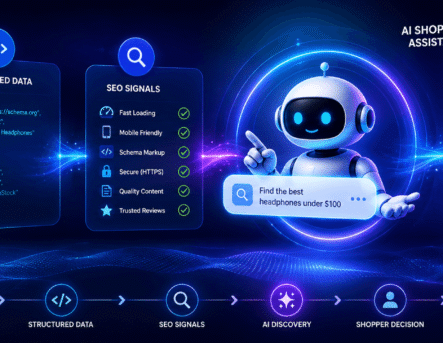
Product data helps customers, search engines, and AI-powered shopping platforms understand your products better.
Your product information should be complete, accurate, and updated regularly.
- Product name
- Price
- Availability
- SKU
- Product specifications
- Images
- Reviews and ratings
- Shipping details
12. Reliable Customer Support
Customer support is an important part of ecommerce success. Shoppers may have questions about products, delivery, returns, payments, or sizing before they buy.
Easy support access can increase trust and reduce purchase hesitation.
- Live chat support
- WhatsApp support
- Email support
- FAQ page
- Clear contact page
- Order tracking support
13. Continuous Tracking and Optimization
A high-performing online store is never fully finished. It should be tested, tracked, and improved regularly based on customer behavior and performance data.
Tracking helps you understand what is working and what needs improvement.
- Conversion rate
- Cart abandonment rate
- Checkout completion rate
- Product page views
- Average order value
- Traffic sources
- Search performance
Best Platforms for Building High-Performing Online Stores
Choosing the right ecommerce platform is also important. The best platform depends on your business size, product type, budget, and growth goals.
Popular ecommerce platforms include Shopify, WooCommerce, BigCommerce, and custom ecommerce solutions.
- For scalable Shopify stores, view our Shopify development services.
- For WordPress-based ecommerce websites, explore our WooCommerce development services.
- For flexible and scalable ecommerce solutions, check our custom ecommerce web development.
Final Thoughts
A high-performing online store in 2026 needs more than good products. It needs speed, mobile-first design, simple navigation, strong product pages, secure checkout, SEO, personalization, and trust-building elements.
Brands that focus on user experience, performance, and customer confidence will have a better chance of increasing sales and building long-term customer loyalty.
If you want to create or improve your ecommerce website, our eCommerce development services can help you build a store that is designed for growth, conversions, and long-term success.
Frequently Asked Questions
1. What makes an online store high-performing in 2026?
A high-performing online store in 2026 is fast, mobile-friendly, easy to navigate, secure, SEO-optimized, and designed to convert visitors into customers. It should also include clear product pages, trust signals, personalized shopping experiences, and a simple checkout process.
2. Why is website speed important for ecommerce stores?
Website speed directly affects user experience and conversions. If an ecommerce website takes too long to load, customers may leave before viewing products or completing a purchase. Faster websites can improve engagement, reduce bounce rate, and support better SEO performance.
3. How can mobile-first design improve ecommerce sales?
Mobile-first design improves the shopping experience for users browsing from smartphones. Clear navigation, fast-loading pages, readable text, easy-to-tap buttons, and simple checkout forms can help customers complete purchases more comfortably on mobile devices.
4. What are the most important trust signals for an online store?
Important trust signals include customer reviews, secure payment badges, return and refund policies, contact information, testimonials, warranty details, and clear shipping information. These elements help customers feel more confident before making a purchase.
5. Why is SEO important for ecommerce websites in 2026?
SEO helps ecommerce websites attract customers who are actively searching for products or services online. In 2026, ecommerce SEO should focus on optimized product pages, category pages, internal linking, helpful content, image alt text, and structured product data.
6. How does AI personalization help online stores?
AI personalization helps online stores show relevant product recommendations, smart search results, personalized offers, and better upsell or cross-sell suggestions. This can improve the customer experience and increase the chances of conversion.
7. What is the role of UI/UX design in ecommerce success?
UI/UX design helps customers browse, understand products, and complete purchases easily. A clean layout, clear call-to-action buttons, simple navigation, and attractive product sections can improve user experience and increase sales.
8. Which ecommerce platform is best for building an online store?
The best ecommerce platform depends on your business goals. Shopify is a good choice for easy store management, WooCommerce works well for WordPress-based stores, BigCommerce supports scalable ecommerce needs, and custom ecommerce development is suitable for businesses that need advanced features.