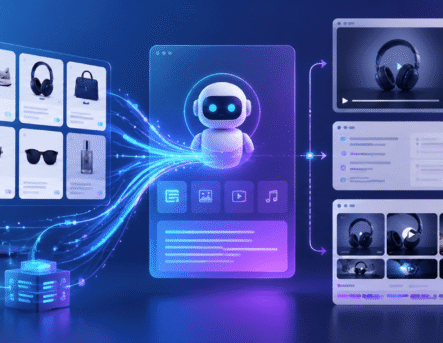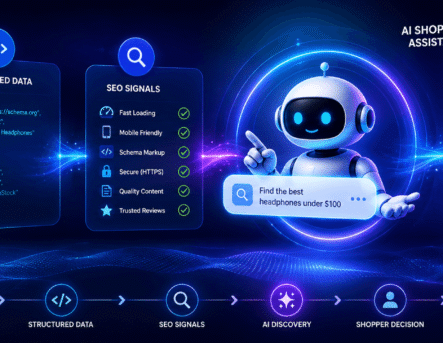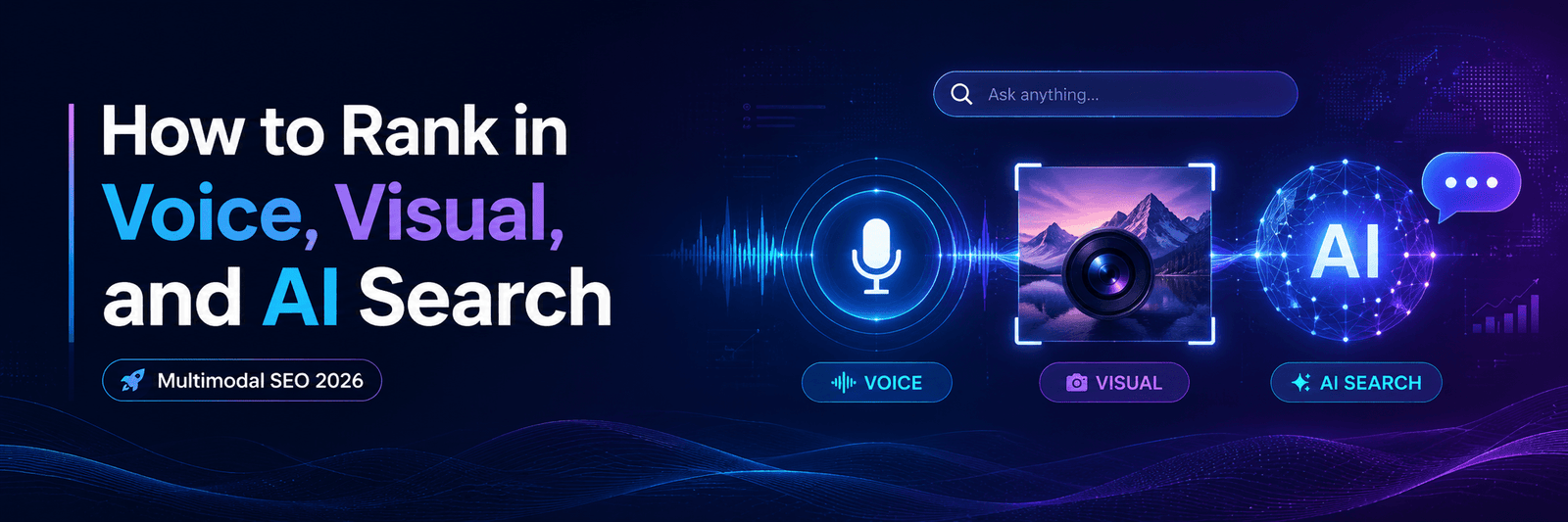
Search is no longer limited to typed keywords. In 2026, customers are searching through voice assistants, image-based tools, AI chatbots, Google Lens, AI Overviews, ChatGPT, Gemini, and Perplexity.
This shift means businesses need a multimodal SEO strategy. Your content should be easy to read, easy to hear, easy to see, and easy for AI systems to understand.
A successful SEO strategy in 2026 should not focus only on ranking in traditional Google search results. It should help your business appear across voice search, visual search, and AI-generated answers.
What Is Multimodal SEO?
Multimodal SEO is the process of optimizing your website and content for different types of search inputs, including text, voice, images, videos, and AI-powered conversations.
In simple terms, it helps your business become visible when users search by typing a question, speaking into a device, uploading an image, scanning a product, or asking an AI tool for recommendations.
For example, a customer may search in different ways:
- Text search: “best ecommerce development company”
- Voice search: “Which company can build an online store near me?”
- Visual search: Uploading a product image to find similar products
- AI search: “Recommend a reliable agency for Shopify website development”
To rank across these search experiences, your website must be structured, helpful, fast, visual, conversational, and trustworthy.
Why Multimodal SEO Matters in 2026
Search behavior is changing quickly. People want faster answers, more personalized results, and easier ways to discover products or services.
AI search tools are now summarizing information, comparing businesses, answering questions, and recommending solutions. Visual search is helping users discover products through images, while voice search is making queries more conversational.
A multimodal SEO strategy can help your business:
- Improve visibility in traditional search results
- Appear in AI-generated answers
- Reach users through voice search
- Get discovered through image and visual search
- Improve brand authority
- Increase high-intent traffic
- Support better user experience
If you want to improve your search visibility, explore our digital marketing and SEO services.
1. Start with Strong SEO Fundamentals
Multimodal SEO starts with traditional SEO. If your website is not technically strong, search engines and AI systems may struggle to crawl, index, and understand your content.
Focus on the basics first:
- SEO-friendly URLs
- Clear page titles
- Optimized meta descriptions
- Proper heading structure
- Fast loading speed
- Mobile-friendly design
- Internal linking
- Helpful and original content
- Image optimization
- Structured data
Strong SEO fundamentals help your website perform better across text, voice, visual, and AI search experiences.
2. Optimize for AI Search Visibility
AI search tools like ChatGPT, Gemini, Perplexity, and Google AI Overviews focus on useful, clear, and trustworthy information. They often summarize content and recommend sources based on relevance and authority.
To improve AI search visibility, your content should directly answer user questions and explain topics clearly.
- Use question-based headings
- Provide short answers before detailed explanations
- Add FAQs to important pages
- Create detailed service pages
- Use schema markup
- Add author or business credibility signals
- Publish case studies and examples
- Keep content updated
For example, instead of writing only “We offer ecommerce development,” create helpful content that answers questions like “How much does ecommerce website development cost?” or “Which platform is best for an online store?”
If your business provides online store solutions, link users to your eCommerce website development services.
3. Create Content for Conversational Search
Voice search and AI search are more conversational than traditional search. Users often ask full questions instead of typing short keywords.
For example, a typed search may be:
- “Shopify development services”
But a voice or AI search may be:
- “Who can help me build a Shopify store for my business?”
- “What is the best ecommerce platform for a small business?”
- “How do I improve my website speed?”
To optimize for conversational search:
- Use natural language
- Answer common customer questions
- Add FAQ sections
- Use long-tail keywords
- Create how-to guides
- Write clear and simple explanations
4. Optimize for Voice Search
Voice search is usually quick, question-based, and local-intent focused. Users often ask voice assistants for nearby services, product suggestions, directions, or quick answers.
To improve voice search performance:
- Use question-and-answer style content
- Optimize for local keywords
- Keep answers short and direct
- Improve website loading speed
- Optimize your Google Business Profile
- Use LocalBusiness schema
- Add clear contact information
Example voice-friendly content:
“Our ecommerce development services help businesses build fast, mobile-friendly, and conversion-focused online stores using platforms like Shopify, WooCommerce, and custom ecommerce solutions.”
5. Optimize for Visual Search
Visual search allows users to search using images instead of words. This is especially important for ecommerce, fashion, furniture, food, interior design, real estate, and product-based businesses.
Google recommends using descriptive filenames, relevant alt text, structured data, and placing images near related content to improve image search visibility.
To optimize for visual search:
- Use original and high-quality images
- Add descriptive image filenames
- Write clear alt text
- Use product schema where relevant
- Add captions when useful
- Place images near related text
- Compress images without losing quality
- Use modern image formats
For ecommerce websites, product images should clearly show the product from multiple angles and include accurate product details.
If your online store needs better product presentation, explore our web design and UI/UX services.
6. Use Structured Data for Better Machine Understanding
Structured data helps search engines and AI systems understand your website content more clearly. It gives extra context about your business, products, services, articles, FAQs, reviews, and locations.
Important schema types for multimodal SEO include:
- Organization schema
- LocalBusiness schema
- Service schema
- Product schema
- FAQ schema
- Article schema
- ImageObject schema
- VideoObject schema
- Review schema
- Breadcrumb schema
Schema markup does not guarantee rankings, but it helps improve clarity and supports better search understanding.
7. Create Multimedia Content
Multimodal SEO is not only about written content. Businesses should also create useful visuals, videos, infographics, product images, and short-form educational content.
Useful multimedia content includes:
- Explainer videos
- Product demo videos
- Infographics
- Before-and-after visuals
- Case study graphics
- Step-by-step image guides
- Short educational videos
Each multimedia asset should be optimized with proper titles, descriptions, captions, transcripts, alt text, and structured data where needed.
8. Improve Local SEO for Voice and AI Search
Local SEO is very important for voice and AI search because many users ask for nearby services or location-based recommendations.
To improve local visibility:
- Optimize your Google Business Profile
- Keep business name, address, and phone number consistent
- Add local landing pages
- Collect genuine customer reviews
- Add location-based keywords naturally
- Use LocalBusiness schema
- Add service area details
For example, a web design agency can create location-specific pages for services such as ecommerce development, Shopify development, or SEO services in its target locations.
9. Build Trust and Brand Authority
AI search and traditional search both depend on trust signals. A website that clearly shows experience, expertise, proof, and customer confidence has a stronger chance of being discovered and recommended.
Add trust-building elements such as:
- Client testimonials
- Case studies
- Portfolio examples
- Reviews and ratings
- Author details
- Business contact information
- Certifications
- Industry partnerships
- Clear privacy policy and terms
Trust signals help both users and search systems understand that your business is reliable.
10. Build Topic Clusters Around Your Services
Topic clusters help search engines and AI systems understand your expertise in a specific area.
For example, if your main service is ecommerce development, you can create supporting content around:
- Shopify development
- WooCommerce development
- Product page optimization
- Checkout optimization
- Page speed optimization
- Ecommerce SEO
- Conversion rate optimization
- AI personalization for online stores
Then link these supporting blogs to your main eCommerce development services page. This helps build topical authority and improves internal linking.
11. Optimize for Featured Answers and AI Summaries
AI tools and search engines often prefer content that is easy to summarize. Your content should provide direct, clear, and useful answers.
To optimize for featured answers and AI summaries:
- Answer the main question early
- Use short paragraphs
- Add bullet points
- Use descriptive headings
- Include examples
- Add comparison tables where useful
- Keep information accurate and updated
12. Track Performance Across Search Channels
A multimodal SEO strategy should be measured regularly. Since visibility now happens across multiple platforms, businesses should track more than only keyword rankings.
Track these metrics:
- Organic traffic
- Image search traffic
- Voice search queries where available
- Referral traffic from AI platforms
- Google Search Console performance
- Branded search growth
- Local search visibility
- AI platform mentions
- Conversions from organic traffic
Regular tracking helps you understand what content is working and what needs improvement.
Multimodal SEO Checklist for 2026
- Improve technical SEO and website speed
- Optimize content for AI-generated answers
- Add question-based headings
- Create voice-search-friendly FAQs
- Use high-quality original images
- Add descriptive image alt text
- Use structured data
- Create videos and visual content
- Optimize Google Business Profile
- Build strong internal links
- Add trust signals and case studies
- Update content regularly
Frequently Asked Questions
1. What is multimodal SEO?
Multimodal SEO is the process of optimizing your website and content for different search formats, including text, voice, images, videos, and AI-powered search results.
2. Why is multimodal SEO important in 2026?
Multimodal SEO is important because users now search through voice assistants, visual search tools, and AI platforms, not only traditional search engines. Businesses need to be visible across all these discovery channels.
3. How can I optimize my website for voice search?
To optimize for voice search, use conversational keywords, answer common questions clearly, add FAQs, improve local SEO, optimize your Google Business Profile, and keep your website fast and mobile-friendly.
4. How can I optimize images for visual search?
Use original high-quality images, descriptive filenames, clear alt text, captions, relevant surrounding content, image compression, and structured data such as Product or ImageObject schema.
5. Does AI search optimization replace traditional SEO?
No. AI search optimization does not replace traditional SEO. Strong SEO fundamentals such as crawlability, helpful content, page speed, internal linking, and structured data are still important for AI search visibility.
6. What type of content works best for AI search?
Clear, helpful, question-based content works best for AI search. Guides, FAQs, comparisons, service pages, case studies, and expert explanations can help AI systems understand and summarize your content.
Final Thoughts
A strong SEO strategy in 2026 must go beyond keywords and traditional rankings. Businesses need to optimize for how people search today: by typing, speaking, uploading images, watching videos, and asking AI tools for answers.
Multimodal SEO helps your business stay visible across voice search, visual search, AI search, and traditional search engines. By combining strong SEO fundamentals, structured data, helpful content, optimized visuals, local SEO, and trust signals, your website can become more discoverable in the new search landscape.
If you want to prepare your website for the future of search, our digital marketing and SEO services can help you build a stronger SEO strategy for 2026 and beyond.