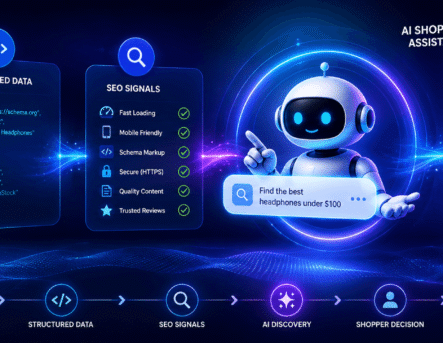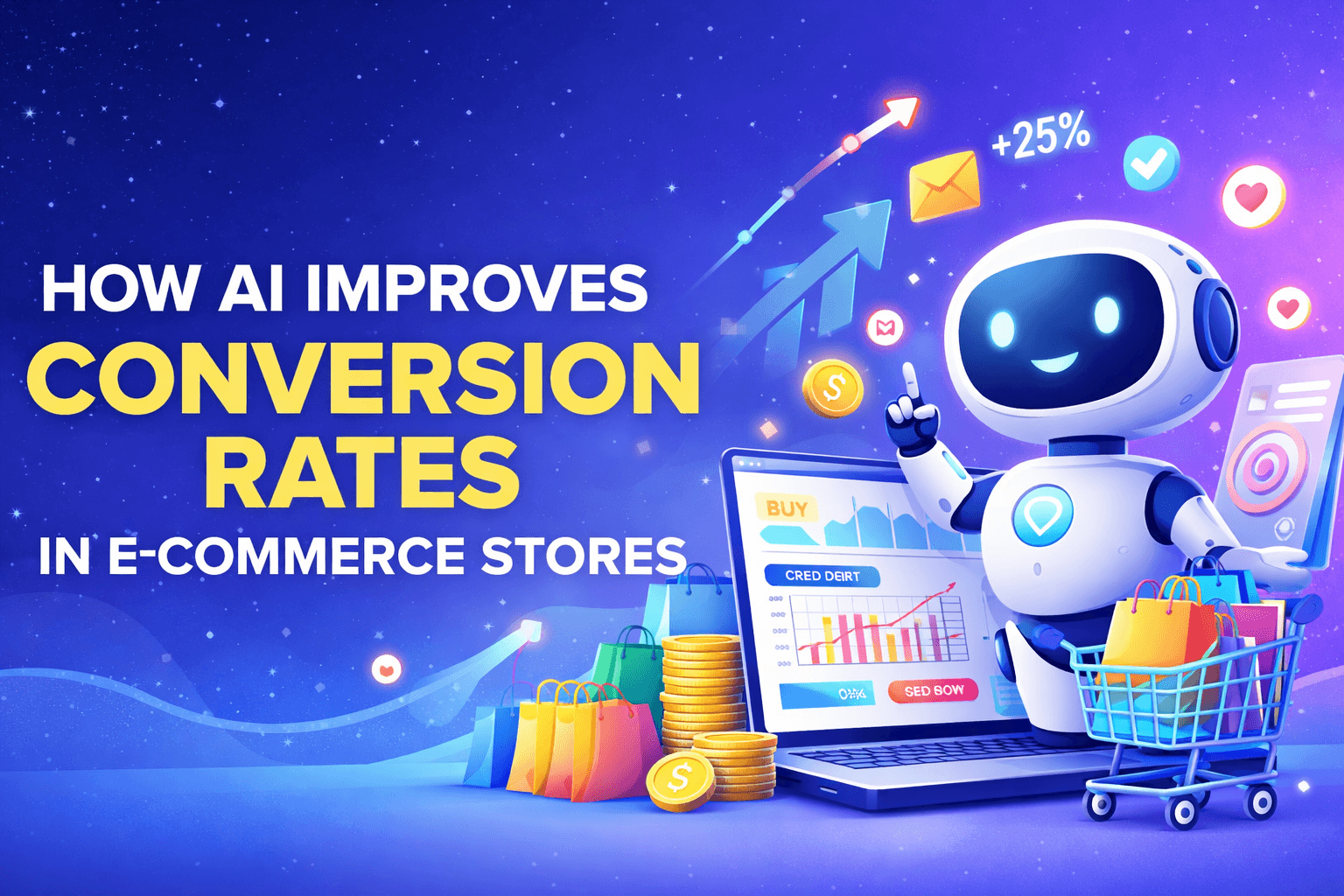
In 2026, AI boosts conversion rates in e-commerce stores by transforming how businesses convert visitors into customers. Instead of focusing only on traffic, brands now use AI to improve personalization, automate marketing, and increase sales. Businesses are now focusing heavily on how to turn visitors into buyers, and that’s exactly where AI boosts conversion rates in e-commerce stores.
Artificial Intelligence is no longer optional. In fact, it’s the backbone of modern online shopping experiences. From smart product recommendations to predictive analytics, AI is helping brands increase engagement, reduce friction, and drive more sales.
If you’re planning to scale, working with eCommerce experts ensures your store is built for conversions from day one.
According to recent research, AI-driven personalization can significantly improve conversions (source).
How AI Boosts Conversion Rates in E-Commerce Stores
When we say AI boosts conversion rates in e-commerce stores, we’re referring to the use of intelligent systems that analyze user behavior and optimize every step of the customer journey.
This includes:
- Personalized product suggestions
- Smart search results
Automated marketing campaigns - AI-driven UX improvements
Businesses investing in AI-powered eCommerce store development are seeing measurable improvements in conversion rates.
Why Voice AI Is Becoming Essential in E-Commerce
With the rapid growth of voice-enabled devices and mobile usage, voice interactions are becoming a preferred way for users to engage online.
Voice AI offers:
- Faster communication
- Hands-free convenience
- Better accessibility
- More natural interactions
To deliver these experiences effectively, businesses must also focus on performance using page speed optimization services and strategic growth through digital marketing and SEO services.
Businesses that adopt this technology early gain a significant competitive advantage.
1. AI-Powered Personalization
One of the biggest reasons AI boosts conversion rates in e-commerce stores is personalization.
AI tracks:
- Browsing behavior
- Purchase history
- Customer preferences
This allows stores to display highly relevant products. As a result, it increases the chances of purchase.
For advanced personalization strategies, explore AI-optimized eCommerce strategies.
👉 SEO Boost Tip: Repeating the keyword naturally—like “AI boosts conversion rates in e-commerce stores through personalization”—helps ranking without keyword stuffing.
2. AI Chatbots That Increase Sales Instantly
Another powerful way AI boosts conversion rates in e-commerce stores is through intelligent chatbots.
These bots:
- Answer queries instantly
- Recommend products
- Reduce cart abandonment
Learn how to implement one here:
Build an AI chatbot for eCommerce
Voice assistants are also growing rapidly. Read about voice AI in eCommerce.
3. Smart Product Recommendations That Convert
AI recommendation engines are a major reason why AI boosts conversion rates in e-commerce stores in 2026.
They:
- Suggest complementary products
- Upsell premium options
- Personalize homepage content
Choosing the right platform is critical. Compare here:
Best eCommerce platform comparison
4. Predictive Analytics = Higher ROI
Predictive analytics is another major factor explaining how AI boosts conversion rates in e-commerce stores.
AI helps you:
- Predict customer intent
- Optimize pricing strategies
- Improve inventory management
Businesses leveraging AI-driven digital marketing services gain a strong competitive edge.
5. Page Speed Optimization with AI
Speed directly impacts conversions. A slow website kills sales.
That’s why AI boosts conversion rates in e-commerce stores by optimizing:
- Image loading
- Scripts
- Server response time
Improve performance using page speed optimization services.
6. AI-Driven UX/UI Improvements
User experience is critical. AI analyzes user behavior and improves layouts accordingly.
This is another way AI boosts conversion rates in e-commerce stores, by making navigation smoother and faster.
Enhance your design with UI/UX optimization services.
7. AI Marketing Automation (High Conversion Driver)
Marketing automation is where AI boosts conversion rates in e-commerce stores at scale.
AI helps:
- Send personalized emails
- Optimize ad campaigns
- Segment audiences
Stay ahead with digital marketing trends 2026.
8. Platform-Specific AI Advantages
Different platforms offer different AI capabilities.
Shopify AI development – Easy automation
WooCommerce AI solutions – Flexible customization
BigCommerce AI tools – Enterprise scalability
Explore more:
Top eCommerce platforms 2026
9. AI + Branding = Trust = Conversions
10. Common Mistakes That Reduce AI Effectiveness
Even though AI boosts conversion rates in e-commerce stores, poor implementation can hurt performance.
Avoid:
- Over-automation
- Poor UX design
- Slow websites
Fix issues here: Common website mistakes
11. Future Trends: AI in E-Commerce Beyond 2026
The future will see even more advanced applications:
- AI-generated product pages
- Voice commerce
- Visual search
- Predictive UX
Stay updated with AI Shopify trends and AI in eCommerce future insights.
12. Why Businesses Must Act Now
The truth is simple:
AI boosts conversion rates in e-commerce stores, but only for businesses that implement it correctly.
Delaying adoption means losing customers to competitors who already use AI.
Get started with Complete digital services or connect via contact page.
Conclusion
AI is no longer a futuristic concept—it’s a necessity. From personalization to automation, every aspect of e-commerce is being transformed.AI boosts conversion rates in e-commerce stores by improving personalization and user experience.
In addition, AI boosts conversion rates in e-commerce stores through automation and predictive analytics.
If you want to grow your business in 2026 and beyond, remember this:
👉 AI boosts conversion rates in e-commerce stores by creating smarter, faster, and more personalized shopping experiences.
How does AI boost conversion rates in e-commerce stores?
AI boosts conversion rates in e-commerce stores by analyzing customer behavior, personalizing product recommendations, and automating interactions. It helps deliver the right product to the right customer at the right time, which significantly increases the chances of a purchase.
Why is AI important for e-commerce in 2026?
Can AI reduce cart abandonment in online stores?
How does personalization improve conversion rates?
Is AI expensive for small e-commerce businesses?