In 2025, having a high-performing, scalable website is no longer optional—it’s a core part of your business strategy. However, before you even begin designing your website, one critical decision needs to be made: which website platform in 2025 is right for you—WordPress, Shopify, or a fully custom-built solution?
To make an informed decision, let’s break down the pros and cons of each to help you choose the best fit.
How to Choose the Best Website Platform in 2025
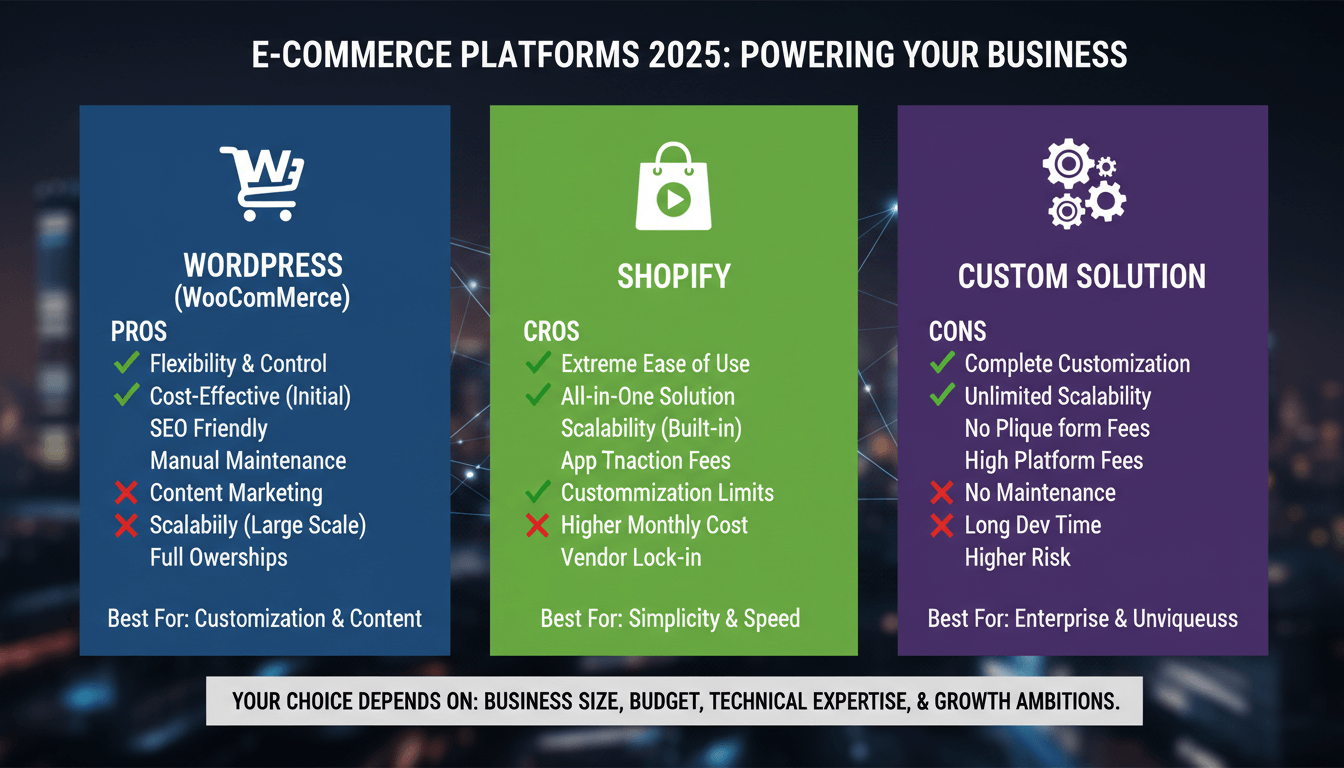
Let’s start with WordPress: Flexibility at Scale
Ideal for blogs, service-based businesses, content-heavy websites, scalable corporate sites.
- Highly customizable with thousands of themes and plugins.
- Ideal for SEO and content marketing.
- Great for hybrid sites (e.g., service + blog + eCommerce with WooCommerce).
- Open-source and developer-friendly.
- Strong community support.
- Requires regular updates and maintenance.
- Plugin bloat can hurt performance if not optimized.
- Not built specifically for eCommerce (you’ll need WooCommerce).
Tip from Zeroradius:
We use custom themes and lightweight plugin stacks to keep your WordPress site blazing fast and easy to manage.
Is Shopify the Right Website Platform in 2025?
Next, let’s explore Shopify: eCommerce Made Simple
Specifically suited for online stores, dropshipping, D2C brands, inventory-heavy businesses.
- All-in-one eCommerce platform with hosting, security, and updates built-in.
- Fast setup with minimal technical knowledge.
- Secure, reliable, and optimized for sales.
- Excellent app ecosystem for payments, shipping, inventory, and marketing.
- Limited design flexibility without code customization.
- Monthly fees and extra costs for premium apps.
- SEO and blog capabilities not as strong as WordPress.
Tip from Zeroradius:
We optimize Shopify stores for mobile conversions, speed, and custom branding while keeping the backend clean and easy to manage.
When to Choose a Custom Website Platform in 2025
Finally, Custom Development: Full Control, Zero Limits
Best for SaaS platforms, web apps, large-scale enterprise websites, unique user experiences.
- Tailored to your exact business logic, workflow, and design needs.
- No third-party plugin or theme limitations.
- Better long-term scalability and security.
- Built for performance from the ground up.
- Higher initial cost and longer development time.
- Requires experienced developers for maintenance.
- Not ideal for MVPs or small-budget projects.
Tip from Zeroradius:
We reserve custom builds for businesses with complex needs or when off-the-shelf solutions become limiting.
Website Platform 2025 Comparison Snapshot
| Feature | WordPress | Shopify | Custom Development |
|---|---|---|---|
| Speed & Performance | ★★★☆☆ (Needs tuning) | ★★★★☆ (Optimized) | ★★★★★ (Fully controlled) |
| SEO & Blogging | ★★★★★ | ★★☆☆☆ | ★★★★☆ |
| eCommerce Capabilities | ★★★★☆ (with plugins) | ★★★★★ | ★★★★☆ (Customizable) |
| Customization | ★★★★☆ | ★★☆☆☆ | ★★★★★ |
| Time to Launch | ★★★☆☆ | ★★★★★ | ★★☆☆☆ |
| Maintenance | ★★☆☆☆ | ★★★★★ | ★★☆☆☆ |
| Cost | $–$$ | $$–$$$ | $$$–$$$$ |
Final Thoughts: Choosing the Right Website Platform in 2025
Ultimately, there’s no one-size-fits-all answer. The best platform is the one that aligns with your business goals, budget, and long-term vision.
- To summarize, choose WordPress if you want flexibility and control.
- Choose Shopify if your main focus is selling products online with ease.
- Choose Custom Development if you need complete control over the experience and functionality.
At Zeroradius, we specialize in WordPress, WooCommerce, Shopify, BigCommerce, and fully custom solutions—so no matter where you are in your journey, we’ll help you choose and build the right platform for growth.
Need help deciding the best platform for your business?
Is WordPress still relevant in 2025 for business websites?
When should I choose Shopify over WordPress?
Is a custom website worth the extra investment?
Can I migrate from WordPress to Shopify or vice versa later?
Which platform is better for SEO in 2025?