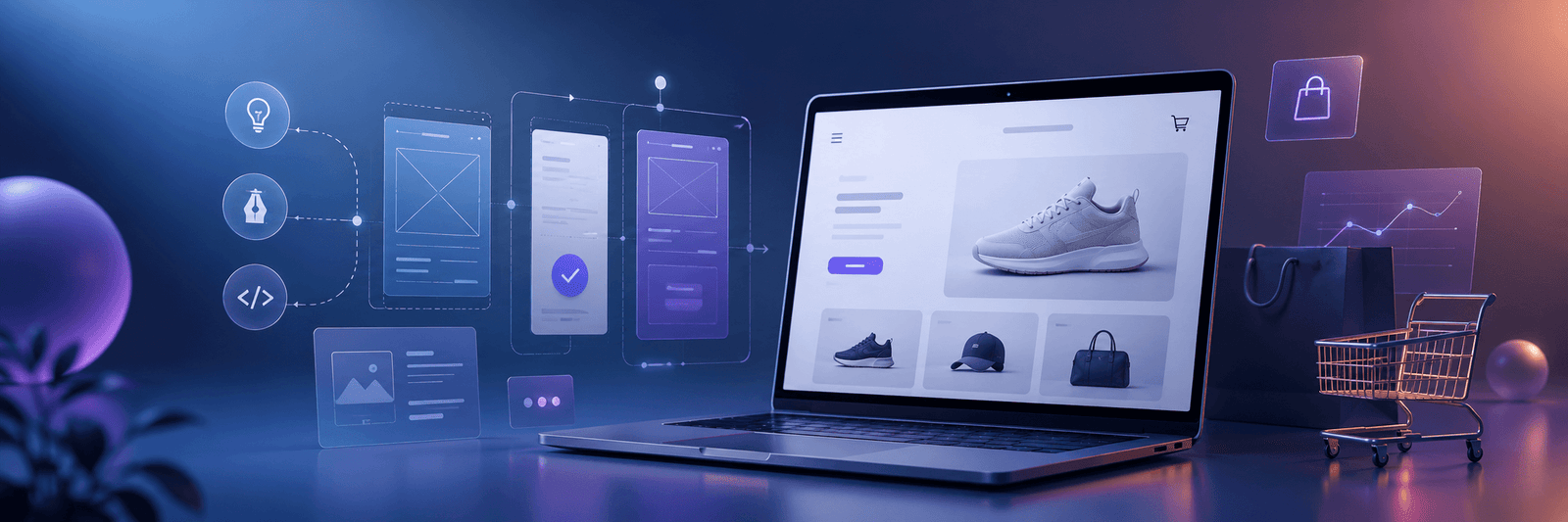
A successful website does not happen by accident. It needs proper planning, clear design thinking, strong development, useful content, and a smooth user experience. This is especially true for ecommerce websites, where every page can influence customer trust, product discovery, and sales.
At Zeroradius, the website design process is built around one simple idea: your website should work for your business, not just sit online. It should help visitors understand your brand, explore your products or services, and take action with confidence.
Our process combines ecommerce development, Shopify development, WooCommerce development, website strategy, and web design and UI/UX services. Instead of jumping directly into design, we first understand the business, audience, goals, and problems the website needs to solve.
If you are new to our brand, you can first read What Is Zeroradius?. You can also explore our articles on why businesses choose Zeroradius for ecommerce development and how Zeroradius builds high-converting ecommerce websites.
Why a Website Design Process Matters
Many businesses think website design starts with colors, images, and layout. Those things are important, but they are not the starting point. A strong website begins with understanding what the business needs and what users expect.
Without a clear process, a website can become confusing. It may look attractive, but users may not know where to click. Product pages may not answer customer questions. Service pages may not explain value clearly. In ecommerce, these small issues can lead to lost sales.
A proper website design process helps avoid these problems. It gives structure to the project and makes sure every important area is planned before development begins.
For example, an ecommerce website needs more than a homepage and product pages. It needs category structure, product filtering, cart flow, checkout planning, trust signals, mobile responsiveness, speed, and SEO-friendly content. If these are not planned early, fixing them later can take more time and cost more.
This is why Zeroradius follows a step-by-step approach. The goal is to build websites that look professional, feel easy to use, and support long-term business growth.
Step 1: Understanding the Business
The first step in the Zeroradius website design process is understanding the business. Before we design a page or write a section, we need to know what the company does, who it serves, and what goals the website should support.
This stage includes learning about the brand, products, services, target audience, competitors, current website issues, and future plans. For ecommerce businesses, we also look at product types, pricing, customer buying behavior, platform needs, and checkout requirements.
For example, a Shopify fashion store may need image-focused product pages, size guides, filters, and fast mobile browsing. A WooCommerce store may need custom product layouts, blog content, SEO pages, and flexible WordPress sections. A BigCommerce store may need scalable category structures and advanced product management.
Each business is different. Because of this, we do not start with a fixed template. Instead, we listen first and then plan the right solution.
This discovery step helps us avoid guesswork. It also helps the final website feel more aligned with the business and its customers.
Step 2: Defining the Website Goal
Once we understand the business, the next step is defining the main goal of the website. A website can have many purposes, but it should have a clear direction.
Some websites are built to generate enquiries. Some are built to sell products. Others are designed to build trust, explain services, support SEO, or improve brand perception. Ecommerce websites usually need to support several of these goals at the same time.
For example, a new Shopify store may focus on launching quickly and selling products smoothly. A WooCommerce website may focus on both sales and content marketing. A service-based website may focus on lead generation through clear service pages and contact forms.
At this stage, Zeroradius identifies what success should look like. Should the website increase sales? Improve mobile experience? Reduce cart abandonment? Build more trust? Help users understand services faster? Generate more qualified enquiries?
When the goal is clear, design decisions become easier. Every section, button, heading, and internal link can be planned to support that goal.
Step 3: Planning the Website Structure
Website structure is one of the most important parts of the design process. If the structure is weak, users may struggle to find what they need. Search engines may also find it harder to understand the website.
Zeroradius plans the main pages, menu items, service pages, product categories, blog sections, and important calls to action. For ecommerce websites, this also includes product listing pages, product detail pages, cart pages, checkout pages, account pages, and policy pages.
A clear structure helps visitors move naturally through the website. For example, a user may start on a blog article, move to an ecommerce development service page, explore Shopify development services, and then contact the business. This journey should feel simple.
Internal linking is also planned during this stage. Good internal links help users discover related content. They also help search engines understand which pages are important.
For example, a website design article can link to ecommerce development services, Shopify website development services, web design and UI/UX services, and related blog posts like Shopify Development Services by Zeroradius.
Step 4: Researching the Target Audience
A website should be designed for the people who will use it. This sounds simple, but many websites fail because they are designed only from the business owner’s point of view.
Users visit a website with questions in mind. They want to know what the business offers, whether it solves their problem, how much they can trust it, and what they should do next.
For ecommerce websites, users may ask different questions. Is the product right for me? Is the price clear? Can I return it? Is payment secure? How long will delivery take? Are there reviews? Is the website trustworthy?
Zeroradius considers these user questions during the design process. This helps us create pages that feel helpful instead of confusing.
Audience research also affects UI/UX design. For example, a younger fashion audience may respond well to bold visuals and quick mobile browsing. A B2B audience may need detailed information, specifications, and enquiry options. A luxury product audience may need premium visuals and trust-building content.
When the design matches the audience, the website feels more natural and effective.
Step 5: Creating a Content Plan
Design and content should work together. A beautiful layout will not help much if the content is unclear. At the same time, strong content may not perform well if it is placed in a poor layout.
Zeroradius plans content sections before moving into full design. This includes homepage messaging, service descriptions, product information, headings, calls to action, trust sections, FAQs, and blog links.
For ecommerce development projects, content planning is especially important. Product descriptions should be useful. Category pages should help users browse. Policy pages should build trust. Blog content should support SEO and internal linking.
For example, an article about WooCommerce can link to WooCommerce Development Services by Zeroradius. A BigCommerce article can link to BigCommerce Development Services by Zeroradius. These links help readers continue learning and support faster indexing of related pages.
A good content plan also improves readability. Short paragraphs, clear headings, natural keywords, and helpful examples make the website easier to read.
Step 6: Wireframing the Page Layout
Before final visual design, Zeroradius may plan the layout using wireframes. A wireframe is a simple structure of a page. It shows where sections, images, headings, buttons, and content blocks will appear.
Wireframing helps everyone understand the page flow before colors and visuals are added. It also helps avoid design mistakes early.
For example, an ecommerce homepage may include a hero section, featured categories, best-selling products, brand story, trust signals, testimonials, and a call-to-action section. A product page may include product images, pricing, variations, description, reviews, delivery details, and related products.
By planning the layout first, we can make sure the page has a logical flow. Users should not feel lost or overwhelmed. Each section should guide them toward the next step.
This is where UI/UX design begins to take shape. The page is not just arranged for beauty. It is arranged for clarity, movement, and action.
Step 7: Designing the User Interface
After the structure is clear, the visual design begins. This is where colors, typography, spacing, images, icons, buttons, and section styles come together.
A good user interface should make the website feel professional and easy to understand. It should match the brand, but it should not distract users from the main message.
Zeroradius focuses on clean and modern design. We avoid unnecessary clutter and use visuals with purpose. Buttons should be easy to notice. Text should be readable. Images should support the message. Spacing should make the page comfortable to scan.
For ecommerce websites, the interface should also support product discovery. Product cards, filters, images, pricing, and add-to-cart buttons should be easy to understand.
Strong UI design helps create a better first impression. More importantly, it helps users feel confident while browsing the website.
Step 8: Improving the User Experience
UI design focuses on how the website looks. UX design focuses on how the website feels to use. Both are important, but UX often has a direct impact on business results.
A website with good UX helps users complete tasks easily. They can find information, compare options, submit forms, add products to cart, or complete checkout without frustration.
Zeroradius improves UX by making the website simple, clear, and logical. We look at menu structure, button placement, content flow, mobile usability, forms, product pages, and checkout steps.
For ecommerce websites, small UX improvements can make a big difference. A clearer add-to-cart button, shorter checkout form, better product filter, or more visible return policy can improve customer confidence.
This is why web design and UI/UX services are part of our core approach. Good design is not only about appearance. It is about helping people use the website with ease.
Step 9: Developing the Website
Once the design is ready, the development stage begins. This is where the approved design becomes a working website.
Depending on the project, Zeroradius may build the website using Shopify, WooCommerce, BigCommerce, WordPress, or another suitable solution. The platform is selected based on the business goal and technical needs.
For Shopify projects, development may include theme customization, product setup, collection pages, app configuration, payment setup, and responsive design. For WooCommerce projects, it may include WordPress setup, plugin configuration, custom layouts, product pages, checkout setup, and performance planning.
Development is not only about making the design look correct. The website should also work smoothly. Buttons, forms, menus, product pages, cart, and checkout should all function properly.
Clean development also helps with future updates. A website should not be difficult to manage after launch. Business owners should be able to update content, products, images, and basic sections without unnecessary confusion.
Step 10: Making the Website Mobile-Friendly
Mobile experience is a major part of modern website design. Many users visit websites from phones, especially ecommerce customers.
A mobile-friendly website should be easy to read and easy to use. Buttons should be large enough to tap. Images should load properly. Menus should be simple. Forms should not feel difficult. Product pages and checkout pages should work smoothly on smaller screens.
Zeroradius designs and develops websites with mobile users in mind. We check how important sections look and function across devices.
This is important for both user experience and SEO. Search engines prefer websites that work well on mobile. Therefore, responsive design can support better engagement and search visibility.
Step 11: Optimizing Website Performance
Website speed affects how users feel about a brand. If pages take too long to load, visitors may leave before reading the content or viewing products.
For ecommerce websites, slow speed can directly affect sales. A customer may abandon the store if product pages or checkout pages feel slow.
Zeroradius considers performance during the design and development process. We focus on optimized images, clean layouts, practical features, responsive structure, and avoiding unnecessary clutter.
Shopify websites can become slow because of too many apps or heavy theme sections. WooCommerce websites can slow down because of poor hosting, too many plugins, large images, or weak theme structure. Each platform needs a different performance approach.
A faster website creates a smoother user experience. It also supports SEO and helps visitors stay longer on the site.
Step 12: Adding Trust-Building Elements
Trust is important for every website. It is even more important for ecommerce websites because customers need confidence before making a purchase.
Trust-building elements may include testimonials, reviews, secure payment details, return policy information, contact details, project examples, certifications, guarantees, or clear company information.
Zeroradius places these elements naturally within the website. They should support the user journey without making the design feel crowded.
For example, reviews can be placed near product sections. Secure payment details can appear near checkout. Contact details can be easy to find in the footer. Case study cards can help service businesses show proof of work.
When users trust the website, they are more likely to take action.
Step 13: SEO-Friendly Website Structure
A website should be designed for users first, but it should also be easy for search engines to understand. SEO-friendly structure helps search engines crawl, understand, and rank important pages.
Zeroradius considers SEO basics during the website design process. This includes proper headings, clean URLs, internal links, readable content, optimized images, mobile-friendly design, and fast loading speed.
Internal links are especially useful. They help connect related pages and guide users through the website. For example, this article links to ecommerce development, Shopify development, WooCommerce content, BigCommerce content, and UI/UX services.
Blog posts can also support SEO growth. Helpful articles can answer customer questions and direct readers to service pages. This improves both user experience and site structure.
However, keywords should be used naturally. Content should not feel forced. A humanized tone, useful examples, and clear explanations are better for readers and search engines.
Step 14: Testing Before Launch
Before a website goes live, testing is very important. Even small issues can affect user experience.
Zeroradius checks important areas such as menus, links, forms, buttons, product pages, cart flow, checkout steps, mobile layouts, browser compatibility, and basic website performance.
Testing helps identify problems before users experience them. For ecommerce websites, this step is especially important because checkout or payment issues can directly affect sales.
A well-tested website gives the business more confidence during launch. It also helps create a smoother first impression for visitors.
Step 15: Launch and Ongoing Improvements
Launching the website is not the end of the process. In many cases, it is the beginning of ongoing improvement.
After launch, businesses may need to add new pages, improve content, update products, create blog posts, optimize speed, add landing pages, or improve conversions.
Zeroradius builds websites with future growth in mind. The website should be easier to update and improve over time.
Ecommerce websites especially need regular improvement. Customer behavior changes. New products are added. Offers change. Competitors improve their websites. Because of this, businesses should continue improving their online store after launch.
A good website design process makes future improvements easier.
Why Businesses Choose the Zeroradius Website Design Process
Businesses choose Zeroradius because our process is practical, clear, and focused on growth. We do not design websites only for appearance. We design websites to support real business goals.
Our team understands ecommerce development, Shopify, WooCommerce, BigCommerce, UI/UX design, website performance, content structure, and SEO-friendly planning.
More importantly, we understand that every business is different. Some brands need a fast Shopify store. Others need a flexible WooCommerce website. Some need better product pages, while others need a complete website redesign.
Instead of using the same design approach for every client, Zeroradius studies the business and creates a website process that fits the goal.
Final Thoughts
The Zeroradius website design process is built to create websites that are useful, professional, and growth-focused. From discovery and planning to UI/UX design, development, testing, and launch, every step has a purpose.
A strong website should look good, but it should also guide users, build trust, support SEO, work smoothly on mobile, and help the business grow. This is why a clear website design process matters.
Whether your business needs Shopify development, WooCommerce development, BigCommerce development, UI/UX design, or complete ecommerce development support, Zeroradius can help build a website that works better for your users and your business.
To learn more, visit the Zeroradius homepage. You can also explore our ecommerce development services, Shopify website development services, and web design and UI/UX services.
FAQs
What is the Zeroradius website design process?
The Zeroradius website design process includes understanding the business, defining goals, planning structure, designing UI/UX, developing the website, optimizing performance, testing, and launching the final website.
Does Zeroradius design ecommerce websites?
Yes. Zeroradius designs and develops ecommerce websites using platforms like Shopify, WooCommerce, BigCommerce, and WordPress.
Why is UI/UX design important in website design?
UI/UX design helps users understand the website, find information easily, browse products, and take action without confusion. Better user experience can support better conversions.
Does Zeroradius build Shopify and WooCommerce websites?
Yes. Zeroradius provides Shopify development and WooCommerce development services for businesses that want professional ecommerce websites.
Why should a website be mobile-friendly?
A mobile-friendly website helps users browse comfortably on phones and tablets. It also supports better user experience, engagement, and SEO performance.