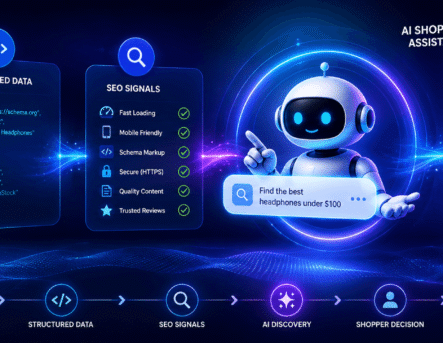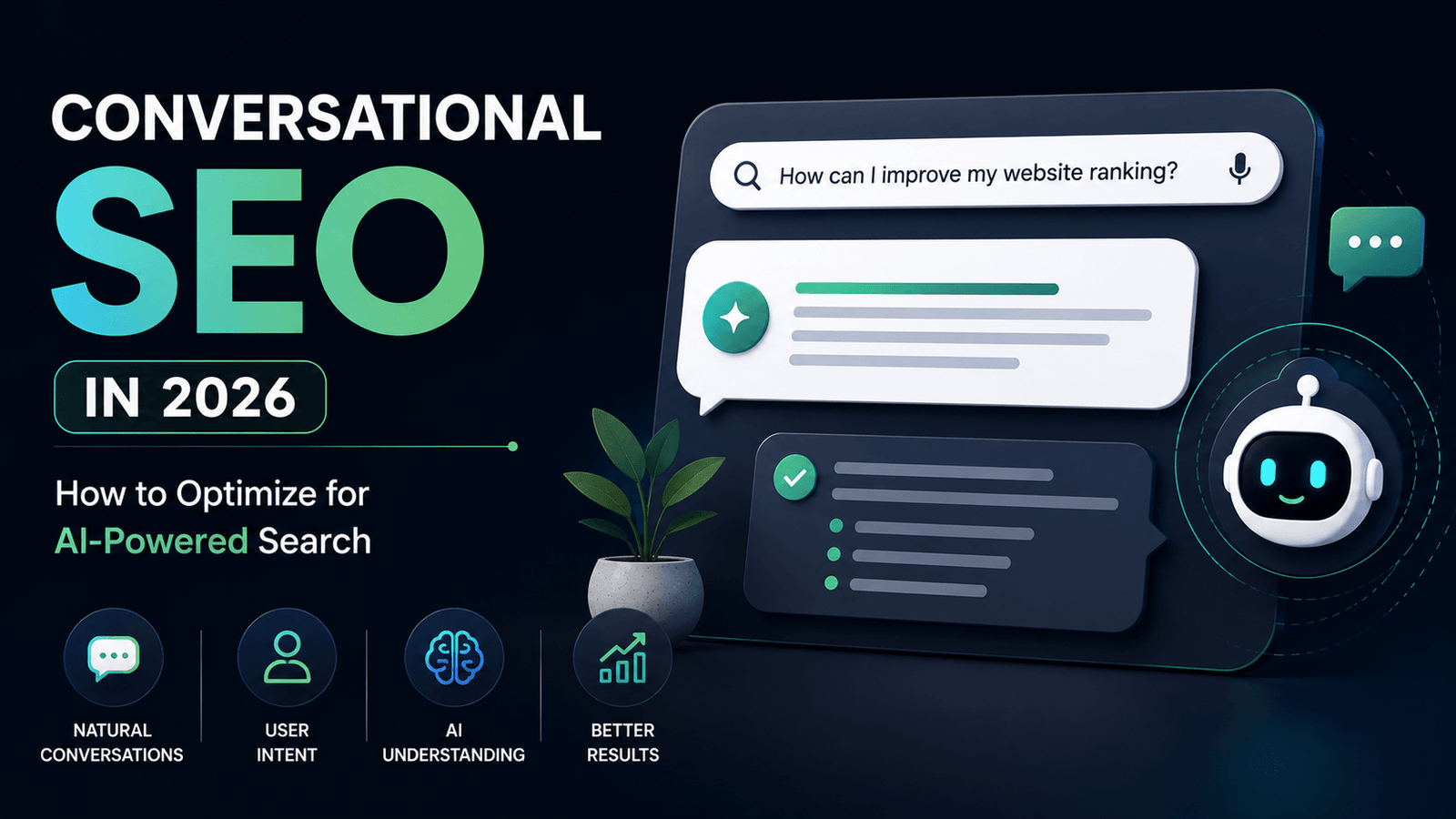
Search behavior is changing rapidly. Users no longer search only with short keywords like “best SEO agency” or “WordPress optimization.”
In 2026, people increasingly search using complete questions, voice commands, and conversational prompts. This shift is largely driven by AI-powered search experiences, voice assistants, and Google AI Overviews.
For businesses, this means traditional keyword-focused SEO is no longer enough. Websites now need to optimize for conversational search intent, natural language queries, and AI-generated search experiences.
In this guide, you’ll learn what conversational SEO is, why it matters in 2026, and how to optimize your website for the future of AI-powered search.
What Is Conversational SEO?
Conversational SEO is the process of optimizing content for natural language searches instead of only short keyword phrases.
Instead of typing fragmented keywords, users now ask complete questions like:
- How can I improve my website rankings in 2026?
- What helps websites appear in AI Overviews?
- Which SEO strategy works best for eCommerce brands?
- How do I optimize WordPress for AI search?
Google’s AI systems try to understand user intent behind these questions and generate direct answers.
Why Conversational SEO Matters in 2026
AI-powered search experiences are changing how users discover websites.
Instead of only showing links, Google increasingly provides summarized answers using AI. This means websites need content that is easy to understand, easy to summarize, and aligned with conversational intent.
Conversational SEO also supports visibility in:
- AI Overviews
- Voice search
- Mobile search
- Featured snippets
- AI assistants
To understand how AI-powered search is evolving, read our guide on Google AI Mode in 2026.
1. Focus on Search Intent Instead of Exact Keywords
Traditional SEO often focused heavily on exact-match keywords. Conversational SEO focuses more on user intent.
Instead of repeating the same keyword unnaturally, create content that answers the broader question behind the search.
Example
Instead of optimizing only for “SEO pricing,” also answer related questions like:
- How much does SEO cost in 2026?
- What affects SEO pricing?
- Why do SEO packages vary?
This helps your content appear for a wider range of conversational queries.
2. Create Question-Based Headings
Question-style headings work extremely well for conversational SEO because they naturally match how users search.
Examples of Strong Conversational Headings
- What is conversational SEO?
- How do AI Overviews affect SEO?
- Why does topical authority matter?
- How can businesses rank faster in 2026?
These headings also improve readability and make it easier for AI systems to extract answers.
3. Optimize for AI Overviews
Conversational SEO and AI Overview optimization work closely together.
Google’s AI prefers content that is structured clearly and answers questions directly.
Ways to Improve AI Overview Visibility
- Use short answer paragraphs
- Add FAQ sections
- Use bullet points
- Structure content clearly
- Improve trust signals
- Build topical authority
For a deeper guide, read our article on how to rank in AI Overviews in 2026.
4. Use Natural Language Throughout Your Content
Conversational SEO works best when your writing feels natural and human.
Avoid robotic keyword stuffing or repetitive phrasing. Instead, write the way real people speak and ask questions.
Good Conversational SEO Writing Includes:
- Simple explanations
- Short sentences
- Natural transitions
- Question-and-answer formatting
- Helpful examples
Content that sounds human usually performs better for both users and AI systems.
5. Build Topical Authority
Conversational SEO is much more effective when your website demonstrates expertise across an entire topic.
Instead of publishing disconnected blog posts, build topic clusters around your main services and industry topics.
Example AI SEO Cluster
- AI Content Strategy in 2026
- Trust Signals for AI SEO
- Conversational SEO in 2026
- Google AI Mode Optimization
- AI SEO Mistakes to Avoid
Internal links between related articles help search engines understand your expertise more clearly.
6. Improve Website User Experience
Good user experience supports conversational SEO because users expect fast, simple, and easy-to-read websites.
If your website is cluttered, slow, or difficult to navigate, users may leave quickly.
Important UX Factors
- Fast loading speed
- Mobile-friendly design
- Clear navigation
- Readable typography
- Simple layout structure
If your website needs a better conversion-focused structure, explore our web design UI/UX services.
7. Improve Core Web Vitals
Website speed still matters in AI-powered search.
Core Web Vitals help Google understand whether your website delivers a smooth user experience.
Important metrics include:
- Largest Contentful Paint
- Interaction to Next Paint
- Cumulative Layout Shift
For a detailed optimization strategy, read our Core Web Vitals Optimization Guide 2026.
8. Add FAQ Sections
FAQs are extremely valuable for conversational SEO because they mirror natural user questions.
AI systems often extract answers directly from FAQ sections.
Example FAQ Questions
- What is conversational SEO?
- How does AI search work?
- Can conversational SEO improve rankings?
- Does voice search affect SEO?
9. Use Schema Markup
Schema markup helps search engines understand your content more clearly.
Useful schema types for conversational SEO include:
- FAQ schema
- Article schema
- Organization schema
- Breadcrumb schema
Schema supports better visibility in AI-powered search experiences and rich results.
10. Refresh and Expand Existing Content
Updating older content can improve rankings faster than publishing completely new articles.
Refresh your content by updating:
- Statistics
- Internal links
- Examples
- FAQs
- Meta descriptions
- Schema markup
Maintaining your website also supports long-term SEO performance. Read our Website Maintenance Cost Guide 2026 to understand ongoing maintenance planning.
Common Conversational SEO Mistakes
Keyword Stuffing
Overusing exact keywords makes content feel unnatural and difficult to read.
Ignoring User Intent
Content that does not answer user questions clearly often performs poorly.
Weak Internal Linking
Disconnected content reduces topical authority.
Poor Mobile Experience
Most conversational searches now happen on mobile devices.
Final Thoughts
Conversational SEO is becoming one of the most important SEO strategies in 2026.
As search becomes more AI-driven, websites need content that feels natural, answers questions clearly, and provides real value to users.
The businesses that adapt early can gain stronger visibility in AI Overviews, voice search, and conversational search experiences.
FAQs
What is conversational SEO?
Conversational SEO is the process of optimizing content for natural language and question-based searches.
Why is conversational SEO important in 2026?
AI-powered search and voice search are making conversational queries more common, changing how users search online.
Does conversational SEO help AI Overviews?
Yes. Clear answers and structured content improve your chances of appearing in AI-generated summaries.
How do I optimize for conversational search?
Use natural language, answer questions directly, improve structure, add FAQs, and build topical authority.
Does voice search affect SEO?
Yes. Voice search encourages more conversational queries, which influences modern SEO strategies.