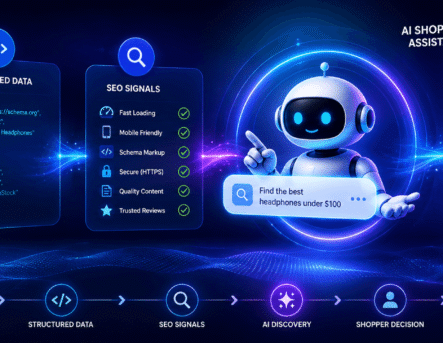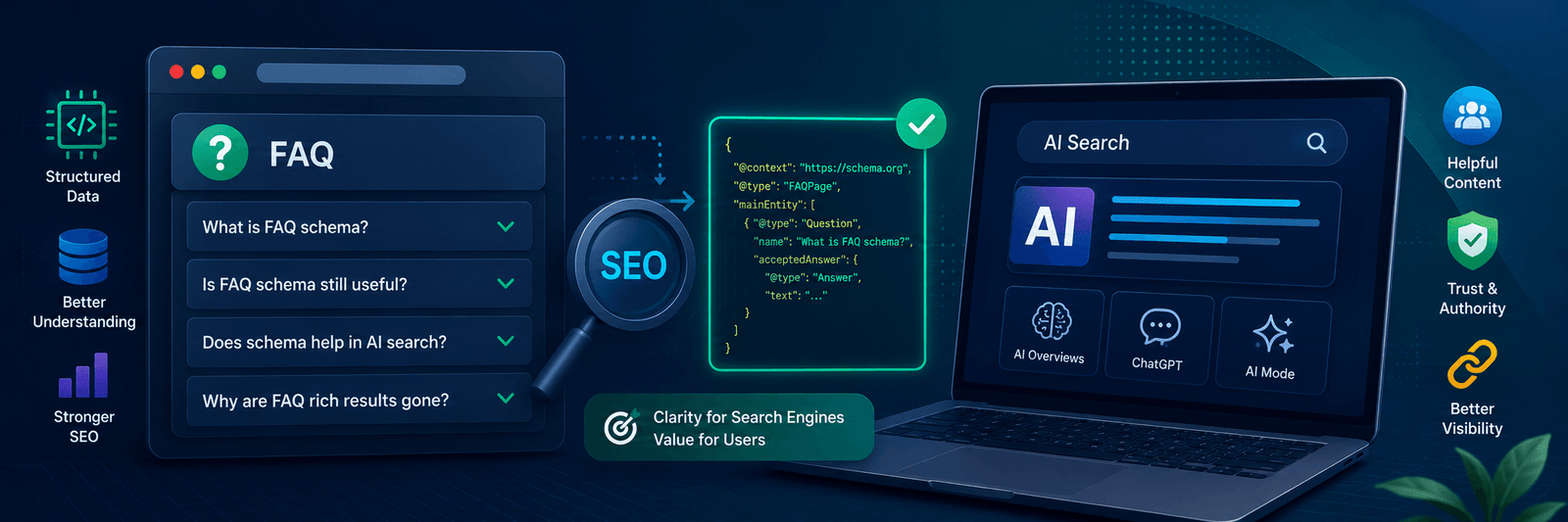
Schema markup has always been one of the most discussed parts of technical SEO. For years, businesses used structured data to help Google understand their pages better and sometimes earn rich results in search.
But recently, the value of schema has become a bigger question.
Google has removed FAQ rich results from most websites, and new data suggests that adding JSON-LD schema may not directly increase AI citations in Google AI Overviews, AI Mode, or ChatGPT. This has made many website owners ask one important question:
Is schema still worth using in 2026?
The simple answer is yes, but not in the way many people think.
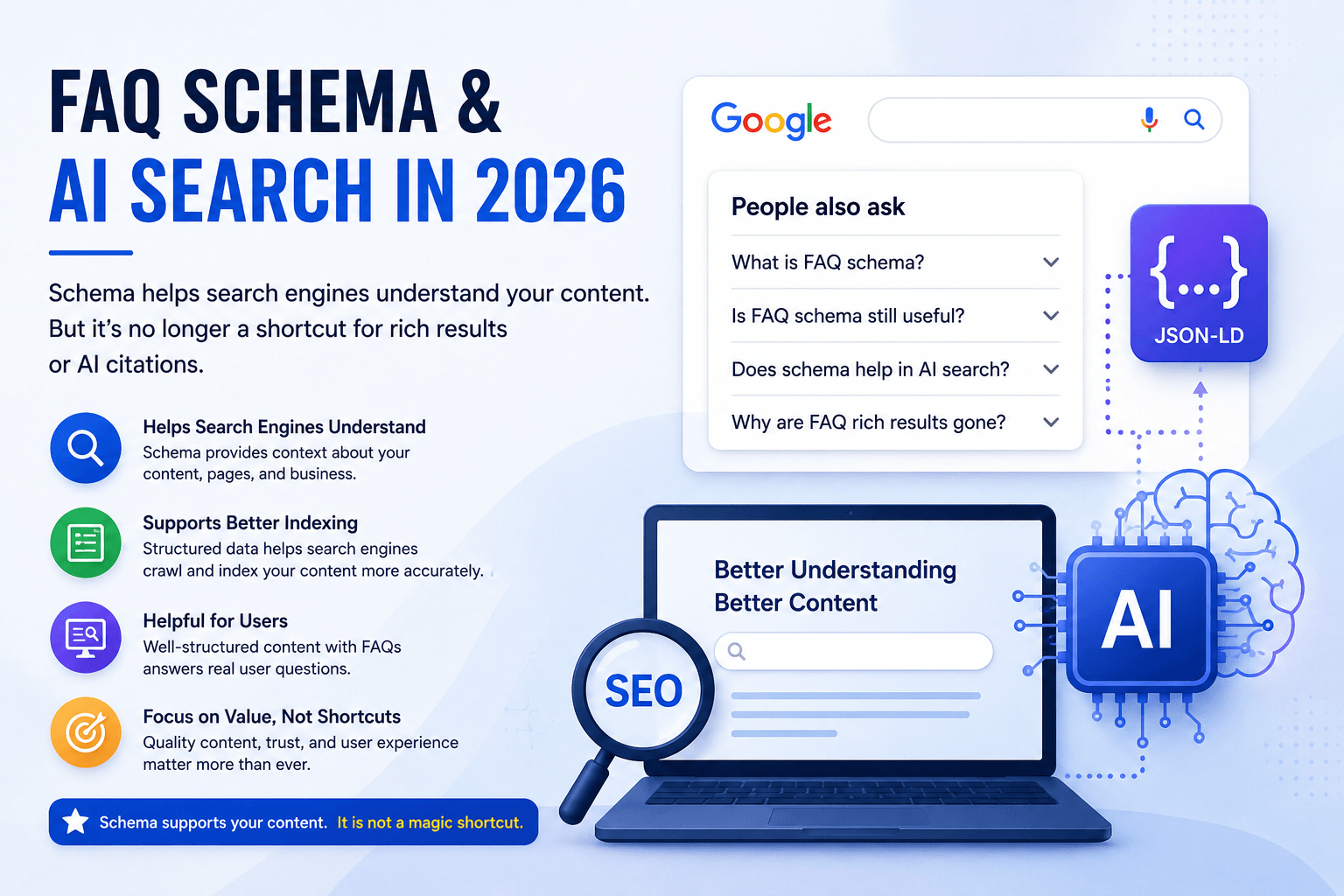
Schema is still useful for helping search engines understand your website. But it should not be treated as a magic shortcut for higher rankings, richer search results, or guaranteed AI visibility.
What Changed With FAQ Schema?
FAQ schema was once a popular SEO tactic. Website owners added FAQ sections to their pages, marked them up with structured data, and often received expanded FAQ results directly in Google Search.
This helped pages take up more space in search results and improve visibility.
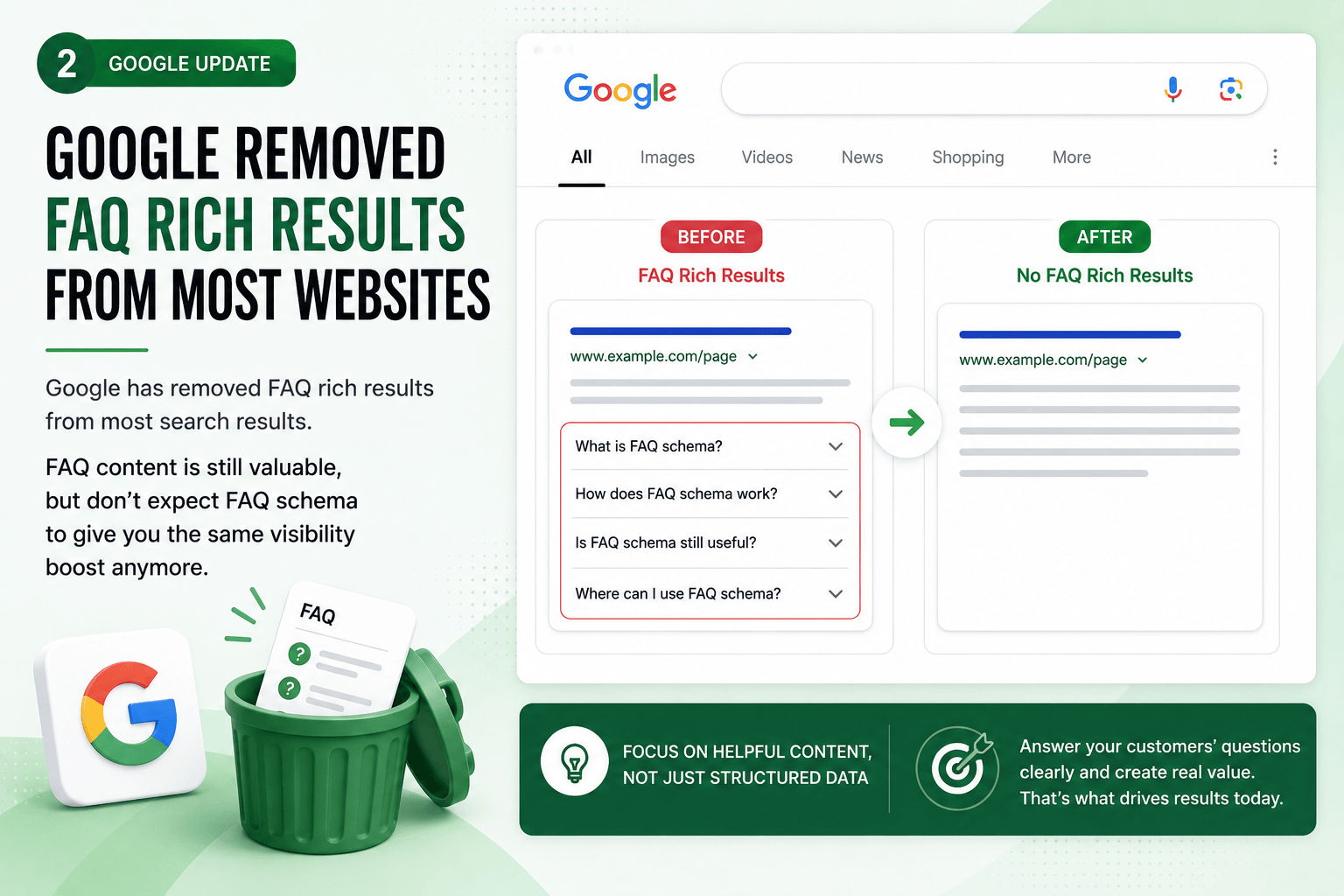
But over time, Google reduced how often FAQ rich results appeared. First, Google limited FAQ rich results mainly to high-authority government and health websites. Later, it removed FAQ rich results from most search results altogether.
This does not mean FAQ content is useless. It simply means Google is no longer giving the same visible rich result reward for adding FAQ schema.
In other words, your FAQ content can still help users. It can still support SEO. It can still answer important customer questions. But you should not expect FAQ schema alone to create extra search visibility like it once did.
Why This Matters for Businesses
Many businesses add schema markup because they believe it will immediately improve rankings or help their website appear in AI-generated answers.
That belief is becoming risky.
Schema can help search engines understand your content, but it does not automatically make your website more valuable. Google and AI systems still need strong content, clear structure, trusted information, and a good user experience.
If your page has weak content, adding schema will not fix the problem.
For example, if a service page has only a few short paragraphs and no useful explanation, FAQ schema will not make it a strong page. But if the page already has helpful content, clear answers, examples, and strong internal links, schema can support that content by making the page easier for search engines to understand.
If you want to understand how search is changing with AI, read our guide on how AI search is changing SEO in 2026.
What Did the New Data Show?
A recent study looked at pages that added JSON-LD schema and measured whether they received more citations in AI search experiences, including Google AI Overviews, AI Mode, and ChatGPT.
The results did not show a clear citation boost from schema alone.
This is important because many AI SEO and GEO guides claim that schema markup is critical for getting cited by AI platforms. The new data challenges that claim.
However, the study does not prove that schema has no value at all. It only suggests that adding schema to pages that are already visible in AI results may not produce a direct, short-term increase in citations.
Schema may still help with crawling, indexing, entity understanding, product information, organization details, and other search-related signals. But it should not be sold as a guaranteed way to get more AI citations.
Schema Is Not Dead — The Strategy Has Changed
It would be wrong to say schema is dead.
Schema is still useful, especially for certain types of content. Product schema, Review schema, Event schema, Video schema, Organization schema, Article schema, Breadcrumb schema, and LocalBusiness schema can still help search engines understand your website more clearly.
For ecommerce websites, schema can help explain product details such as price, availability, reviews, and ratings.
For local businesses, LocalBusiness schema can help clarify business name, address, phone number, opening hours, and service area.
For blogs, Article schema can help define the page as editorial content and provide information such as headline, author, image, and publish date.
But the purpose of schema should be clarity, not shortcuts. Schema should support your content. It should not replace quality content.
Why Visible Content Matters More in AI Search
AI search systems are becoming better at reading and summarizing visible page content. That means your actual words on the page matter more than ever.
Clear headings, short answers, helpful explanations, examples, FAQs, and natural language can make your content easier for both users and AI systems to understand.
If your content is hidden only inside structured data, it may not carry the same value as visible, well-written content on the page.
This is why businesses should focus on content structure first. If you are planning content for AI visibility, our guide on AI content strategy in 2026 can help you build a better approach.
A good AI-friendly page should include:
- Clear headings
- Direct answers
- Helpful explanations
- Short paragraphs
- Real examples
- FAQs written for users
- Strong internal links
- Updated information
- Trust signals
Schema can then be added to support this structure.
What This Means for FAQ Sections
Even though FAQ rich results are no longer widely shown, FAQ sections are still useful.
Users still have questions before they buy a product, book a service, or contact a company. A good FAQ section can reduce confusion, improve trust, and support conversions.
For example, a web design agency can answer questions like:
- How much does a business website cost?
- How long does website development take?
- Do you provide SEO with website design?
- Can you redesign an existing website?
- Do you work with WordPress or Shopify?
These questions may not always generate FAQ rich results, but they make the page more helpful. They also give search engines and AI platforms more context about your services.
So, do not remove FAQs just because Google removed most FAQ rich results. Instead, write better FAQs that genuinely help your customers.
The Problem With “Schema as a Shortcut”
One major issue in SEO is that useful tactics often become overused.
FAQ schema is a good example. Many websites added FAQ markup not because the FAQs were helpful, but because they wanted more space in search results.
When a tactic becomes too widely used only for visibility, Google often reduces its visible reward.
This is a reminder that SEO should not depend on one technical tactic.
Good SEO needs a complete approach: strong content, technical performance, user experience, authority, internal linking, and trust.
Should You Still Add Schema Markup?
Yes, you should still add schema markup where it makes sense.
But you should add it for the right reason.
Use schema to help search engines understand your business, content, products, services, and website structure more clearly.
Do not add schema only because you expect instant ranking improvements or AI citations.
Good schema usage includes:
- Organization schema for your business details
- LocalBusiness schema for local SEO
- Product schema for ecommerce products
- Review schema where reviews are eligible and genuine
- Article schema for blog posts
- FAQ schema for genuine FAQ sections
- Breadcrumb schema for site structure
- Service schema for service pages
- Video schema for video content
The key is accuracy. Your schema should match the visible content on the page. Do not add misleading or unrelated markup.
What Businesses Should Focus on Instead
If you want better SEO and AI search visibility in 2026, schema should be only one part of your strategy.
The bigger focus should be creating content that is easy to understand, useful, and trustworthy.
1. Write for Real Users First
Your content should answer real customer questions. Avoid writing only for keywords or search engines.
Instead of stuffing pages with repeated phrases, explain your services clearly. Help users understand what you offer, who it is for, and why it matters.
2. Use Clear Page Structure
Use proper headings, subheadings, bullet points, short paragraphs, and FAQs. This helps users scan the page and helps search systems understand the topic.
3. Add Trust Signals
Trust is becoming more important in SEO and AI search. Add testimonials, case studies, reviews, client logos, portfolio work, contact details, and clear business information.
To improve credibility, read our guide on trust signals for AI SEO in 2026.
4. Improve Technical SEO
Schema alone cannot help if your website is slow, broken, or difficult to crawl. Improve website speed, mobile performance, Core Web Vitals, clean URLs, indexing, and internal links.
If your website speed needs improvement, explore our Core Web Vitals optimization guide for 2026.
5. Build Topic Authority
One page is not enough. Build a complete content cluster around your main services. For example, if you offer SEO services, create content around AI search, technical SEO, local SEO, content strategy, Core Web Vitals, and Google updates.
6. Keep Content Updated
AI search and Google results are changing quickly. Update older blogs, refresh FAQs, improve examples, and remove outdated information.
Does Schema Help With AI Search?
Schema may help AI systems understand your content better, but it should not be seen as a direct AI citation booster.
AI platforms look at many signals. They may consider content quality, page authority, brand trust, visible information, citations, links, structure, and overall relevance.
Schema can support understanding, but it is not enough on its own.
For better AI visibility planning, you can also read our guide on how to rank in AI Overviews in 2026.
For AI search visibility, your content should be:
- Clear
- Helpful
- Original
- Well-structured
- Easy to summarize
- Backed by trust signals
- Connected with relevant internal links
- Updated regularly
That is more valuable than simply adding markup and expecting results.
The Future of Schema in SEO
Schema will continue to have a role in SEO, but the role is becoming more practical and less promotional.
Earlier, many websites used schema mainly to win rich results. In 2026 and beyond, schema should be used as technical support for search understanding.
Think of schema like good website plumbing. Users may not always see it, but it helps the system work better in the background.
That is still valuable.
But your main SEO growth will come from the visible parts of your website: the content, page experience, authority, and usefulness.
Final Thoughts
The removal of FAQ rich results does not mean FAQ content or schema markup is useless. It simply means businesses need to stop treating schema as a shortcut.
Schema is still helpful when used correctly. It can make your website easier for search engines to understand. But it will not replace strong content, clear structure, trust signals, or a good user experience.
If your goal is to improve SEO and AI search visibility in 2026, focus on the bigger picture.
Write content that answers real questions. Make your website technically strong. Add trust signals. Use internal links wisely. Keep your information updated. Then use schema markup to support that content, not to carry the entire SEO strategy.
SEO is not about chasing one feature. It is about building a website that users, search engines, and AI platforms can trust.
If your business wants to improve search visibility, explore our SEO and digital marketing services.
Frequently Asked Questions
1. Is FAQ schema still useful in 2026?
Yes, FAQ schema can still be useful when it supports genuine FAQ content on the page. However, it should not be used only to win rich results, because Google no longer shows FAQ rich results for most websites.
2. Did Google remove FAQ rich results completely?
Google has removed FAQ rich results from most search results. FAQ content can still be helpful for users, but website owners should not expect FAQ schema to provide the same visibility benefit it once did.
3. Does schema markup help with AI search visibility?
Schema markup can help search engines and AI systems understand your content better, but it does not guarantee AI citations or higher rankings. It should be used as a support layer alongside strong content and trust signals.
4. Should businesses remove FAQ sections from their website?
No, businesses should not remove useful FAQ sections. FAQs still help users, answer buying questions, improve clarity, and support conversions. The focus should be on writing helpful FAQs, not only adding FAQ markup.
5. What schema types are useful for business websites?
Useful schema types include Organization schema, LocalBusiness schema, Article schema, Product schema, Review schema, Breadcrumb schema, Service schema, Video schema, and FAQ schema where it matches visible page content.
6. What matters more than schema for SEO in 2026?
Content quality, technical SEO, user experience, trust signals, internal linking, topical authority, and updated information matter more than schema alone. Schema should support these elements, not replace them.