When someone visits your website for the first time, they make a quick decision.
Can I trust this business?
That decision may happen in just a few seconds.
Your website may have good design, good services, and good pricing. But if it does not feel trustworthy, visitors may leave without calling, sending an enquiry, or making a purchase.
For local businesses, trust is even more important. Customers want to know whether your business is real, nearby, responsive, and capable of solving their problem.
In 2026, a trustworthy website is not only about looking professional. It needs clear information, proof, speed, security, helpful content, and a smooth user experience.
Why Trust Signals Matter
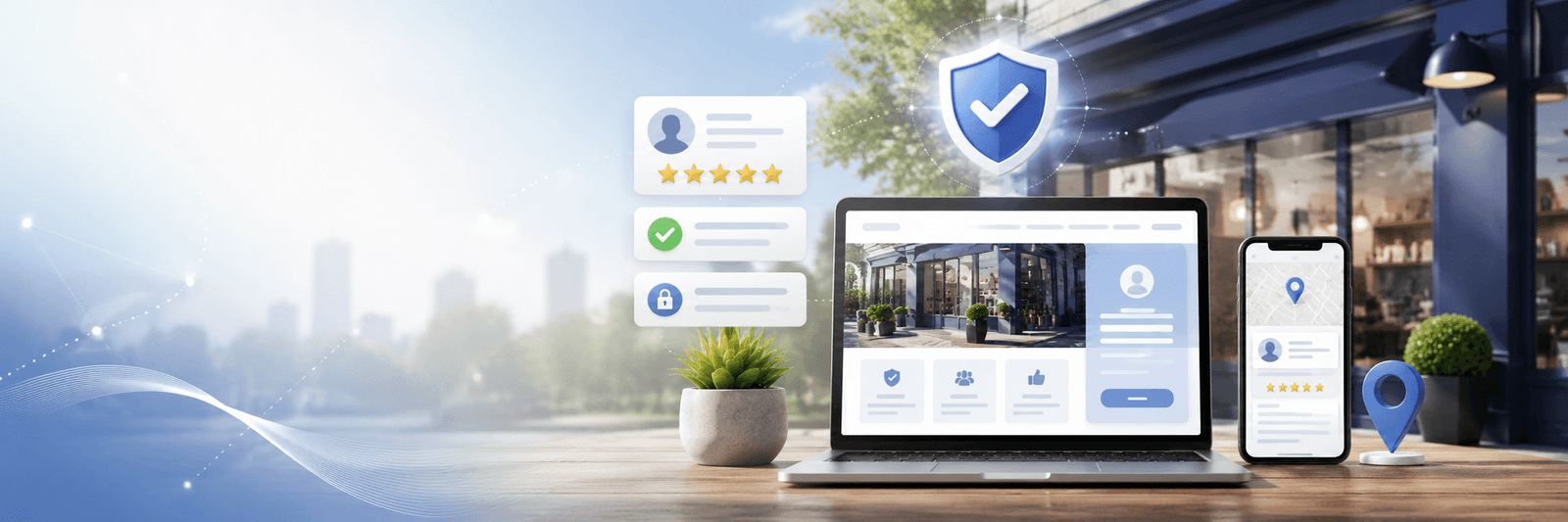
Trust signals are elements on your website that make visitors feel more confident about your business.
They can include:
- Clear contact details
- Real business address
- Customer reviews
- Case studies
- Service pages
- Team information
- Secure website
- Fast loading speed
- Professional design
- Helpful content
- Clear pricing or process
- Social proof
- Certifications or partnerships
Trust signals reduce doubt.
When visitors trust your website, they are more likely to contact you, request a quote, visit your store, book a service, or complete a purchase.
1. Show Clear Contact Information
One of the simplest trust signals is also one of the most important: contact information.
A local business website should make it easy for users to find:
- Phone number
- Email address
- Location
- Working hours
- Contact form
- Google Maps link if relevant
Do not hide your contact details only in the footer. Important contact options should be easy to access from key pages.
For example, a clear Contact Us page helps visitors take the next step without confusion.
If a visitor has to search too hard to contact you, they may assume your business is not responsive.
2. Create a Strong About Page
Many businesses underestimate the About page.
But for local customers, the About page can be a major trust-builder. People want to know who is behind the company.
A good About page should explain:
- Who you are
- What your business does
- Who you help
- How long you have been working
- What makes your approach different
- Your mission and values
- Why customers can trust you
Your About page should not feel like generic corporate text. It should sound human and specific.
People trust people before they trust brands.
3. Build Dedicated Service Pages
A common mistake local businesses make is listing all services on one general page.
This may be simple, but it is not always effective for SEO or user experience.
If your business offers multiple services, each important service should have its own page.
For example, Zeroradius has separate pages for web design and UI/UX services, digital marketing and SEO services, WordPress website development, and Shopify website development.
Dedicated service pages help visitors understand exactly what you offer.
They also help search engines understand your business better.
A strong service page should include:
- Service overview
- Problems you solve
- Your process
- Benefits
- FAQs
- Internal links
- Call to action
- Trust elements
4. Add Real Reviews and Testimonials
Reviews are powerful because they come from other customers, not from the business itself.
A visitor may not fully believe a brand saying, “We provide excellent service.” But they may trust a real customer explaining how the business helped them.
Add testimonials to important pages such as:
- Homepage
- Service pages
- Landing pages
- Contact page
- Case study pages
Make reviews specific when possible.
Generic review:
“Great service.”
Better review:
“The team redesigned our website and made it easier for customers to contact us. We started getting more enquiries within the first month.”
The second review feels more believable because it includes context.
5. Use Professional Website Design
A website does not need to be flashy to build trust.
In fact, many over-designed websites confuse users.
A trustworthy local business website should be clean, easy to read, mobile-friendly, and simple to navigate.
Good design includes:
- Clear typography
- Strong contrast
- Consistent spacing
- Mobile-friendly layout
- Simple navigation
- Fast-loading sections
- Clear call-to-action buttons
- Professional images
If your website looks outdated, broken, or cluttered, visitors may assume your business is also unorganized.
A well-planned UI/UX design service can help improve both trust and conversion.
6. Make Your Website Fast
Speed is a trust signal.
When a website loads slowly, users may feel frustrated. Some may leave before the page even opens properly.
For local businesses, this is risky because users often search when they are ready to act. They may need a service quickly. If your website is slow, they may simply choose the next result.
Speed issues can come from:
- Heavy images
- Poor hosting
- Too many plugins
- Large scripts
- Unoptimized themes
- Unused animations
- Poor mobile performance
Your page speed optimization services page can support visitors who need help improving performance.
7. Keep the Website Secure
A secure website is basic, but still important.
Your website should use HTTPS. Forms should work properly. Users should feel safe submitting their contact details.
If a browser shows a security warning, trust can disappear immediately.
For businesses collecting enquiries, bookings, payments, or customer information, security should never be ignored.
This is especially important for WordPress websites. Your article on how to secure a WordPress website in 2026 can support this topic.
8. Add Helpful Content
Helpful content builds authority.
A local business website should not only say “we offer this service.” It should also answer the questions customers ask before buying.
For example:
- How much does this service cost?
- How long does the process take?
- What should I prepare before starting?
- How do I choose the right provider?
- What mistakes should I avoid?
- What happens after I contact you?
Blog posts, FAQs, guides, and comparison pages can all help.
Your article on how to choose a reliable web design agency near me is a good example of content that supports local search intent.
9. Avoid Common Website Mistakes
Many local business websites lose trust because of small but visible problems.
Common mistakes include:
- Broken links
- Old copyright year
- Poor mobile layout
- Missing contact details
- No service details
- No clear call to action
- Slow pages
- Low-quality images
- Too much text without structure
- Generic stock photos
- No proof of work
These issues may look small, but they affect the visitor’s confidence.
Your blog on common website mistakes businesses make can be internally linked here.
10. Make the Next Step Clear
A trustworthy website should guide visitors clearly.
Do you want them to call? Book a consultation? Send an enquiry? Request a quote? Visit your store?
Every important page should have a clear next step.
Examples:
- Request a Free Consultation
- Get a Website Audit
- Talk to Our Team
- Book a Call
- Get a Quote
Avoid using too many different calls to action on one page. Keep the user journey focused.
Final Thoughts
Trust is not built by one element. It is built by the full experience.
A local business website should feel real, clear, helpful, secure, and easy to use. Visitors should quickly understand who you are, what you offer, why you are credible, and how to contact you.
In 2026, businesses cannot depend only on good design or keyword placement. They need websites that feel human and reliable.
When your website answers questions, shows proof, loads fast, and guides users clearly, it becomes more than an online brochure.
It becomes a trust-building tool for your business.
FAQ
What are website trust signals?
Website trust signals are elements that make visitors feel confident about your business, such as reviews, contact details, secure browsing, service pages, case studies, and clear company information.
Why are trust signals important for local businesses?
Local customers want to know if a business is real, reliable, and easy to contact. Trust signals help reduce doubt and increase enquiries.
Does website design affect trust?
Yes. A clean, professional, mobile-friendly design can make a business look more credible and organized.
Should every local business have an About page?
Yes. An About page helps visitors understand who is behind the business and why they should trust it.
How can I make my website more trustworthy?
Start with clear contact details, real reviews, dedicated service pages, fast loading speed, HTTPS security, helpful content, and a simple user journey.