Faster page loading
Improve how quickly important website content loads so visitors can access your pages with less waiting.

Slow websites can frustrate visitors, weaken user experience, and make it harder for your business to turn traffic into customers. Zeroradius provides website speed optimization focused on improving loading performance, Core Web Vitals, technical efficiency, and the overall experience across devices.

Website performance affects how people experience your business online. When pages take too long to load, visitors may leave before they explore your products, services, or content.
Our website speed optimization approach identifies performance bottlenecks across your website and focuses on practical improvements to loading speed, page performance, technical structure, and user experience.
We look at the factors affecting your website's performance, from images and scripts to caching, code, hosting configuration, and other technical elements, based on your website's technology and requirements.
Improve how quickly important website content loads so visitors can access your pages with less waiting.
Identify technical issues and performance bottlenecks that can affect how efficiently your website loads and responds.
Review and improve relevant Core Web Vitals signals that help assess loading performance, responsiveness, and visual stability.
Optimize the website experience for mobile users, where connection speeds, device capabilities, and screen sizes can affect performance.
A faster and more responsive website creates a smoother experience and makes it easier for visitors to browse, interact, and take action.
Improve technical performance factors that can contribute to a healthier website foundation for search visibility and user experience.
Better website speed comes from removing friction across the full stack, not from one isolated tweak.
Review image sizes, formats, compression, and delivery methods to reduce unnecessary page weight.
Identify unnecessary or inefficient scripts, styles, and code that can contribute to slower page loading.
Review caching and asset delivery methods that can help browsers load frequently used resources more efficiently.
Assess relevant performance signals and identify opportunities to improve loading, responsiveness, and visual stability.
Review how the website performs on mobile devices and identify issues that may affect loading speed and usability.
Investigate broader technical factors that may influence site speed, including third-party resources, hosting configuration, database performance, and platform-specific issues.

Learn how to prepare your website for Google AI Mode with stronger content structure, trust signals, technical SEO, schema, and AI-friendly answers.
Read Article
Learn what agentic commerce means for ecommerce brands, and how clearer product data, stronger store structure, and better trust signals can help your products stay visible to AI shopping agents.

A practical guide to building trust on a local business website through clearer content, stronger proof, better usability, and a more credible customer experience.

Learn why website performance matters for ecommerce growth, including its impact on search visibility, user experience, conversions, trust, and revenue.
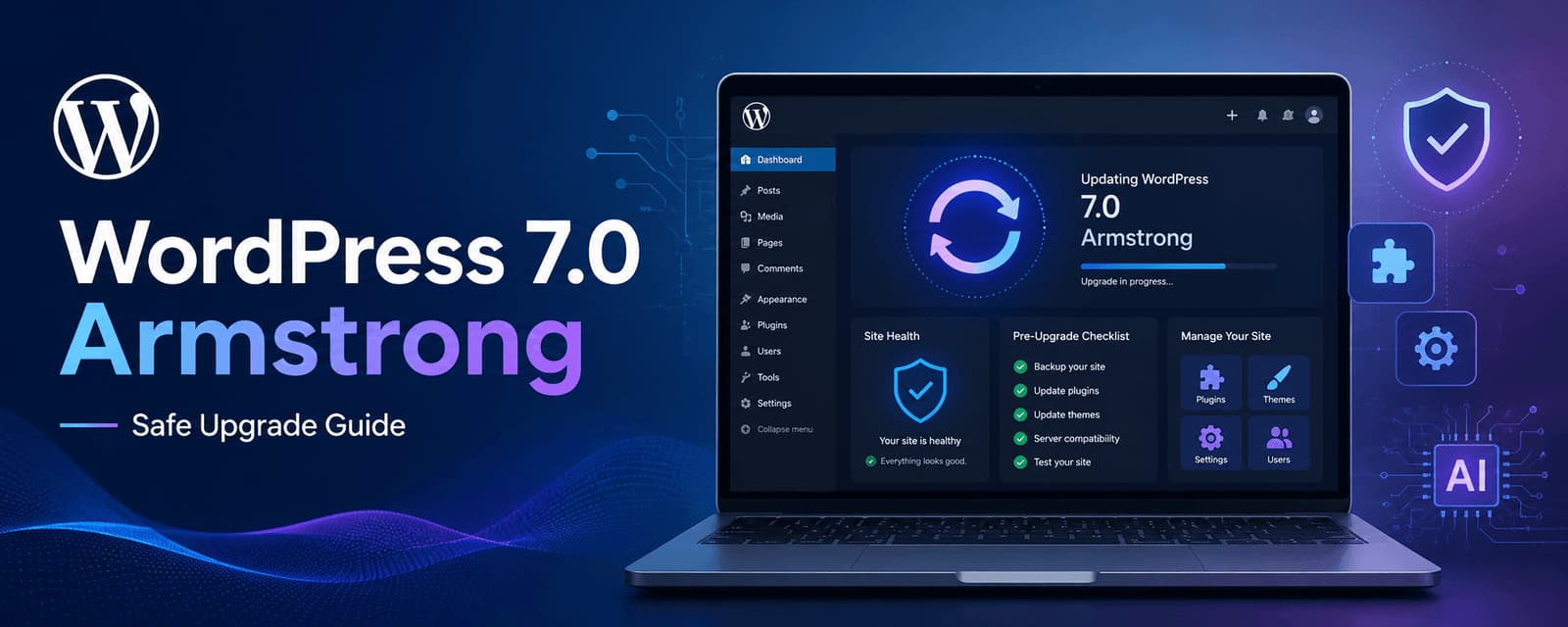
Learn what to check before upgrading to WordPress 7.0 Armstrong, including compatibility, backups, performance, plugins, editor changes, and rollout planning.

Compare livestream shopping platforms for ecommerce brands and learn how live selling can support product discovery, customer trust, engagement, and conversions.

Learn what Core Web Vitals mean in 2026, why they matter for SEO and conversions, and how to improve LCP, INP, and CLS with a practical optimization approach.

See a website conversion case study focused on improving leads through clearer messaging, stronger UX, better calls to action, trust signals, and testing.

Understand why Google I/O did not end SEO, how AI search may reduce clicks, and what businesses can do to protect visibility and qualified traffic.

Learn how to build an AI content strategy in 2026 with stronger topic planning, search intent, editorial judgment, internal links, and content quality.

Learn when to create service pages or blog posts for SEO, how each supports search intent, and how to use both in a stronger content strategy.
Website speed optimization is the process of identifying and improving factors that affect how quickly and efficiently a website loads and responds for users.
Website speed influences user experience and can affect how visitors interact with your website. Faster loading pages can make it easier for users to browse content, products, services, and other important information.
We can assess relevant Core Web Vitals metrics and identify technical opportunities for improvement based on your website's platform, technology, and current performance.
The approach depends on the website. We may review images, scripts, code, caching, asset delivery, third-party resources, hosting, database performance, and other technical factors that can affect loading speed.
Yes. We can review WordPress websites and identify performance issues related to themes, plugins, images, scripts, caching, hosting, and other relevant areas.
Yes. Ecommerce websites can require additional performance considerations because of product images, catalogues, filters, third-party integrations, tracking scripts, and other store functionality.
Website performance is one of the factors considered by search engines, but ranking results depend on many factors. Improving performance can contribute to a stronger technical and user experience foundation, but specific ranking improvements cannot be guaranteed.
The timeframe depends on the website's platform, current performance, technical issues, size, and scope of work. We first assess the website to determine the appropriate optimization approach.
Make your website faster and easier to use
Let's identify what's slowing your website down and improve the performance areas that matter most to your visitors and business.