
Online shopping is changing again, but not in the same way it changed during the rise of marketplaces or social commerce. This time the shift is happening in the layer between the customer and the store. Instead of visiting multiple sites, comparing options manually, and making the decision alone, shoppers are increasingly able to ask AI systems to help them find, evaluate, and narrow products before they even arrive on a product page.
That changes the job of an ecommerce website. Your store still needs to persuade real people, but it also needs to be interpretable by systems that are reading product data, reviewing specifications, checking availability, and trying to determine which products are relevant enough to recommend. This is where agentic commerce becomes important.
The idea is still emerging, but the direction is clear enough to prepare for now. Stores that are easier to understand, easier to crawl, and easier to trust are likely to be in a much better position as AI-assisted shopping becomes more normal.
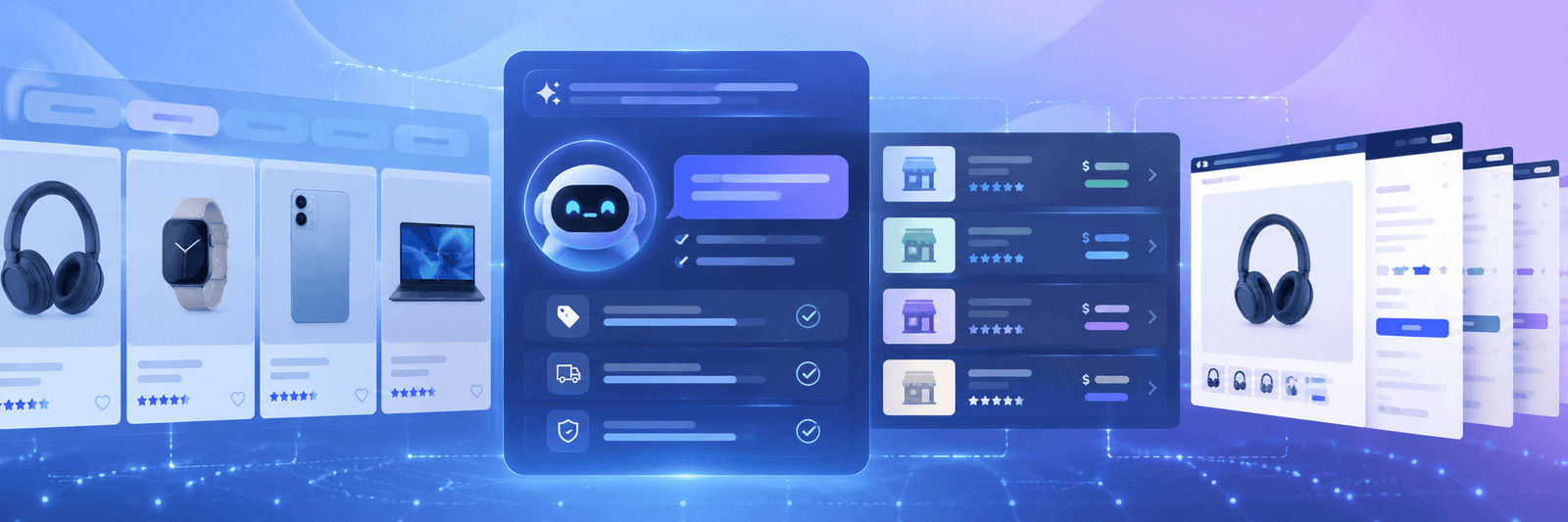
What Agentic Commerce Actually Means
Agentic commerce refers to a shopping experience where an AI assistant helps perform part of the buyer’s work. The shopper provides a goal, a budget, a preference, or a set of constraints, and the AI helps search, compare, filter, and recommend products that match. In some cases, that assistant may even move the user closer to purchase by narrowing the options faster than a person would on their own.
This matters because it changes how products are discovered. The user is no longer only searching with basic keywords. They may be asking for “a compact coffee grinder for a small kitchen,” “a durable office chair under a fixed budget,” or “a gift for someone who works from home and likes minimalist design.” Those requests are richer and more contextual than a normal ecommerce query.
For the store, that means product clarity matters more than ever. If your product page explains dimensions, use case, material, compatibility, shipping timing, and availability clearly, an AI system has more confidence in understanding it. If your page is vague, thin, or structurally messy, the product becomes harder for the system to recommend.
Why This Matters for Ecommerce Brands Now
Agentic commerce does not mean traditional ecommerce strategy disappears. Search, paid traffic, email, social, marketplaces, and brand building still matter. What changes is that product discovery becomes more mediated by systems that reward clarity. In other words, the store has to compete not only on visibility but on interpretability.
That has big implications for mid-sized and smaller brands. In many cases, a smaller store with better-structured product information may be easier for an AI shopping assistant to understand than a larger competitor with cluttered product pages and inconsistent data. This is one reason the shift is not only a threat. It is also an opportunity for businesses willing to clean up the fundamentals.
If your store needs help preparing at the structural level, Zeroradius offers ecommerce store development services focused on UX, performance, product clarity, and conversion.
AI Shopping Agents Recommend What They Can Understand
The most important principle in agentic commerce is surprisingly simple: AI systems can only compare what they can reliably interpret. That means product titles, descriptions, attributes, structured data, inventory accuracy, image context, shipping clarity, and page accessibility all start to matter in more connected ways.
A vague product title may still be understood by a human who is already familiar with your brand. It is less helpful to an assistant that is trying to match specific requirements. A short description may look elegant, but if it omits practical detail, the product becomes harder to compare. A missing dimension or compatibility note may be enough for the system to skip the product entirely in favor of a competitor that states the same information more explicitly.
This is one of the biggest mindset changes ecommerce teams need to make. Product content is no longer only about selling. It is also about making the product intelligible.
Product Titles and Descriptions Need to Do More Work
Many ecommerce stores still rely on product titles that are too short, too brand-led, or too vague. That may be acceptable in a tightly controlled catalog with strong brand recognition, but it becomes weaker when AI comparison enters the picture. Titles should help identify what the product actually is, what kind of buyer it suits, and what core feature or use case makes it relevant.
The same applies to product descriptions. Generic marketing language is rarely enough. A description should explain what the product does, how it is used, who it is for, and what practical qualities matter when comparing it with other options. This does not mean stuffing in keywords. It means writing with enough substance that both a person and a machine can understand what makes the product distinct.
If AI is used to draft product descriptions, it should be treated as a starting point. The final content still needs human editing, real product knowledge, and information that reflects the actual item rather than generic category copy.
Structured Data, Product Attributes, and Accuracy Become Strategic
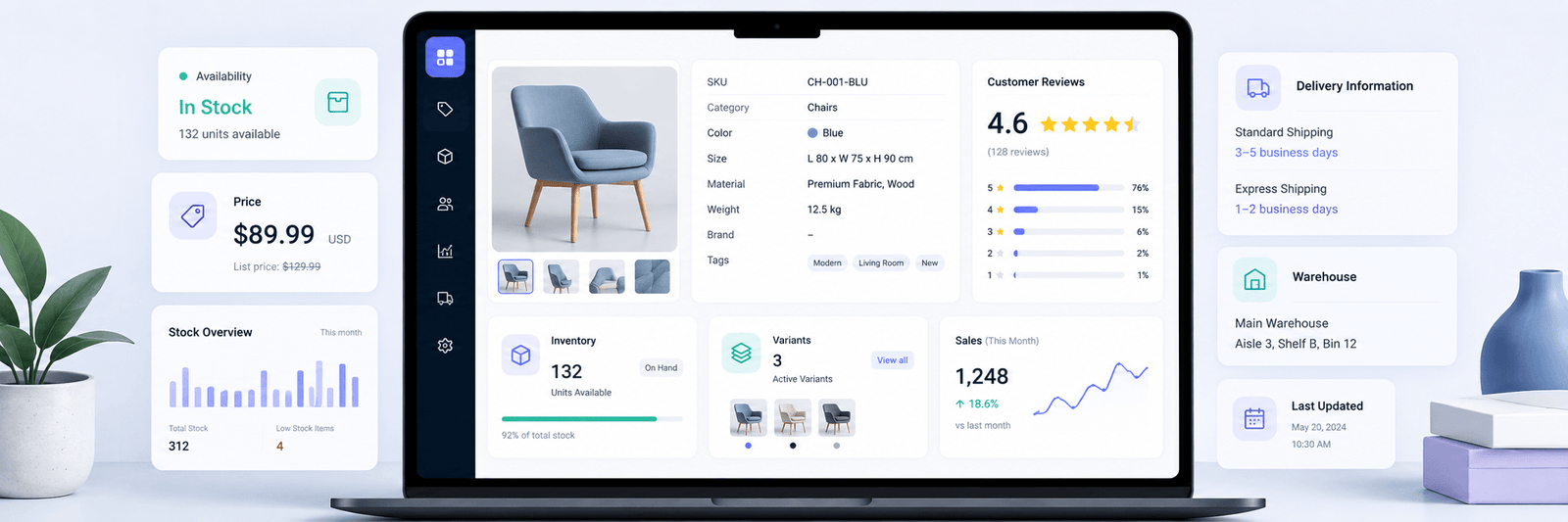
One of the biggest technical advantages a store can create in the age of agentic commerce is cleaner product data. Structured data helps systems interpret key details such as price, stock, brand, ratings, and other product-level signals more confidently. Product attributes provide the specificity that comparison-driven shopping depends on.
This matters because many AI-assisted recommendations are not only based on broad category relevance. They are based on fit. If a shopper asks for a product within a budget, a certain size, a certain material, or a certain use case, your store needs to expose that information clearly. Dimensions, compatibility, weight, finish, age suitability, care instructions, and other practical details become much more valuable when they are consistent and easy to parse.
Accuracy matters just as much as structure. Outdated availability, unclear discounts, or inconsistent pricing across pages and feeds can damage trust quickly. AI systems and buyers both respond badly to unreliable commercial data.
Shipping, Policies, and Trust Signals Influence Recommendation Quality
Product information alone is not enough. Shipping transparency, return clarity, review presence, and overall trust signals all affect whether a store feels recommendation-worthy. If a shopper asks for a product that can arrive by a certain date, the store needs to make delivery expectations visible. If return terms are hidden or confusing, that weakens confidence even if the product itself is a good match.
Trust is especially important because agentic commerce may introduce your store to buyers who have never heard of your brand. In those cases, the store has to earn confidence quickly. Clear policies, good contact information, visible support, strong product imagery, useful reviews, and a professional overall experience become part of the recommendation story.
In practical terms, agentic commerce is rewarding many of the same fundamentals that already improve conversion. The difference is that weak fundamentals may now reduce discovery before the human visitor even reaches the page.
Technical Readiness Still Matters
AI-driven discovery still depends on accessibility. If important product pages are blocked from crawlers, canonical logic is poor, structured data is broken, or key content is hidden behind technical barriers, products become harder to understand and less likely to be surfaced. This is where technical SEO, product architecture, and crawlability remain essential.
Stores should review product URLs, internal linking, indexing health, sitemap quality, schema coverage, duplicate content risks, and page speed. None of this is new, but the reason for caring about it is broadening. Technical clarity is no longer only about search engines. It is about machine readability more generally.
If you want a wider context for this shift, our article on how AI search is changing SEO explores the broader implications.
Different Platforms Need Different Preparation, but the Principle Is the Same
WooCommerce, Shopify, BigCommerce, and custom ecommerce setups can all prepare for agentic commerce, but the implementation details vary. WooCommerce may rely more heavily on product schema discipline and content flexibility. Shopify may depend on strong metafield use, theme quality, and app restraint. BigCommerce may lean more on catalog structure, storefront organization, and B2B-related product logic.
The platform differences matter, but the strategic principle stays the same. Make your products easier to understand, easier to trust, and easier to compare. Stores that do this well are more likely to perform strongly whether discovery comes from search, recommendation systems, or direct brand demand.
If you are working platform-specifically, Zeroradius also offers WooCommerce website development services, Shopify website development services, and BigCommerce website development services.
How Small Stores Can Compete
One of the most encouraging aspects of agentic commerce is that it does not automatically favor the biggest catalog. In many situations, smaller stores can compete by being clearer, better organized, and more trustworthy. A focused brand with excellent product detail, accurate stock, strong reviews, clean imagery, and consistent policies may be easier for an AI assistant to recommend than a larger store with noisier data.
That means smaller businesses do not need to outscale bigger players immediately. They need to out-clarify them. This is often a more achievable advantage.
What to Do First
Preparing for agentic commerce does not require a total rebuild on day one. A more practical approach is to start with the products that matter most to the business. Review the top-selling or highest-margin product pages first. Make sure the titles are clear, the descriptions are useful, the specifications are complete, the shipping expectations are visible, the reviews are credible, and the page performs well on mobile.
Once those high-value pages are stronger, move outward to category structure, product attributes, structured data, policy clarity, and internal linking. Step by step, the store becomes easier for both people and AI systems to evaluate with confidence.
Growing an ecommerce business?
Choose the next improvement that moves revenue.
Get help with platform decisions, store UX, performance, content, and conversion-focused ecommerce strategy.
Final Thoughts
Agentic commerce is not a separate ecommerce discipline so much as an evolution of good ecommerce fundamentals. It rewards stores that are easier to understand, easier to compare, and easier to trust. The businesses that respond well will not necessarily be the ones that publish the most products or the most AI content. They will be the ones that make their products more readable, their store more dependable, and their customer experience more coherent.
In that sense, agentic commerce is not only about AI. It is about clarity. And clarity tends to be a durable advantage in any stage of ecommerce.
Have questions?
Agentic commerce is a shopping environment where AI assistants help users search, compare, and narrow products based on goals, preferences, and practical constraints.
It makes product clarity more important because stores are increasingly being interpreted by AI systems as well as by human shoppers.
Yes. Smaller stores can compete effectively when their product data, trust signals, and overall shopping experience are clearer than larger competitors.
Start with your most commercially important product pages. Strengthen titles, descriptions, attributes, structured data, shipping clarity, reviews, and mobile usability before moving into wider catalog optimization.
Yes. Structured data helps AI systems and search engines interpret product information such as price, availability, ratings, and other important commercial details more reliably.