
B2B ecommerce looks similar to retail ecommerce on the surface, but the buying logic underneath is very different. A consumer may browse casually, choose one item, pay immediately, and complete the order within minutes. A business buyer often needs pricing tied to account status, role-based access, quote workflows, repeat ordering, invoice terms, and catalog visibility that changes depending on the customer relationship.
That is why B2B ecommerce cannot be treated like a normal store with a few extra features added later. The buying process has to be planned around how real business customers behave. If it is not, the store may look polished but still create friction at every important point.
BigCommerce is a strong platform for this kind of work because it can support more complex buying needs while still offering a hosted ecommerce foundation. But the platform only becomes effective when the store is structured around the customer journey, not just around a feature list.

Why B2B Stores Need a Different Approach
B2B buyers are usually not shopping casually. They are buying for a company, often under internal rules, approvals, negotiated terms, or operational pressure. They need clarity, speed, and consistency more than persuasion-heavy merchandising. That does not mean B2B stores can ignore design. It means the design should reduce complexity rather than add it.
A serious B2B buyer may want to confirm account pricing, check stock quickly, reorder familiar products, request a quote, review technical specs, or send an order through an approval process. If the website forces them through a consumer-style flow that assumes every buyer pays instantly by card, the store will feel misaligned with the way the business actually buys.
This is where structured B2B development matters. For businesses building a more capable trade or wholesale experience, Zeroradius provides BigCommerce website development services focused on usability, commercial logic, and scalable ecommerce workflows.
Start With the Buyer Journey, Not the Features List
Many B2B ecommerce projects begin by discussing features: company accounts, custom pricing, quote requests, bulk ordering, and integrations. Those are important, but they make more sense when mapped against the real buying sequence. The stronger question is how the buyer actually moves from need to order inside your business model.
For some companies, the journey begins with registration and approval before product visibility is even granted. For others, the key friction point is reordering or quote turnaround. Some businesses need highly detailed product pages because technical buyers are comparing specifications closely. Others need fast ordering by SKU because the products are already well known to the customer.
Once that journey is clear, the development decisions become more rational. You stop adding features because they sound advanced and start building only what makes the buying process easier.
That shift matters because B2B stores often become unnecessarily complicated when teams start from tooling instead of workflow. The most effective builds usually feel simpler from the buyer side precisely because the complexity has been organized properly behind the scenes.
Company Accounts and Customer Groups Should Reflect Real Buying Relationships
One of the biggest differences in B2B ecommerce is that the buyer is often part of a wider organization. Purchasing can involve multiple users with different responsibilities. One person may browse, another may approve, and someone else may handle payment or reordering. If the store treats everyone like an isolated individual, it immediately breaks from real business behavior.
Company account structure helps organize access more realistically. It also creates a foundation for customer groups, account-based pricing, catalog rules, and workflow differences between buyer types. This becomes especially important when the business sells to wholesalers, distributors, trade customers, or long-term accounts that each need a different commercial arrangement.
The goal is not to make the account system complicated. It is to make the buying experience feel natural for a customer who already operates within a business structure.
Pricing Logic Should Be Clear, Not Hidden Behind Manual Work
B2B pricing is rarely one-size-fits-all. It can depend on relationship history, order volume, negotiated agreements, buyer category, regional setup, or contract terms. If every pricing conversation has to happen manually by email, the store quickly loses efficiency.
BigCommerce can support more structured pricing through customer groups and related configuration, but what matters most is that the logic stays understandable. Buyers should be able to log in and understand what price applies to them, rather than having to guess whether the website is showing retail rates, wholesale rates, or outdated information.
Good pricing visibility also reduces unnecessary sales friction. When the right buyer sees the right offer without having to request basic clarification, the store begins to feel more mature and more useful.
Bulk Ordering and Reordering Should Save Time
One of the clearest opportunities in B2B ecommerce is reducing the time it takes repeat customers to place orders. Business buyers often know exactly what they need. They may be restocking regular items, ordering against internal schedules, or purchasing from a shortlist of approved products. For those users, opening product pages one by one is inefficient.
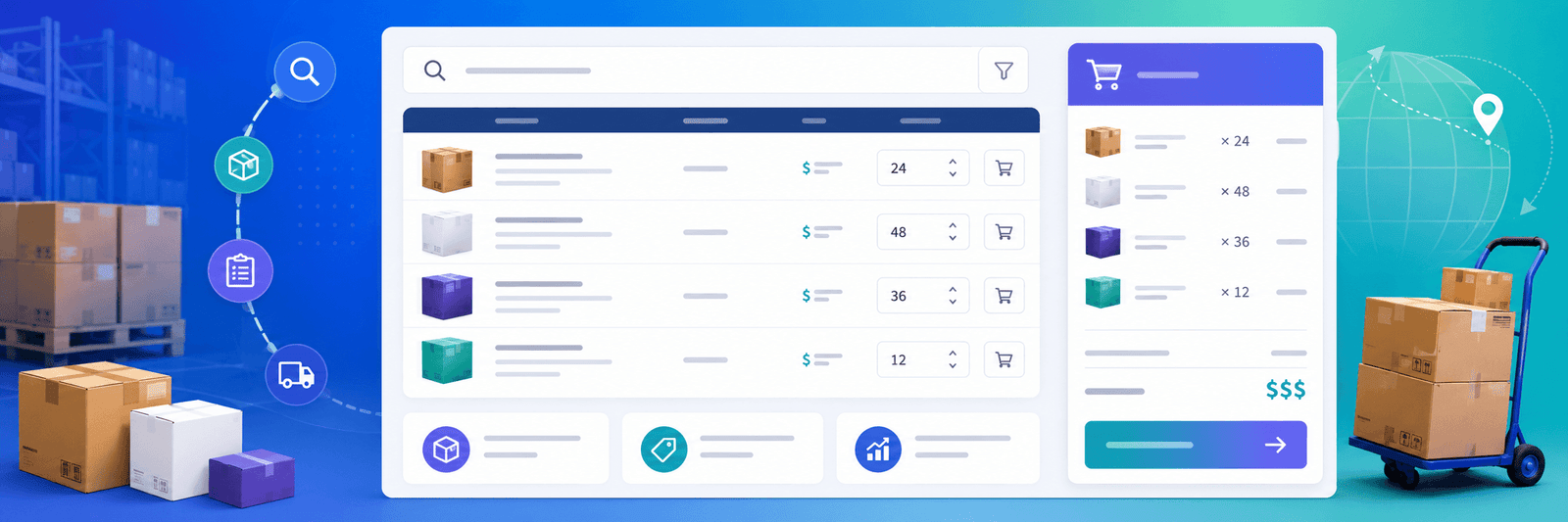
A stronger B2B experience supports fast ordering through tools like quick-order flows, SKU search, saved lists, order history, or simplified reorder paths. This is not just a convenience feature. It directly affects retention because it shapes how easy the store is to work with compared with phone, email, or legacy ordering methods.
Reordering should feel like one of the strongest parts of the experience, not an afterthought. In many B2B environments, that is where the long-term value of ecommerce becomes most obvious.
If repeat customers still prefer email or manual spreadsheets after the store launches, that usually signals that the reordering experience is not yet doing enough useful work for them.
Quote Requests and Flexible Payment Matter More Than Many Teams Expect
Not every B2B order is a fixed-price, instant-checkout transaction. Some orders need internal review, negotiated volume pricing, shipping discussion, or finance approval. That is why quote workflows are so important for many B2B stores. They let the customer begin the transaction inside the site instead of pushing everything into fragmented offline conversations.
Payment expectations also differ from retail. Many business customers rely on invoices, bank transfers, purchase orders, or credit terms. If the store only supports a narrow payment pattern, it may create friction even for otherwise qualified buyers. The right setup depends on the commercial model, but the broader point stays the same: the ecommerce flow should reflect real procurement behavior.
A B2B store does not need to imitate consumer ecommerce. It needs to support business buying cleanly.
Catalog Visibility and Product Detail Need More Precision
In B2B ecommerce, not every product belongs in front of every buyer. Some catalogs may be restricted by region, relationship, trade status, or contract type. Some products may only be relevant for certain industries or customer groups. Controlled visibility is often part of good B2B architecture because it keeps the experience clearer and reduces confusion.
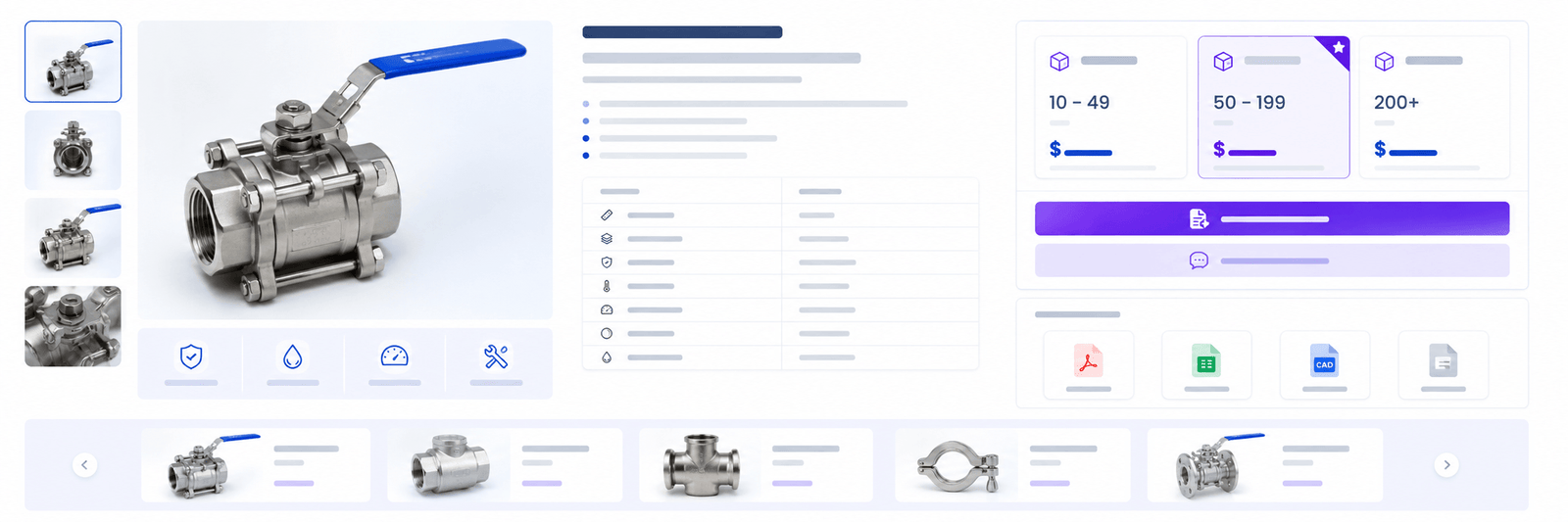
Product pages also need to carry more weight than they do in many B2C environments. Business buyers often need technical details, documentation, SKUs, pack sizes, compatibility information, certifications, reorder context, or commercial notes that help them make a faster decision. These pages should answer practical questions thoroughly rather than relying on marketing language alone.
When the product detail is strong, support volume drops, buyer trust improves, and the store becomes more useful as a working sales tool.
Shipping, Integrations, and Account Area UX Shape Real Usability
B2B orders often create more shipping complexity than consumer orders. Freight rules, delivery scheduling, pickup options, custom rates, warehouse logic, and product-specific constraints may all need to be reflected clearly in the site. When delivery rules are vague, hesitation enters the process quickly.
Integrations matter just as much. ERP systems, CRM tools, accounting platforms, inventory systems, shipping software, and support tools all influence whether the ecommerce store reduces manual work or simply adds another layer to it. The right connections create efficiency. The wrong ones create operational noise.
The account area is another often-overlooked part of the experience. Buyers may use it to review quotes, check invoices, reorder past items, manage users, or access account-specific information. If that environment is confusing, buyers will often return to manual ordering patterns. In B2B ecommerce, the account area is not secondary. It is part of the core product.
SEO and Trust Still Matter in B2B
B2B commerce is not exempt from search behavior. Buyers still search for suppliers, technical product types, industry solutions, specifications, and comparison information. That means the store needs a real SEO structure, not just a gated catalog. Category pages, product pages, industry landing pages, and supporting blog content should work together to create visibility and credibility.
Trust signals matter as well. A professional B2B store should make the business feel legitimate and dependable. Clear company information, strong contact options, documentation, testimonials, policy clarity, secure checkout, and overall design quality all help reinforce confidence. This is especially important when new buyers encounter the brand for the first time through search or referral.
If your team is also reviewing broader store operations, our article on BigCommerce shipping and promotions may be useful.
Test the Store Like a Buyer and Keep Improving After Launch
B2B stores should be tested from multiple perspectives before launch. It is not enough to confirm that the admin side works. The real test is whether a buyer can register, view the right catalog, understand pricing, request a quote, reorder efficiently, and complete the expected path without unnecessary confusion.
After launch, the store should continue evolving. Search behavior, quote patterns, reorder friction, account usage, failed payments, support questions, and product page performance all reveal where the next improvements should happen. That is often where the store becomes significantly more valuable over time.
B2B ecommerce rewards refinement. Small operational improvements often produce outsized returns because they reduce friction for repeat commercial behavior.
That is one reason B2B ecommerce teams benefit from treating the store like an operating system for customer accounts rather than just a digital catalog. The more precisely it fits real buying behavior, the more value it creates.
Ready to strengthen your BigCommerce setup?
Map out a better BigCommerce growth path.
Get help with B2B workflows, storefront UX, shipping strategy, and performance-focused BigCommerce development.
Final Thoughts
A strong BigCommerce B2B store is not defined by how many features it contains. It is defined by how effectively it supports real business buying. That means better account structure, clearer pricing, easier reordering, more practical product detail, and an experience that respects how companies actually purchase.
When those pieces are planned properly, the store becomes more than a digital catalog. It becomes a more efficient commercial system for both the customer and the team behind it. If you want a broader view of how Zeroradius approaches ecommerce work, you can also read Zeroradius ecommerce development services.
Have questions?
It is the process of building and optimizing a BigCommerce store for business buyers, including account structure, pricing logic, quote workflows, bulk ordering, integrations, and buyer-specific user experience.
Yes. BigCommerce can support more structured pricing approaches for different customer groups when the store is configured around real buyer relationships and pricing rules.
Company accounts help reflect the way businesses actually buy, with multiple users, role-based access, account-level pricing, and more organized purchasing workflows.
A strong B2B product page provides technical clarity, commercial relevance, and enough detail for a buyer to make or progress a purchase decision with less back-and-forth.
Because business buyers usually need more structure, more account logic, more practical detail, and more flexible commercial flows than consumer shoppers do.