
Choosing an ecommerce platform is rarely just a technical decision. It affects how easily your team can manage products, how well your store scales, how quickly customers can find what they need, and how much flexibility you have when the business grows beyond its first version. That is why BigCommerce has become such an attractive option for brands that want more structure than a basic starter store, but do not want the operational burden of building everything from scratch.
BigCommerce is especially useful when a store needs room to evolve. That might mean a broader catalog, better filtering, more serious merchandising, deeper integrations, B2B capabilities, or support for multiple regions and buyer types. The platform can support those needs well, but the results still depend on how the store is planned. BigCommerce itself does not guarantee a strong shopping experience. Good development does.
In our experience, the strongest BigCommerce stores are not simply the ones with more features. They are the ones built around clarity. The structure makes sense, the product pages answer real buying questions, the design supports the merchandise, and the technical setup stays disciplined enough to support growth without becoming messy six months later.
Why BigCommerce Works Well for Growing Brands
Many online stores begin with simple needs. A limited product range, a straightforward checkout, a small content footprint, and a team that mainly wants to launch without friction. But growth changes the requirements quickly. Categories expand. Filtering becomes more important. Customer expectations rise. The business may add wholesale buyers, regional complexity, or marketplace integrations. Suddenly the store needs to operate more like a system than a brochure with a cart.
BigCommerce is well suited to that stage because it gives businesses a hosted ecommerce foundation while still allowing serious customization. It can support both B2C and B2B models, more complex catalog structures, and more demanding operational flows without forcing the store into a rigid one-size-fits-all shape.
For businesses planning a more strategic build, Zeroradius provides BigCommerce website development services focused on structure, design clarity, performance, and long-term scalability.
BigCommerce Development Is About Customer Journey, Not Just Setup
It is easy to reduce BigCommerce development to theme selection, product upload, and launch. In reality, that is only the visible surface. A good store needs to be planned around how people actually move from discovery to purchase. That includes navigation, category logic, product detail quality, search, trust signals, content, speed, checkout flow, and the operational rules sitting behind the scenes.
If the store is well structured, customers feel guided. If it is badly structured, even strong products become harder to sell because the buyer is forced to do too much work. They have to interpret categories, compare unclear options, guess at delivery expectations, and search for reassurance that should have been present naturally in the page.
Development matters because it is where those choices get translated into the actual experience. The store should not only look polished. It should make buying feel easier.
Start With Store Structure Before Theme Customization
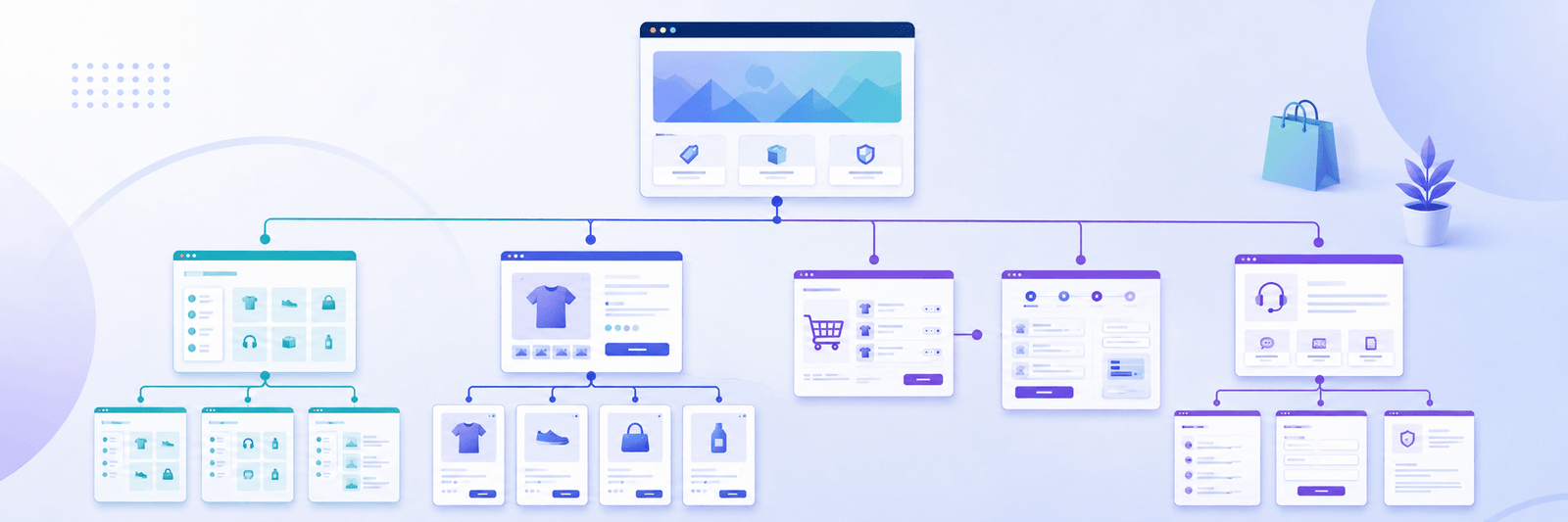
One of the most important early decisions is store structure. Before choosing visual treatments, it is worth deciding how products, categories, collections, navigation paths, and informational pages should relate to one another. Strong ecommerce structure usually feels invisible to the user because it makes sense immediately.
A fashion brand, for example, may need category logic around style, season, gender, fit, or collection. A B2B supplier may need structure around application, buyer type, product family, or industry use case. The structure should reflect how the customer thinks, not only how the merchant organizes inventory internally.
Good information architecture also supports SEO. Search engines can understand the store more clearly when category relationships, URLs, internal links, and supporting content are logically organized. That is why structure should be settled early rather than treated as a cleanup task after launch.
When structure is left vague, growth often makes the problem worse. New categories, new merchandising ideas, and new campaign pages get layered on top of an unclear foundation until both users and internal teams have to work harder than they should.
Theme Selection Matters, but Restraint Matters More
BigCommerce themes provide a starting point, not a complete brand experience. A theme can help with layout foundations, product page conventions, mobile responsiveness, and content blocks, but it still needs thoughtful customization. Stores that rely too heavily on default presentation often look generic. Stores that customize without discipline often become cluttered.
The best theme decisions usually come down to fit. Does the theme support how the products need to be merchandised? Does it keep product imagery clear? Does it allow category browsing to stay easy? Does it remain fast and readable on mobile? Those questions matter more than whether the demo looked impressive in isolation.
BigCommerce’s Stencil framework and Page Builder tools make it possible to adapt a theme meaningfully, but more customization is not always better. Extra banners, widgets, effects, and oversized media often hurt conversion more than they help it. In ecommerce, visual clarity usually beats visual excess.
Product Pages Should Reduce Uncertainty
Product pages are where the store either earns confidence or loses it. A buyer lands there with some level of intent, but intent alone does not guarantee a sale. The page still needs to answer the questions that make purchase feel safe: what the product is, who it is for, why it is worth the price, what the variants mean, when it ships, and whether the store looks trustworthy enough to buy from.
That means product pages need more than a title, gallery, and short description. They need useful content. The most effective pages explain the product in buyer language, highlight the benefits clearly, show enough visual detail, and surface practical information without making the user search for it. Reviews, shipping context, return clarity, and relevant comparisons all help reduce hesitation.
Many underperforming stores treat the product page like a data container. Stronger stores treat it like a decision page.
Search, Filtering, and Discovery Become More Important as the Catalog Grows
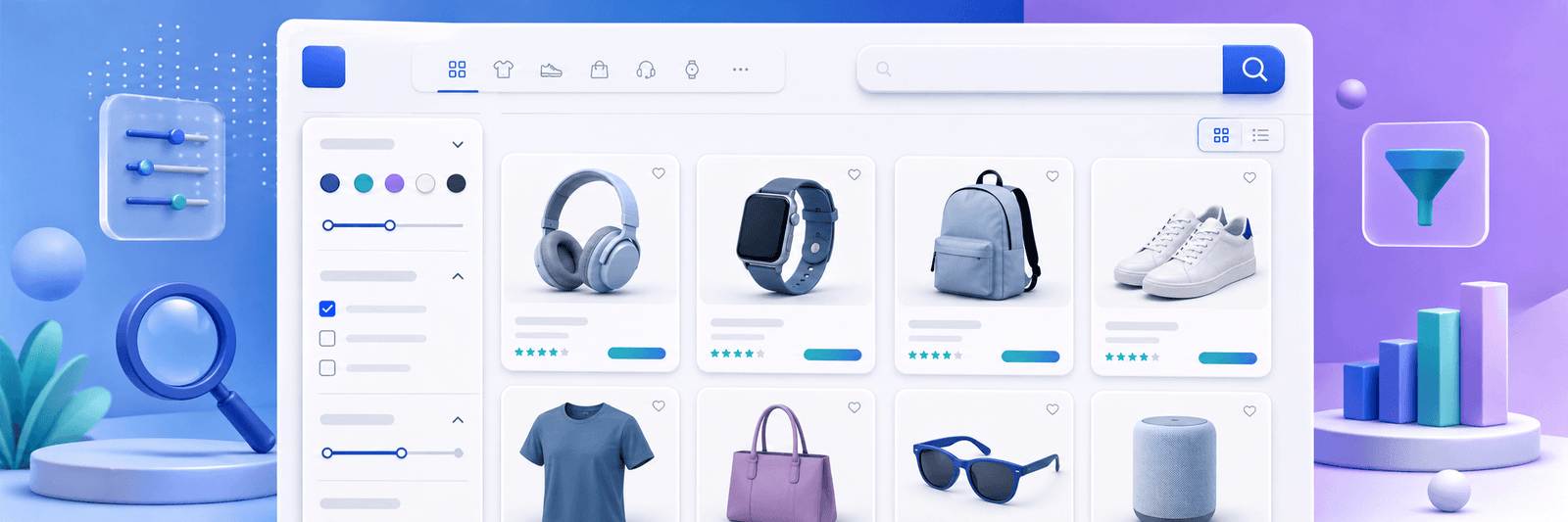
Small catalogs can survive with basic browsing. Larger catalogs cannot. Once product count increases, discovery becomes a conversion issue. If users cannot narrow options quickly, the store begins to feel heavier than it really is. That is where filtering, search relevance, and collection logic start to matter much more.
Good filtering does not mean offering every possible filter. It means offering the right ones. The most useful filters are the ones that reflect how people compare products in that category. In some stores that may be size, material, compatibility, or delivery speed. In others it may be business use case, finish, or price range. Search behavior should also be reviewed regularly because buyers often use different language than the merchandiser expects.
Product discovery is one of the clearest examples of where ecommerce UX and revenue performance overlap. If browsing feels frictionless, the catalog feels stronger even before the customer reaches a product page.
This is also where many scaling stores underestimate the value of UX discipline. Better filters and better search logic do not just make the site easier to use. They make the inventory itself feel more relevant and easier to buy from.
Performance and Mobile Experience Are Core Parts of the Build
Store speed is often discussed like a technical metric, but customers experience it as trust. A fast store feels more capable. A slow one feels less reliable even if the design is strong. This becomes even more important on mobile, where the margin for patience is lower and many purchase journeys begin.
BigCommerce stores should be reviewed for theme weight, image handling, script load, third-party app impact, checkout responsiveness, and Core Web Vitals. It is surprisingly common for otherwise capable stores to be slowed down by avoidable decisions: oversized media, too many external scripts, or design layers that add visual complexity without improving the user journey.
If you want a broader performance perspective, our article on why website performance matters for ecommerce growth explores this in more detail.
BigCommerce Becomes Even More Valuable in B2B and Multi-Storefront Use Cases
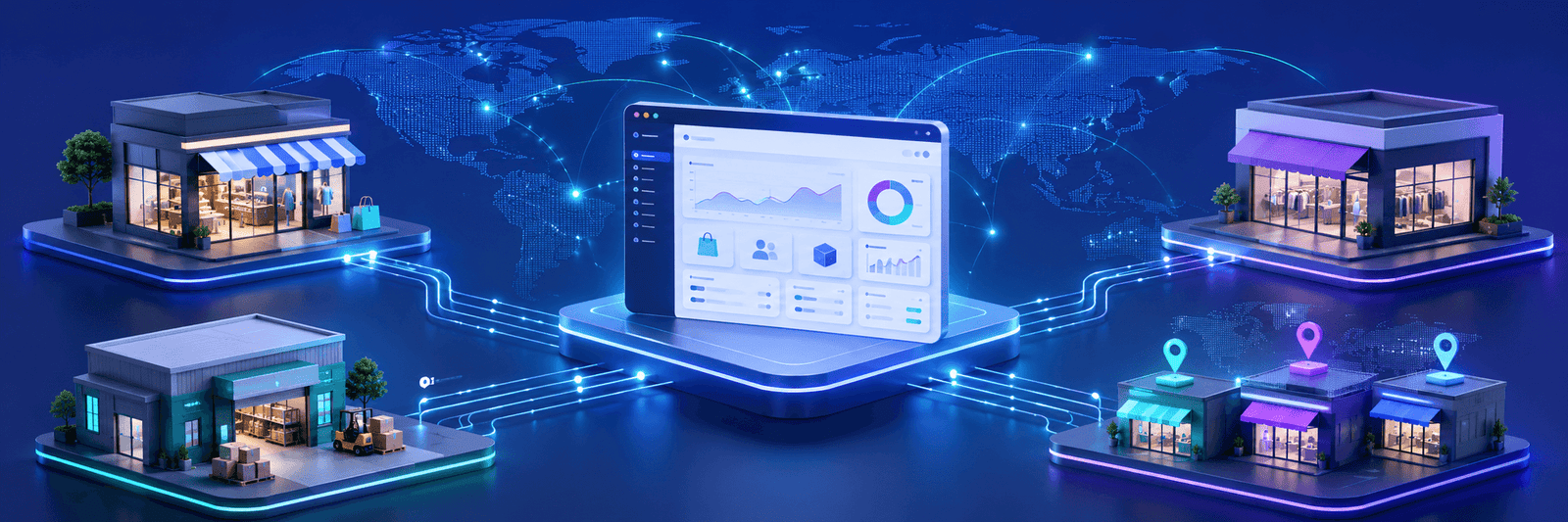
One reason many growing brands move toward BigCommerce is that the platform can support more complex commercial models. That includes B2B workflows, company accounts, customer-specific pricing, multi-storefront management, regional differences, and more advanced operational logic. These are not edge cases anymore. For many businesses, they are part of normal growth.
The key is to avoid treating those features as toggles rather than experience decisions. B2B buying needs to feel simple from the buyer’s perspective even when the rules behind it are more complex. Multi-storefront can create efficiency, but only when each storefront has a clear reason to exist and a well-defined audience. Otherwise it becomes management overhead disguised as flexibility.
For businesses thinking through B2B workflow in more depth, our guide to BigCommerce B2B ecommerce development is a useful next read.
Integrations, SEO, and Post-Launch Improvement Should Be Planned Early
Growing stores rarely operate in isolation. Payments, shipping, ERP systems, CRM platforms, analytics, inventory sync, email marketing, marketplaces, and support tools all shape how the store functions. Integrations can create real efficiency, but they also add complexity, so each one should solve a genuine business problem rather than simply adding another layer to the stack.
SEO should be part of the same conversation. Store structure, URLs, product content, category depth, internal linking, canonical decisions, image optimization, and migration planning all affect how visible the store can become over time. Waiting until after launch to think about SEO usually means revisiting decisions that were easier to solve during the build.
Launch itself should be seen as the beginning of the next phase, not the end of the work. The best ecommerce stores keep improving because customer behavior reveals what the original assumptions missed. Conversion drop-offs, search terms, product page engagement, cart abandonment, and support questions all give insight into where the next gains can come from.
Teams that treat launch as a learning point rather than a finish line usually get more value from the platform over time. That mindset is often what turns a competent store into a genuinely strong one.
Why Work With a BigCommerce Development Team?
BigCommerce gives businesses strong underlying capability, but platform capability and store quality are not the same thing. A development team adds value by helping the business make better decisions before those decisions become expensive to reverse. That includes planning store structure, refining UX, improving product presentation, keeping the tech stack lean, protecting SEO, and preparing the store for growth rather than just launch.
At Zeroradius, ecommerce development is not approached as a one-time design task. It is treated as a commercial system that has to support clarity, trust, scalability, and real user behavior. If you want a broader picture of how we approach ecommerce projects, you can also read Zeroradius ecommerce development services.
Ready to strengthen your BigCommerce setup?
Map out a better BigCommerce growth path.
Get help with B2B workflows, storefront UX, shipping strategy, and performance-focused BigCommerce development.
Final Thoughts
BigCommerce is a strong option for businesses that need more than a basic store, but the platform only becomes powerful when the build is grounded in sound ecommerce thinking. A scalable store needs clear structure, better product communication, thoughtful discovery, strong mobile performance, disciplined integrations, and a willingness to keep improving after launch.
Done well, BigCommerce can support much more than transactions. It can become a reliable growth platform for brands that need flexibility, operational control, and a shopping experience that feels easier for customers at every stage.
Have questions?
BigCommerce development is the process of planning, customizing, optimizing, and maintaining a store on the BigCommerce platform. That can include design work, theme customization, product structure, integrations, SEO, performance, and B2B or multi-storefront setup.
Yes. BigCommerce is especially useful for businesses that need more flexibility, stronger catalog management, better B2B support, or room to scale without rebuilding everything from scratch.
Yes. BigCommerce can support company accounts, customer-specific pricing, quote-based workflows, buyer roles, and other B2B features when the store is planned correctly.
Multi-Storefront allows businesses to manage multiple storefront experiences from one BigCommerce backend, which can be useful for regions, brands, customer types, or retail and wholesale models.
Yes. BigCommerce can be used in a headless setup when a business needs a more custom frontend experience while keeping BigCommerce as the ecommerce backend.