
An ecommerce website is no longer just a digital storefront. In 2026 it is a core part of how a business is discovered, evaluated, and trusted. Customers expect a fast, clear, and well-structured shopping experience from the first click onward, and they make those judgments quickly. A store that feels slow, awkward, or poorly planned does not simply look unfinished. It loses revenue.
That is why many businesses eventually reach the same conclusion: building a serious online store requires more than installing a theme and uploading products. It requires strategy, UX thinking, development discipline, and ongoing optimization. This is where an experienced ecommerce development company becomes valuable.
Why Ecommerce Development Has Become More Demanding
The standard for ecommerce is much higher than it used to be. Customers now compare your website not only with direct competitors but with the best shopping experiences they see anywhere online. They expect mobile-first browsing, fast page loads, clear product information, secure checkout, and a level of polish that makes the brand feel credible.
At the same time, businesses need more from their websites. They need platform flexibility, cleaner integrations, better analytics, stronger search visibility, and the ability to improve the store over time without rebuilding everything from scratch. Those needs are difficult to handle well when the store has been built without a solid technical and strategic foundation.
What an Ecommerce Development Company Actually Brings
A good ecommerce development company does more than write code. It helps shape the commercial experience of the store. That includes platform selection, site structure, design decisions, product-page logic, performance planning, checkout flow, integrations, and ongoing improvement after launch.
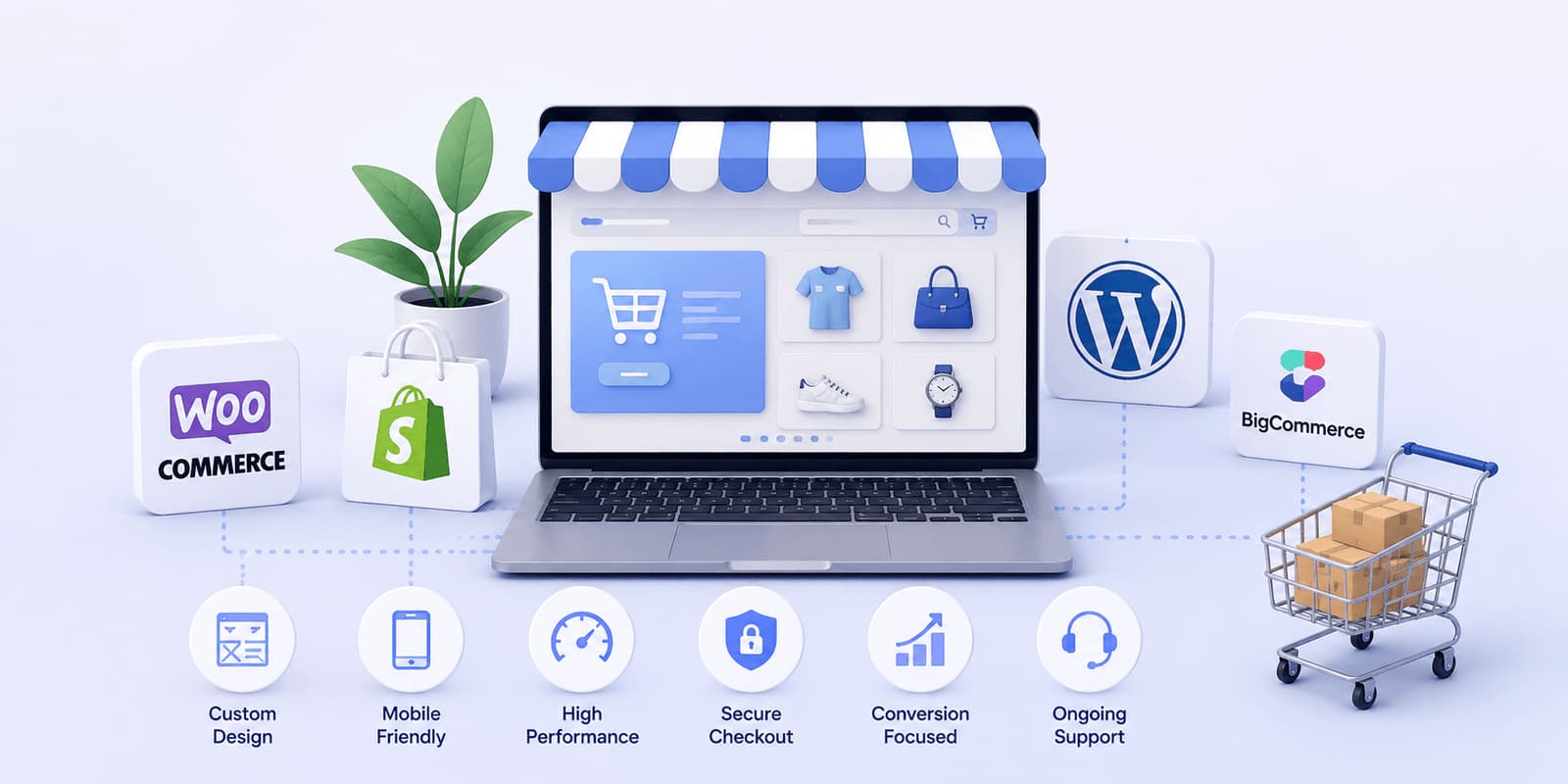
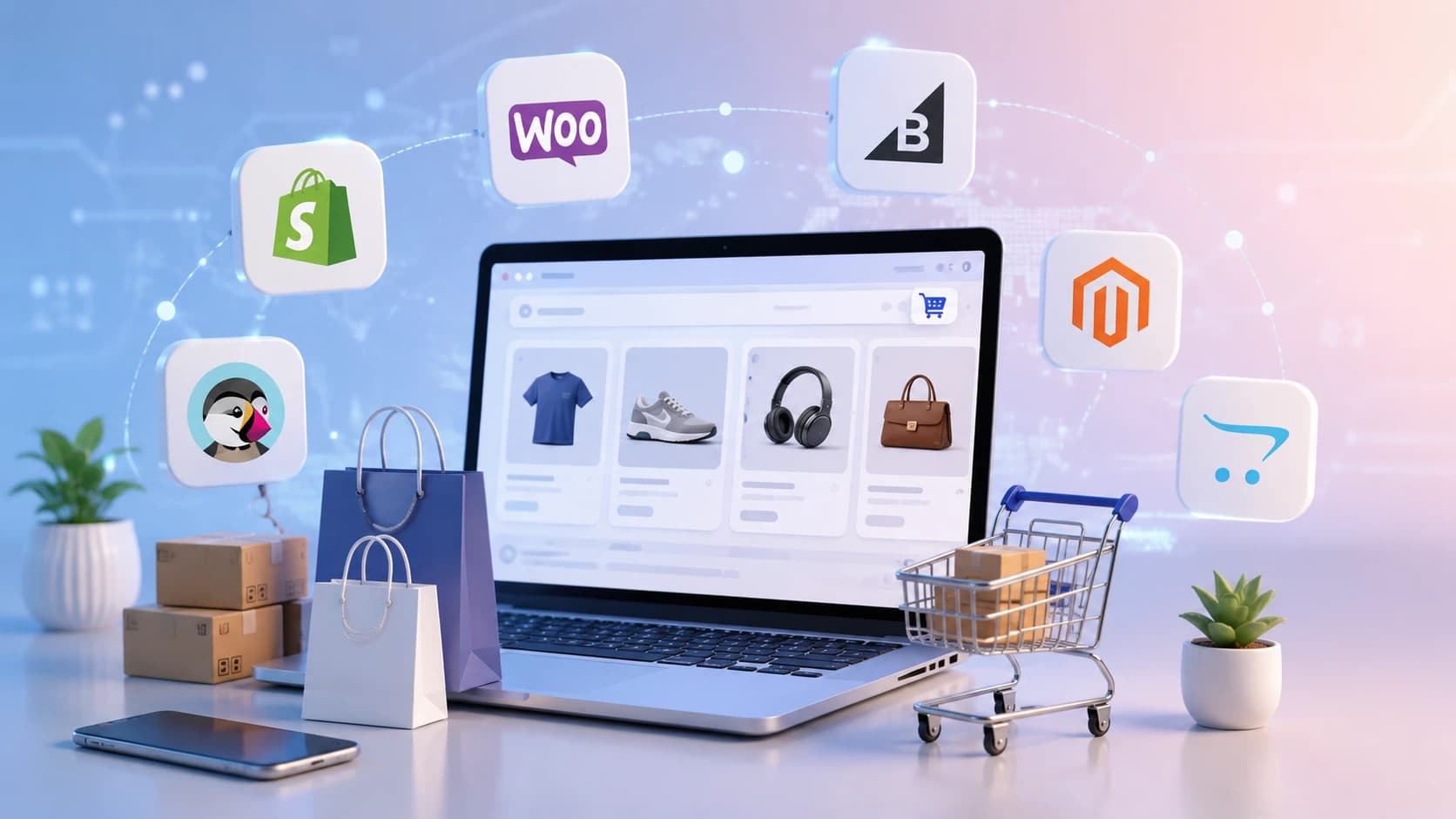
In practice, this means fewer avoidable mistakes. Instead of learning through expensive trial and error, the business gets access to experience across store architecture, UX, search readiness, and scalability. That matters whether the project is being built on Shopify, WooCommerce, BigCommerce, or a more custom stack.
In-House Alone Is Not Always the Fastest Route
Many businesses assume that building internally will save money or create more control. Sometimes that is true, especially for large teams with strong product and engineering capacity. But for many growing brands, internal builds become slow, fragmented, and harder to coordinate than expected.
An ecommerce development partner shortens that learning curve. The team already understands how to structure store content, plan checkout flows, reduce performance problems, and avoid the kinds of design decisions that quietly reduce conversions. That usually leads to faster delivery and better early outcomes.
Performance, UX, and Conversion Are Tied Together
One of the biggest misconceptions in ecommerce is that design, speed, and conversion can be handled separately. In reality, they influence each other constantly. A store that looks polished but loads slowly will lose trust. A fast store with weak product pages will still underperform. A technically solid store with confusing navigation will not convert as well as it should.
Strong ecommerce development brings those layers together. Product pages should answer buying questions quickly. Navigation should help shoppers move without friction. Mobile layouts should feel natural rather than adapted as an afterthought. Checkout should reduce hesitation, not create it. That is why development and UI/UX strategy need to work together.
Scalability Matters Earlier Than Most Businesses Expect
A store may begin with a simple product range and modest traffic, but growth creates technical pressure quickly. More products, more marketing, more traffic, and more integrations often expose weaknesses in the original build. Stores that were assembled too quickly can become harder to manage, slower to improve, and more expensive to expand.
A properly developed ecommerce website is built with future changes in mind. That does not mean overengineering from day one. It means making sensible decisions early so the store can support new product lines, campaigns, landing pages, content, and technical improvements without constant structural repair.
What a Modern Ecommerce Store Should Include
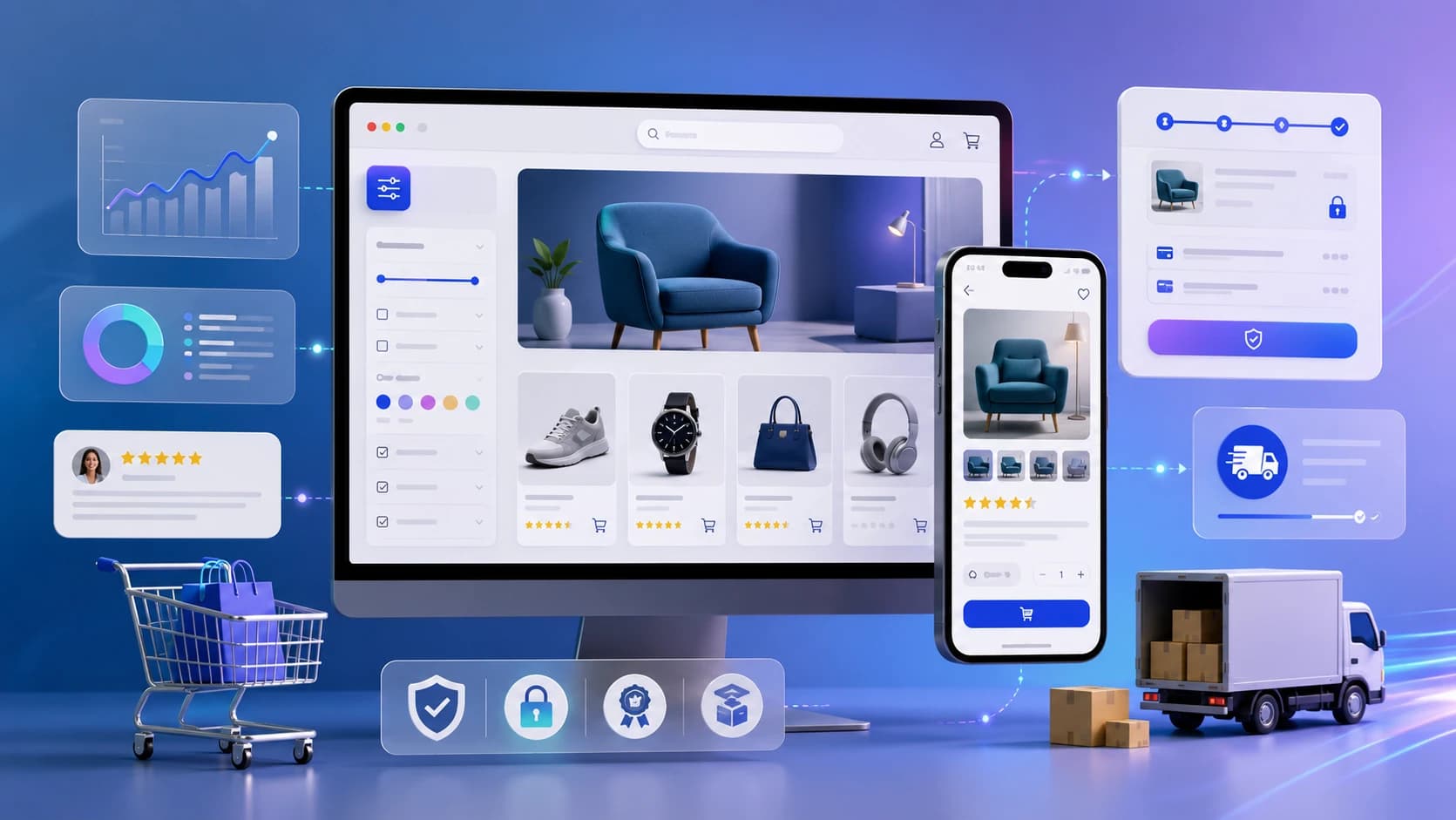
In 2026, a strong ecommerce website should be mobile-friendly, fast, secure, and easy to navigate. It should support search visibility, give customers clear product information, and create a checkout journey that feels simple and trustworthy. It should also integrate cleanly with tools for payments, inventory, CRM, email, and analytics.
Increasingly, businesses also want a store that can support personalization, content-led discovery, and future AI-assisted shopping behavior. Those features only work well when the fundamentals are already strong.
The Cost of a Weak Build
Businesses often notice the cost of weak ecommerce development only after launch. Conversion rates stay low. Pages feel slow. Mobile engagement underperforms. Marketing becomes more expensive because the website does not convert traffic efficiently. Updates take too long. Small technical decisions become persistent commercial problems.
In that sense, hiring the wrong team or underinvesting in the build can be more expensive than paying for experienced help upfront. A store that looks acceptable on day one can still fail as a long-term revenue asset.
How to Judge the Right Development Partner
The right ecommerce development company should be able to explain more than visual preferences. It should talk clearly about platform fit, performance, user journeys, mobile behavior, conversion thinking, and post-launch growth. A strong portfolio matters, but so does the team's ability to explain how and why it builds in a certain way.
Look for a partner that understands both technical and commercial priorities. Good ecommerce development is not just about getting the store live. It is about making the store more useful to the business once it is live.
Growing an ecommerce business?
Choose the next improvement that moves revenue.
Get help with platform decisions, store UX, performance, content, and conversion-focused ecommerce strategy.
Final Thoughts
Businesses need ecommerce development companies because online selling has become more demanding, not less. The website has to do more work. It has to present the brand clearly, perform well on mobile, support discovery, build trust, and convert attention into revenue.
When that work is handled properly, the website becomes more than an online catalog. It becomes a commercial system the business can keep building on. If that is the direction you want to take, Zeroradius can help through our ecommerce development services and related Shopify, WooCommerce, and UX support.
Have questions?
It helps plan, design, build, and improve online stores, including UX, platform setup, integrations, performance, and conversion-focused structure.
The cost depends on platform choice, custom features, content needs, integrations, and the level of design and development involved.
Timelines vary by scope. A relatively straightforward store may move quickly, while more custom or content-heavy builds take longer.
A large share of ecommerce discovery and buying happens on phones, so poor mobile UX can directly reduce both trust and sales.
Not always, but businesses with more demanding growth, UX, or performance needs often benefit from a more tailored approach than a default theme can provide.