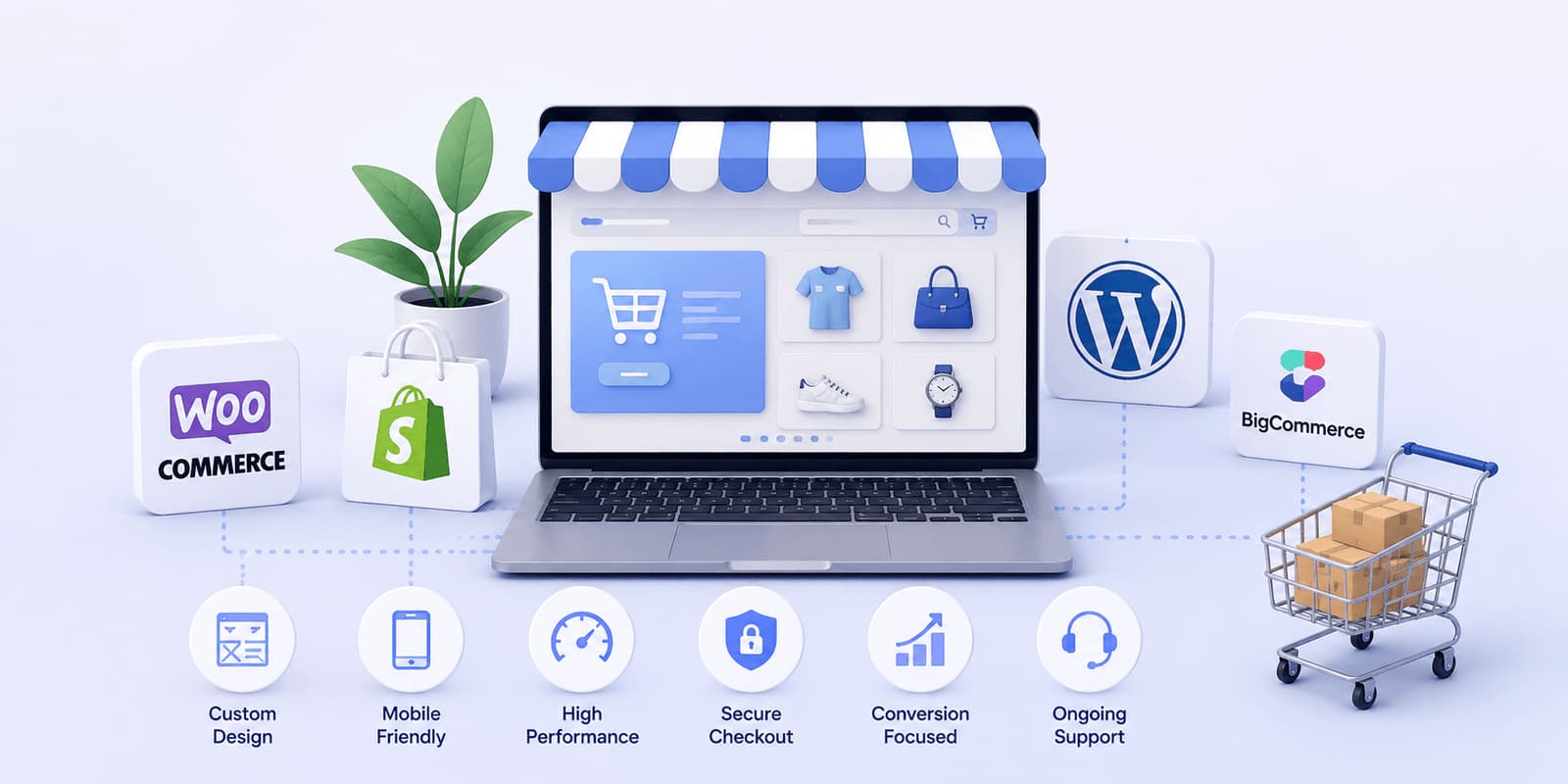

Choosing an ecommerce platform is one of the most consequential decisions in any online-store project. The platform influences how quickly a store can launch, how easily the team can manage it, how flexible the experience can become, and how well the site performs as the business grows. That is why experienced ecommerce development companies do not choose platforms casually. They match them to business models, content needs, technical requirements, and long-term goals.
There is no single best platform for every brand. The better question is which platform is best for the kind of business you are building. Some brands need simplicity and speed. Others need deeper customization, stronger content control, or more enterprise-level scalability. Understanding those differences is what helps agencies recommend the right stack in 2026.
Why Platform Choice Matters So Much
The ecommerce platform sits underneath almost every important part of the customer experience. It affects performance, SEO, content structure, product management, integrations, checkout behavior, and the ease of future development. When the platform is a poor fit, the business often feels that pain later through slower growth, more expensive workarounds, and a website that becomes harder to improve over time.
Good platform selection also protects commercial flexibility. A business that plans to publish strong content, expand product lines, improve search visibility, or create a more tailored user journey may need a very different foundation from a business that simply wants to launch quickly and sell a small product range efficiently.
Shopify Remains the Most Common Recommendation
Shopify continues to be one of the most widely recommended platforms because it balances simplicity with serious ecommerce capability. It is especially attractive for direct-to-consumer brands, smaller teams, and growing businesses that want a dependable hosted solution without managing infrastructure themselves.
Agencies often recommend Shopify when the business values speed to market, a strong app ecosystem, stable checkout, and a platform that is relatively easy to manage day to day. That does not mean Shopify is automatically lightweight or automatically optimized. Stores still need careful theme choices, restrained app usage, and strong UX planning. But as a starting point for many modern brands, it remains a practical option.
Businesses exploring this route often pair the platform with professional Shopify development services to avoid generic builds and performance problems.
WooCommerce Is Strong When Content and Flexibility Matter
WooCommerce remains a popular choice for businesses that want tighter control over content, SEO structure, and broader WordPress-driven flexibility. It is especially useful for brands whose ecommerce strategy sits alongside service pages, long-form content, landing pages, and a more customized website architecture.
Agencies often recommend WooCommerce when the business needs deeper ownership and more freedom than a fully hosted platform typically provides. That freedom can be a major advantage, but it also requires more discipline. Hosting quality, plugin choices, theme structure, and ongoing maintenance have a direct effect on performance and stability.
For businesses that already rely on WordPress content and want ecommerce built into that environment, WooCommerce is still one of the strongest options available. Our broader comparison of WordPress vs Shopify vs custom can help if that decision is still open.
BigCommerce Serves Brands That Want SaaS With More Room to Grow
BigCommerce is often chosen for brands that want the convenience of a SaaS platform but need a little more flexibility than entry-level ecommerce setups tend to offer. It is increasingly relevant for mid-market businesses, larger catalogs, and brands that want scalable infrastructure without moving fully into a custom-stack world.
Development companies often like BigCommerce because it can handle growth-oriented requirements while still offering managed infrastructure. It is especially useful when the business wants a cleaner balance between usability, built-in features, and longer-term scalability.
Adobe Commerce Still Matters for Enterprise Complexity
Adobe Commerce, still widely associated with Magento, is not the default recommendation for most businesses, but it remains relevant for larger organizations with more complex needs. It is commonly considered when catalog depth, B2B features, multi-store architecture, and advanced customization requirements go beyond what lighter platforms handle comfortably.
That power comes with cost and complexity. Agencies only tend to recommend Adobe Commerce when the business truly needs enterprise-level depth and has the operational capacity to support it. It is not the right choice simply because it sounds powerful.
Wix and Squarespace Still Have a Place
Not every ecommerce project needs a large platform commitment. Wix and Squarespace still serve smaller brands, simpler stores, and design-led businesses that want to launch with lower complexity. They can work well for lean product ranges, founder-led brands, or businesses where ecommerce is important but not operationally complex.
Development companies may recommend these platforms when the priority is simplicity and the commercial demands are relatively modest. They are rarely the first choice for businesses that expect rapid catalog growth, deeper customization, or more advanced technical control.
How Agencies Decide Which Platform to Recommend
Experienced ecommerce teams usually start with the business model rather than the software. They look at what the company sells, how customers buy, how much content matters, what integrations are needed, how much flexibility is required, and how the business expects to grow. Budget matters too, but it should be weighed alongside future maintenance, performance demands, and the cost of choosing a platform that becomes restrictive later.
SEO also plays a major role. Some businesses need deeper content structures and more control over their information architecture. Others care more about speed of execution and operational simplicity. The right platform is usually the one that supports the business most naturally, not the one with the loudest marketing.
Growing an ecommerce business?
Choose the next improvement that moves revenue.
Get help with platform decisions, store UX, performance, content, and conversion-focused ecommerce strategy.
Final Thoughts
The best ecommerce platforms in 2026 are still the ones that align properly with business reality. Shopify remains dominant for many growing brands. WooCommerce stays valuable where content and flexibility matter. BigCommerce continues to appeal to scaling SaaS-minded businesses. Adobe Commerce remains relevant for larger, more complex operations. Wix and Squarespace still have a place for simpler needs.
The real advantage comes from choosing intentionally. A strong ecommerce development partner can help you choose the right platform before unnecessary complexity, performance issues, or expensive rework begin.
Have questions?
Shopify is still one of the most widely used platforms because it combines ease of use with strong ecommerce capability.
WooCommerce is often favored when deeper content control and WordPress-based SEO flexibility are important.
Larger businesses may use BigCommerce or Adobe Commerce when they need more scale, complexity, or custom operational control.
Neither is universally better. Shopify is often easier to launch and manage, while WooCommerce offers broader flexibility for businesses that need more control. Shopify is currently one of the most popular ecommerce platforms due to its simplicity, scalability, and extensive ecosystem of apps and integrations. WooCommerce is widely regarded as one of the most SEO-friendly ecommerce platforms because it runs on WordPress and provides full control over technical SEO settings. Large enterprises typically use Magento (Adobe Commerce) or BigCommerce because they support advanced customization and large product catalogs. Shopify is easier to use and faster to launch, while WooCommerce offers more customization and SEO control. The best option depends on your business needs.