
We begin by understanding your business model, products, customers, operational workflows, existing systems, integrations, and digital commerce priorities.
Enterprise Ecommerce Development
Build an ecommerce platform designed to support complex operations, large product catalogs, multiple customer segments, and long-term digital commerce growth. Zeroradius provides enterprise ecommerce development services focused on scalable architecture, seamless integrations, customer experience, and the operational requirements of established businesses.
Why Enterprise Ecommerce Development Matters for Your Business
Enterprise ecommerce requires more than a standard online store.
As product catalogs, customer volumes, sales channels, integrations, and internal processes become more complex, your ecommerce platform needs to support those requirements without creating unnecessary operational friction.
A well-planned enterprise ecommerce solution can support complex commerce operations, connect critical business systems, improve customer experience, and create a scalable technical foundation for ongoing digital growth.
Enterprise ecommerce development should balance customer-facing experiences with the systems and processes that operate behind the storefront, so teams can move faster without losing control of the business.

Technology benefits
Enterprise ecommerce requires more than a standard online store.
Our Process
We take a structured approach to enterprise ecommerce development so the platform, integrations, customer journeys, and operational workflows support both current requirements and future growth.
We define the ecommerce platform direction, system architecture, data flows, customer journeys, and delivery priorities required for the project.
We shape the customer-facing storefront, navigation, product discovery, account experiences, and buying journeys around the needs of your audience and sales model.
We build the required ecommerce functionality, custom features, platform extensions, and operational workflows with scalability and maintainability in mind.
We connect relevant ERP, CRM, payment, marketplace, shipping, inventory, analytics, and other business systems according to the project's data and workflow needs.
We validate critical customer journeys, integrations, data handling, and operational flows before launch, then support the platform through ongoing enhancements and technical improvements.

Work With Zeroradius
Build an Enterprise Ecommerce Platform Ready for Growth
Tell us about your ecommerce platform, business processes, integrations, products, customers, and growth requirements. We can help define and develop an enterprise ecommerce solution around your business needs.
Enterprise ecommerce requires more than a standard online store. As product catalogs, customer volumes, channels, integrations, and internal workflows become more complex, the platform needs to support those requirements without creating avoidable operational friction.
Insights
View All Articles
Featured Article
BigCommerce Development Services by Zeroradius
Explore BigCommerce development services from Zeroradius, including storefront UX, custom development, integrations, migration, SEO, and performance support.
Read Article
WooCommerce Development Services by Zeroradius
Explore WooCommerce development services from Zeroradius, including custom stores, theme work, plugin support, integrations, migration, SEO, and maintenance.


Shopify Development Services by Zeroradius
Explore Shopify development services from Zeroradius, including store strategy, theme work, custom features, integrations, speed, SEO, and ongoing support.
Why Businesses Choose Zeroradius for Ecommerce Development
Learn why businesses choose Zeroradius for ecommerce development, including strategy, platform selection, UX, custom development, performance, and support.

How Zeroradius Builds High-Converting Ecommerce Websites
See how Zeroradius approaches high-converting ecommerce websites through strategy, UX, performance, platform decisions, and continuous improvement.
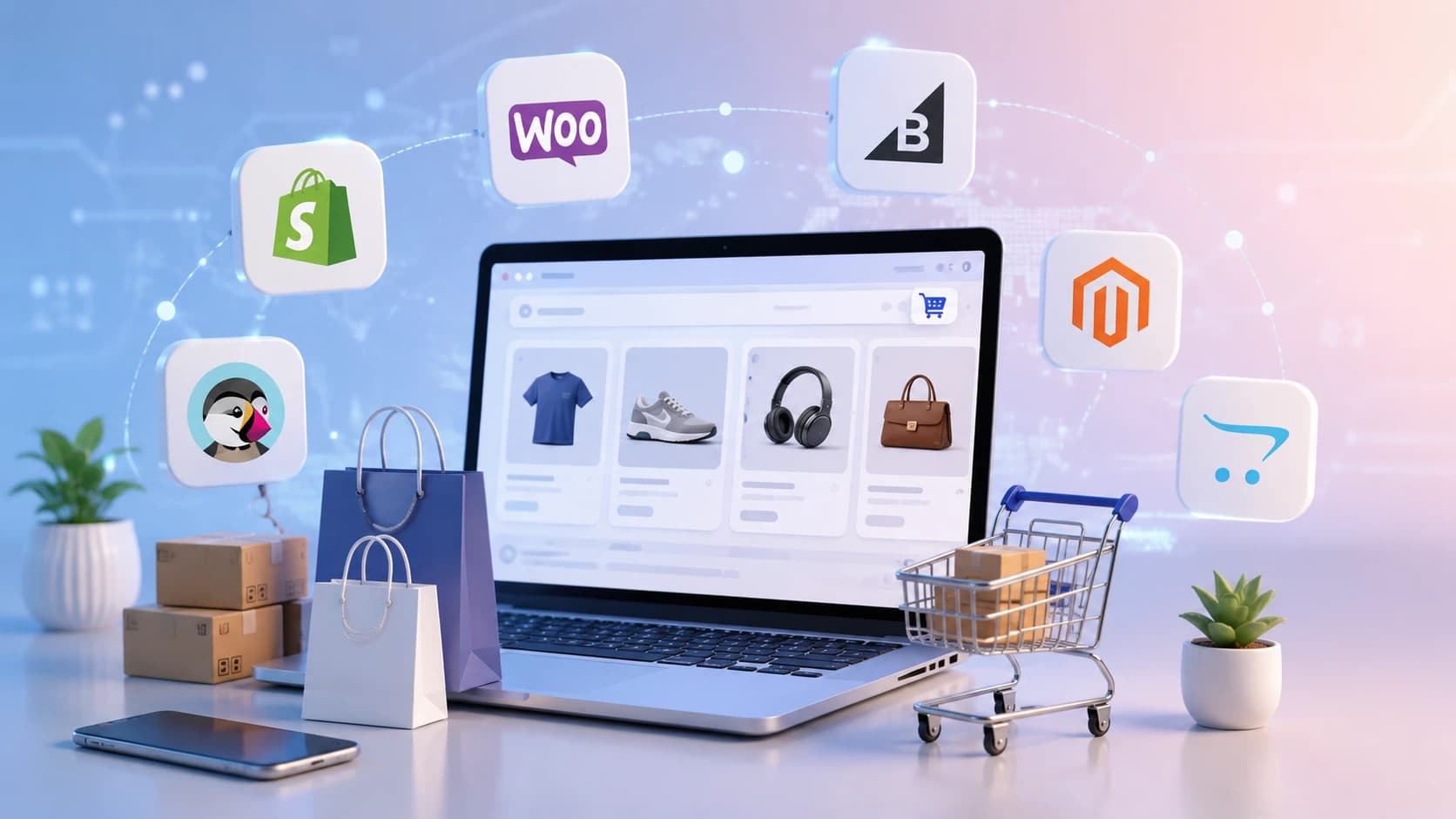
Best Ecommerce Platforms Used by Ecommerce Development Companies in 2026
Compare the ecommerce platforms development companies use in 2026, including Shopify, WooCommerce, BigCommerce, headless commerce, and custom builds.
BigCommerce B2B Ecommerce Development Guide
A practical guide to BigCommerce B2B ecommerce development, covering buyer workflows, pricing logic, company accounts, reordering, integrations, and long-term scalability.
BigCommerce Development: How to Build a Scalable Ecommerce Store for Growth
A practical guide to BigCommerce development for growing brands, covering store structure, product pages, performance, B2B needs, SEO, and long-term scalability.
How Shopify AI Helps Online Stores Work Faster and Sell Smarter
A practical guide to how Shopify AI helps with product content, store operations, marketing, SEO, analytics, and conversion improvement without replacing human strategy.
AI Product Descriptions for Shopify: How to Improve Conversions Without Sounding Generic
A practical guide to using AI for Shopify product descriptions in a way that improves SEO, clarity, and conversions without publishing generic or unedited copy.
How AI Can Make WordPress Management More Efficient
A practical guide to using AI in WordPress management for content workflows, maintenance, monitoring, performance, and lead handling without over-automating the site.
Frequently Asked Questions
Need a more specific answer? Talk to us and we'll point you in the right direction.
Enterprise ecommerce development is the process of building or enhancing ecommerce platforms for established businesses with complex products, customer requirements, integrations, workflows, and digital commerce operations.
Depending on the project, enterprise ecommerce development can include platform development, custom functionality, storefront development, product catalog management, ERP and CRM integration, payment integration, marketplace capabilities, APIs, and ongoing technical improvements.
Enterprise ecommerce development can be appropriate when a business has complex commerce requirements, large product catalogs, multiple customer segments, significant integrations, multiple sales channels, or technical requirements that exceed a basic ecommerce implementation.
Yes. Enterprise ecommerce solutions can be customized around the organization's business model, customer journeys, operational processes, technology environment, integrations, and functional requirements.
Yes. ERP integration can connect relevant ecommerce and business data, depending on the ERP system, ecommerce platform, available APIs, data requirements, and integration architecture.
Yes. CRM integration can connect relevant customer and commerce information between the ecommerce platform and CRM environment to support connected business workflows.
Yes. Enterprise ecommerce development can account for extensive product catalogs, product attributes, categories, variations, pricing structures, and catalog management requirements.
Yes. Enterprise ecommerce solutions can be designed around B2B, B2C, or combined commerce models, depending on the organization's customer and operational requirements.
Enterprise ecommerce development can support marketplace requirements where the business model involves multiple sellers, product sources, or marketplace-specific workflows.
Yes. Payment gateway integration can be implemented according to the selected ecommerce platform, payment provider, transaction requirements, and business workflows.
Yes. Headless commerce can be considered when an enterprise requires a decoupled frontend architecture, multiple customer-facing experiences, or greater flexibility in how commerce functionality is presented.
The approach depends on the project, but typically involves understanding business requirements, defining the technical and commerce architecture, planning integrations, developing the required experiences and functionality, testing the implementation, and supporting the launch.
Yes. Enterprise ecommerce projects can include migration planning and implementation when a business is moving from an existing ecommerce platform to another technology environment.
The timeline depends on the platform, project scope, number of integrations, custom functionality, catalog complexity, design requirements, testing, migration requirements, and other technical considerations.
The cost depends on the platform, scope, integrations, custom development requirements, catalog complexity, functionality, and overall project architecture.
Start your enterprise ecommerce project
Ready to Build Your Enterprise Ecommerce Platform?
Your ecommerce platform needs to work for both your customers and the teams operating the business behind it.
Share your product catalog, customer model, existing systems, integrations, operational requirements, and growth plans. We'll help shape an enterprise ecommerce development approach that fits your business.