
We review your existing platform, store structure, content, data, integrations, SEO setup, and operational constraints to understand the migration scope.
Shopify Migration Services
Move your ecommerce store to Shopify with a structured migration approach built around your data, SEO, customer experience, and business requirements.
Why Shopify Migration Matters for Your Business
Moving an ecommerce store to Shopify is more than transferring products and customer information.
A successful migration needs to consider your existing store structure, URLs, content, SEO visibility, customer data, integrations, and day-to-day business operations.
Poorly planned platform migration can create broken URLs, missing content, incorrect data, indexing issues, or disruptions to important ecommerce workflows.
Zeroradius approaches Shopify migration as a structured store modernization project. We assess the existing platform, identify what needs to move, plan the new Shopify structure, and address important technical and SEO requirements before and after launch.

Technology benefits
Moving an ecommerce store to Shopify is more than transferring products and customer information.
Our Process
We approach Shopify migration as a structured store transition so data, SEO, customer experience, and operational requirements are reviewed before launch rather than fixed after the move.
We define the target Shopify structure, migration phases, technical dependencies, redirect approach, and validation requirements for the transition.
We prepare the migration of products, customers, orders, content, URLs, and metadata while mapping the destination structure for the new Shopify store.
We implement the Shopify migration, configure the required setup, validate migrated information, and review important store workflows before go-live.
We support launch activities, monitor redirects and critical pages, troubleshoot issues, and help stabilize the store after the migration goes live.

Work With Zeroradius
Move to Shopify With a Clear Migration Plan
Whether you are moving from another ecommerce platform or restructuring an existing Shopify setup, Zeroradius can help assess your current store, plan the migration, manage data and SEO requirements, and support the transition through launch.
Moving to Shopify affects more than products and customer records. URLs, SEO, content structure, integrations, workflows, and launch timing all influence whether the migration supports the business or creates avoidable disruption.
Insights
View All Articles
Featured Article
Shopify Development Services by Zeroradius
Explore Shopify development services from Zeroradius, including store strategy, theme work, custom features, integrations, speed, SEO, and ongoing support.
Read Article
BigCommerce Development Services by Zeroradius
Explore BigCommerce development services from Zeroradius, including storefront UX, custom development, integrations, migration, SEO, and performance support.

Why Businesses Choose Zeroradius for Ecommerce Development
Learn why businesses choose Zeroradius for ecommerce development, including strategy, platform selection, UX, custom development, performance, and support.

How Zeroradius Builds High-Converting Ecommerce Websites
See how Zeroradius approaches high-converting ecommerce websites through strategy, UX, performance, platform decisions, and continuous improvement.

Best Ecommerce Platforms Used by Ecommerce Development Companies in 2026
Compare the ecommerce platforms development companies use in 2026, including Shopify, WooCommerce, BigCommerce, headless commerce, and custom builds.

How Shopify AI Helps Online Stores Work Faster and Sell Smarter
A practical guide to how Shopify AI helps with product content, store operations, marketing, SEO, analytics, and conversion improvement without replacing human strategy.

AI Product Descriptions for Shopify: How to Improve Conversions Without Sounding Generic
A practical guide to using AI for Shopify product descriptions in a way that improves SEO, clarity, and conversions without publishing generic or unedited copy.
How AI Can Make WordPress Management More Efficient
A practical guide to using AI in WordPress management for content workflows, maintenance, monitoring, performance, and lead handling without over-automating the site.
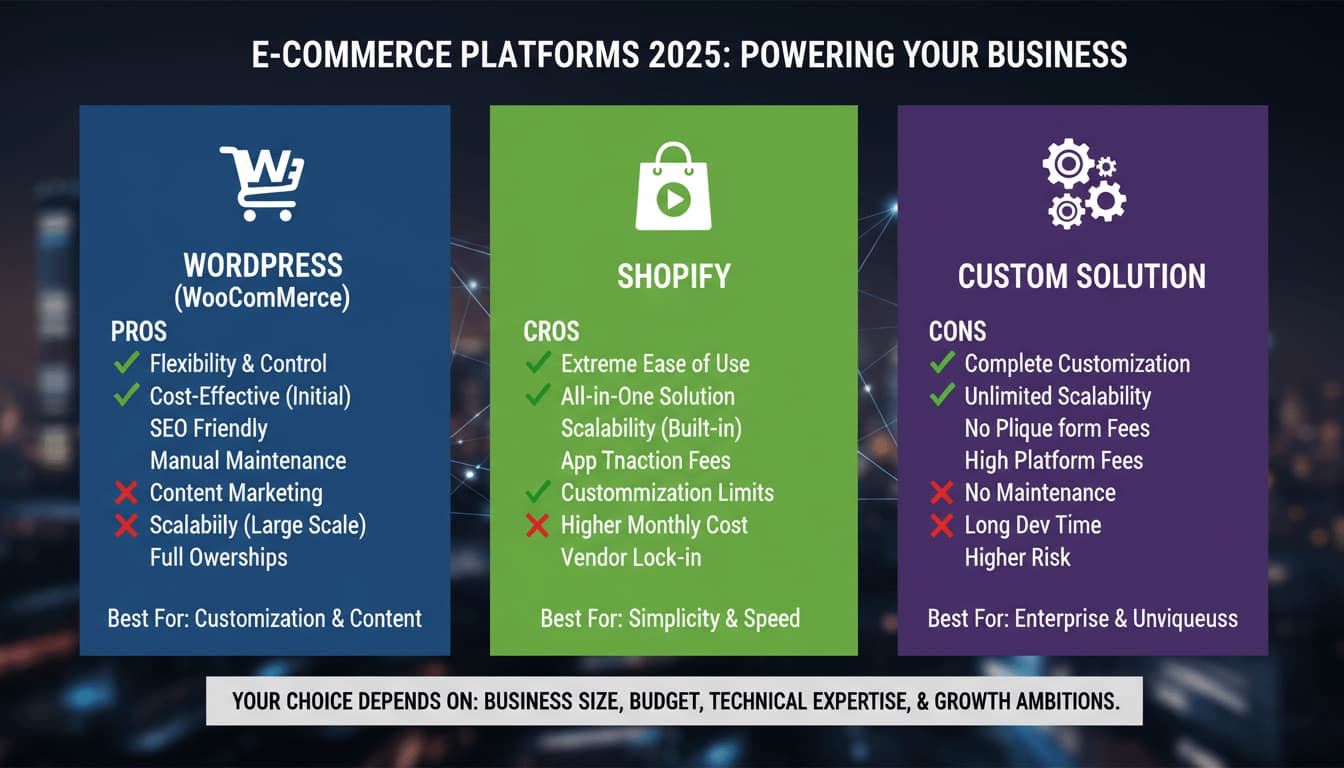
WordPress vs Shopify vs Custom: Which Platform Is Right for Your Business?
A practical comparison of WordPress, Shopify, and custom website development, with clear guidance on which platform fits different business goals, budgets, and growth plans.

WooCommerce Development Services by Zeroradius
Explore WooCommerce development services from Zeroradius, including custom stores, theme work, plugin support, integrations, migration, SEO, and maintenance.

13 Essential Elements Every High-Performing Online Store Needs in 2026
Learn the essential elements of a high-performing online store, from speed and mobile UX to trust signals, product pages, checkout, and post-launch optimization.
Frequently Asked Questions
Need a more specific answer? Talk to us and we'll point you in the right direction.
Shopify Migration Services help businesses move an existing ecommerce store, website, data, content, and relevant configurations to Shopify while addressing technical, SEO, and business requirements.
Yes. Zeroradius can plan and implement Shopify store migration from another ecommerce platform based on the existing store structure, data, integrations, and migration requirements.
The data that can be migrated depends on the source platform, available export or API capabilities, Shopify's supported data structure, and the project requirements. This may include products, variants, customers, orders, content, and other relevant store information.
Yes. Shopify data migration can be included as part of a broader platform migration project, with the migration scope determined by the source platform and required destination structure.
Yes. Relevant website content can be reviewed and migrated as part of the Shopify website migration process, subject to the source content structure and Shopify requirements.
They may change depending on the new Shopify website structure. Existing URLs should be reviewed and mapped to appropriate destination URLs as part of the migration planning process.
Yes. Shopify SEO migration can include reviewing existing URLs, metadata, content, internal links, redirects, and other relevant SEO considerations during the transition.
A 301 redirect permanently directs an old URL to a new URL. During a migration, appropriate redirects can help users and search engines reach the corresponding page after the website structure changes.
Yes. URL mapping can be used to identify existing important URLs and their corresponding destinations within the new Shopify store.
Customer data migration may be possible depending on the source platform, available data, Shopify's supported structure, and the specific information that needs to be transferred.
Product and order migration may be included depending on the source platform, available export or API capabilities, data structure, and Shopify requirements.
Yes. Shopify migration can involve moving an ecommerce store from another platform to Shopify. The exact migration approach depends on the source platform and the information that needs to be transferred.
Yes. Shopify store migration can also involve restructuring or moving an existing Shopify store when the business requires a new store architecture, setup, or implementation.
A migration can be planned to reduce disruption, but the exact downtime requirements depend on the source platform, store complexity, data synchronization, integrations, DNS changes, and launch process. Zero downtime should not be assumed without assessing the specific migration.
Migration projects can include data validation and integrity checks, but no migration should be described as guaranteeing zero data loss without first assessing the source system, migration method, data structure, and validation process.
SEO performance after migration depends on many factors, including URL changes, redirects, content, metadata, technical implementation, site structure, indexing, and external signals. Proper SEO migration planning can help reduce avoidable migration-related issues, but rankings cannot be guaranteed.
Core Web Vitals can be considered during the new Shopify implementation and optimization process. The specific performance work depends on the store design, theme, apps, content, and technical setup.
Yes. Post-launch support can include migration-related troubleshooting, redirect checks, data validation, SEO issues, and other requirements identified after launch.
The cost depends on the existing platform, store size, number of products and customers, data complexity, content requirements, SEO migration, integrations, customization, and overall project scope. A project assessment is required to determine an appropriate estimate.
Start your Shopify migration
Ready to Move Your Store to Shopify?
Tell us about your current ecommerce platform, migration goals, store data, content requirements, SEO considerations, and integration needs. We can help you plan and execute a Shopify migration around your business requirements.