
We establish a baseline for important website performance metrics so future changes can be reviewed against a known reference point.
Website Performance Monitoring
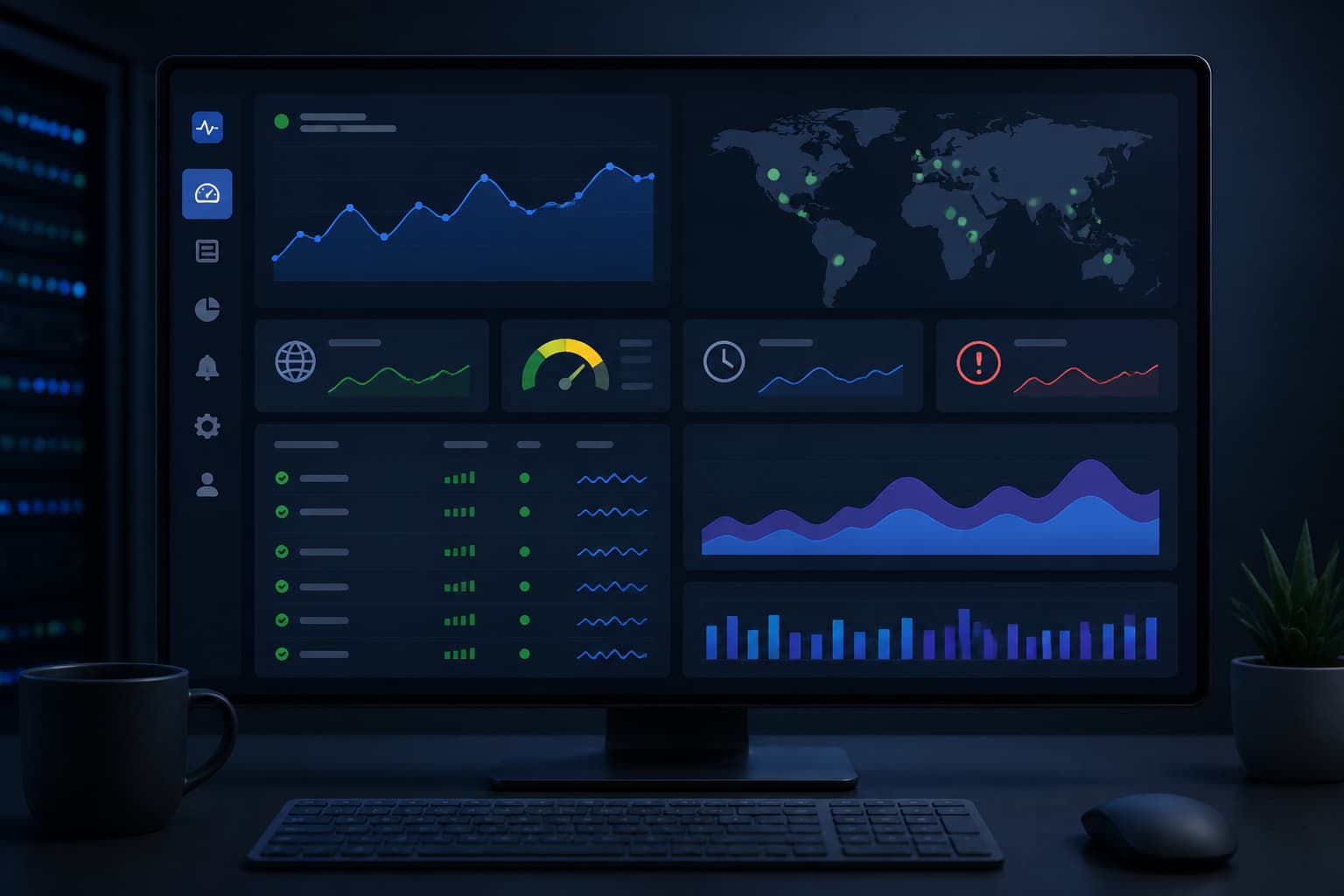
Professional website performance monitoring services to track speed, uptime, Core Web Vitals, response trends, and the overall website experience over time.
Why Website Performance Monitoring Matters for Your Business
Website performance can shift over time as content, scripts, integrations, infrastructure, and user behaviour change. Monitoring helps you understand those changes before they quietly become bigger user experience or business problems.
A website that performs well today can develop issues later. Slower page load times, increased response time, unstable layouts, downtime, or weaker Core Web Vitals can all affect how confidently visitors move through your website.
At Zeroradius, our website performance monitoring services focus on continuously tracking meaningful signals, identifying unusual changes, and helping businesses understand where deeper analysis or optimization may be required.

Website support benefits
Website performance can shift over time as content, scripts, integrations, infrastructure, and user behaviour change. Monitoring helps you understand those changes.
Our Process
We follow a structured monitoring process to establish baselines, track meaningful signals, analyze changes, and highlight the issues that deserve attention.
We track relevant performance signals to understand how website performance changes over time across important pages and resources.
We monitor website speed and page load behaviour to identify performance changes that may require investigation.
We analyze available performance data to identify patterns, bottlenecks, and areas where website performance may need attention.
We monitor relevant Core Web Vitals signals to understand changes in loading performance, responsiveness, and visual stability.
We review relevant server performance indicators that can contribute to slower response times or website loading issues.
We conduct appropriate performance testing to evaluate website behaviour under relevant conditions and identify potential bottlenecks.
We review monitoring data and provide practical recommendations when performance issues or optimization opportunities are identified.
Work With Zeroradius
Keep Track of Your Website Performance
Website performance needs attention beyond a one-time speed test. If you want clearer visibility into how your website behaves over time, Zeroradius can help monitor important performance signals and highlight areas that may need action.
Website performance is not fixed after launch. Monitoring helps you understand how speed, uptime, responsiveness, and stability change over time so emerging issues can be caught earlier.
Insights
View All Articles
Featured Article
WordPress 7.0 Armstrong Update: What to Check Before Upgrading
Learn what to check before upgrading to WordPress 7.0 Armstrong, including compatibility, backups, performance, plugins, editor changes, and rollout planning.
Read Article
Core Web Vitals Optimization Guide (2026): Improve Speed, Rankings & Conversions
Learn what Core Web Vitals mean in 2026, why they matter for SEO and conversions, and how to improve LCP, INP, and CLS with a practical optimization approach.


How AI Can Make WordPress Management More Efficient
A practical guide to using AI in WordPress management for content workflows, maintenance, monitoring, performance, and lead handling without over-automating the site.

Why WordPress Is Moving Toward Block-Based Architecture in 2026
A practical explanation of why WordPress is moving toward block-based architecture, what that means for performance and editing, and when businesses should consider adopting it.

Headless WordPress vs Traditional WordPress: Performance Tradeoffs That Actually Matter
A practical comparison of headless WordPress and traditional WordPress, focusing on performance, complexity, cost, editorial workflow, and when each approach makes more sense.

Why Your WordPress Website Is Slow and How to Fix It in 2026
A practical guide to diagnosing and fixing a slow WordPress website, including the most common causes, what matters most, and how to improve speed without guesswork.

Website Maintenance Cost in 2026: What You Should Really Expect to Pay
A practical guide to website maintenance cost in 2026, including what is usually included, what changes pricing, and how businesses should think about maintenance budgets.

A Practical WordPress AI Workflow for Faster, Smarter Business Websites
A practical WordPress AI workflow for planning, content, design, SEO, and maintenance, built to help business websites move faster without losing quality or strategic clarity.

Why Website Performance Matters for Ecommerce Growth
Learn why website performance matters for ecommerce growth, including its impact on search visibility, user experience, conversions, trust, and revenue.

WordPress vs Webflow in 2026: Which Platform Is Better for SEO?
A practical comparison of WordPress and Webflow in 2026, with a focus on SEO flexibility, content growth, performance, workflow, and long-term scalability.


Best Performance Optimization Stack for WordPress: CDN, Caching, Edge, and Core Web Vitals
A practical guide to building a strong WordPress performance stack using caching, CDN delivery, edge optimization, image handling, and careful plugin discipline.
Frequently Asked Questions
Need a more specific answer? Talk to us and we'll point you in the right direction.
Website performance monitoring involves tracking important website performance signals over time to identify changes, issues, and opportunities for improvement.
Website performance monitoring can include tracking website speed, uptime, response time, Core Web Vitals, performance trends, server signals, and other technical performance indicators depending on the website and monitoring setup.
Website performance can change as content grows, integrations are added, plugins or themes are updated, traffic changes, or infrastructure conditions shift. Regular monitoring helps identify meaningful changes before they become larger problems.
Website performance tracking involves monitoring relevant performance metrics over time to understand how a website's speed, responsiveness, and stability change.
Website speed monitoring tracks website loading performance and helps identify changes that may indicate slower page load times or other performance issues.
Website performance analysis involves reviewing performance data to identify bottlenecks, delays, inefficient resources, unstable behaviour, and other factors that may affect website performance.
Yes. Website uptime monitoring can be included where required to track availability and identify downtime or accessibility issues that may affect visitors.
Yes. Core Web Vitals can be monitored to track changes related to loading performance, responsiveness, and visual stability.
Page load time refers to how long it takes for relevant page content and resources to load. Monitoring it can help identify changes in website loading performance.
Site speed refers broadly to how quickly a website responds and loads content for users. It is usually assessed through multiple performance signals rather than a single metric.
Response time measures how quickly a server or website responds to a request. Higher response times can contribute to slower page loading and a weaker user experience.
Load testing evaluates how a website or application performs under a defined level of traffic or request activity to identify potential performance limitations.
Depending on the website and monitoring setup, relevant metrics can include page load time, response time, Core Web Vitals, uptime, site speed, server performance, and other available performance signals.
Performance monitoring can help identify unusual changes or patterns that may point to a technical issue. Further investigation is often needed to confirm the underlying cause and priority.
Yes. Performance monitoring for ecommerce websites can help track important signals across product, category, cart, and checkout journeys and identify changes that may affect the shopping experience.
Yes. WordPress websites can be monitored for relevant performance signals including loading speed, response time, Core Web Vitals, uptime, and other applicable technical metrics.
Yes. Shopify websites can be monitored for relevant performance signals and changes that may affect the storefront experience.
Yes. Performance testing can be carried out where appropriate to evaluate website behaviour under defined conditions and identify potential bottlenecks.
Server performance monitoring involves reviewing relevant server-side indicators such as response time, resource usage, and other technical conditions that can affect website performance and availability.
Talk to a performance specialist
Monitor Your Website Performance
Your website should stay fast, stable, and available as content, traffic, integrations, and business requirements evolve.
Tell us about your website, platform, and any performance concerns you want tracked. We will help define the right monitoring approach around speed, uptime, Core Web Vitals, response time, and ongoing technical performance.