The headless WordPress conversation usually begins with performance, but it should not end there. A faster frontend is valuable, yet architecture decisions affect far more than page speed alone. They also influence editorial workflow, development cost, flexibility, deployment complexity, plugin dependence, and how much technical ownership the business is prepared to carry over time.
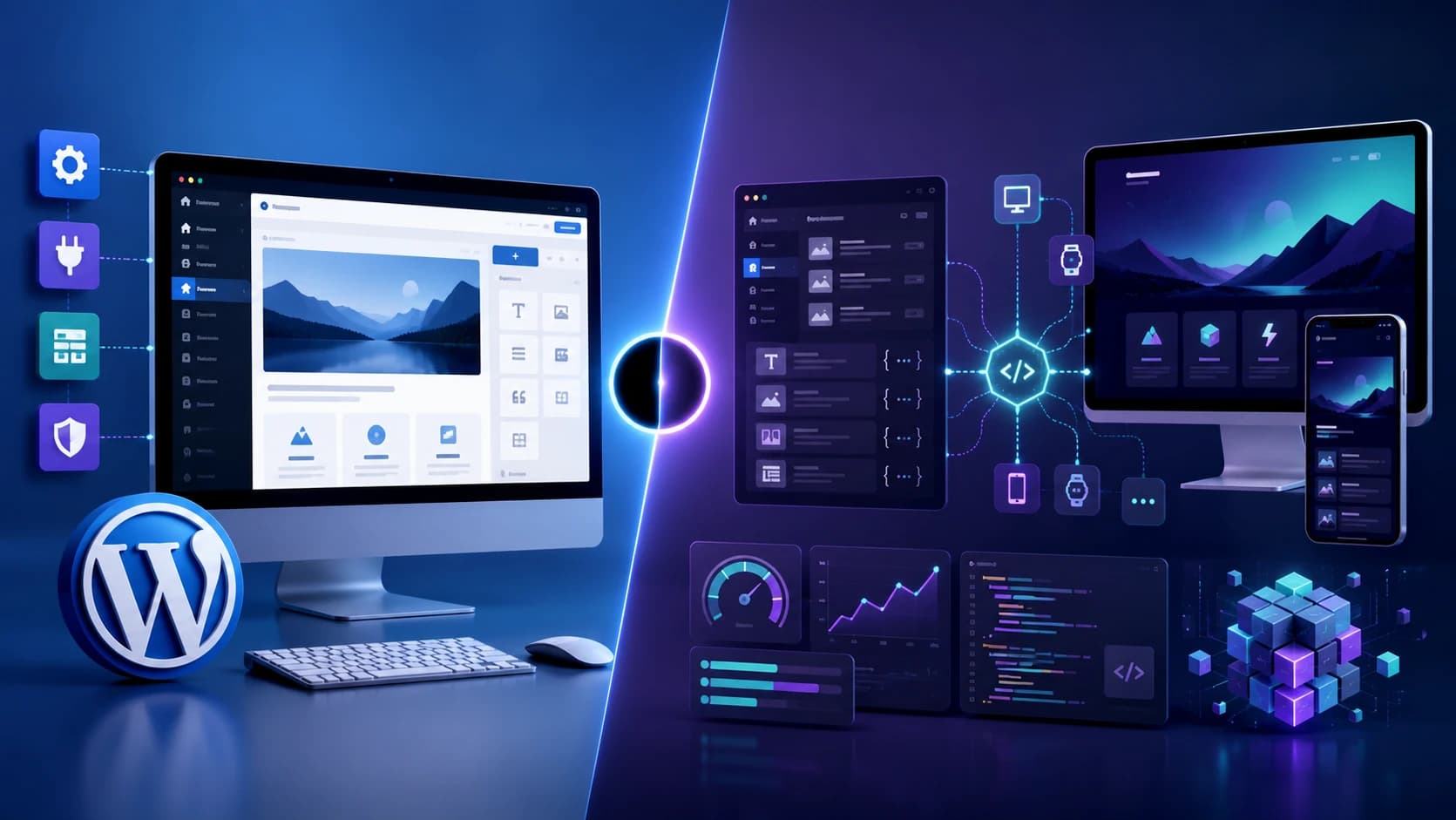
That is why headless WordPress versus traditional WordPress is not simply a speed contest. It is a tradeoff between performance potential and operational simplicity. For some projects, the added control of a headless setup is worth it. For many others, a well-optimized traditional WordPress build is the more practical answer.
Why Headless Often Performs Better
Headless WordPress usually gains its performance edge because the frontend is separated from the WordPress theme layer and rebuilt with a more controlled delivery model. Modern frontend frameworks, static generation, cleaner asset handling, and tighter rendering control can all reduce overhead. That often produces stronger Core Web Vitals and a faster-feeling experience when implemented well.
The important phrase there is “when implemented well.” Headless architecture creates performance opportunity, but it does not guarantee performance automatically. A poorly designed frontend can still be heavy, and a messy API strategy can still create unnecessary complexity.
Traditional WordPress Still Has a Major Practical Advantage
Traditional WordPress remains powerful because everything sits in one familiar environment. Content management, themes, plugins, previews, and publishing workflows are more straightforward for most teams. This matters a great deal for businesses that want speed in the broader project sense, not just frontend rendering speed. A platform that is easier to manage often creates more long-term value than a technically faster system that few people on the team can operate confidently.
In other words, simplicity is a form of performance too. It shows up in faster updates, lower training friction, cheaper maintenance, and fewer handoffs for routine work.
Cost and Complexity Usually Rise With Headless
One of the most common mistakes in architecture decisions is underestimating how much extra complexity headless introduces. Separate frontend hosting, deployment workflows, API handling, preview logic, data mapping, and custom maintenance all add weight to the project. For technically strong teams, that may be acceptable. For smaller businesses, it often becomes a cost center that is hard to justify unless the performance or product requirements are unusually demanding.
This is why many WordPress sites that could benefit from better speed are still better served by optimization rather than re-architecture.
Editorial Workflow Deserves More Attention
Performance discussions often overlook the editor experience. Traditional WordPress is usually easier for content teams because previewing, updating, and publishing happen in a familiar and tightly connected environment. Headless setups can absolutely be built well for editors, but doing so often requires extra work and stronger coordination between developers and content teams.
If publishing speed and editorial independence matter heavily to the business, that should carry real weight in the decision.
When Headless Makes Sense
Headless WordPress makes the most sense when the project needs a highly customized frontend, stronger multi-channel delivery, tighter performance control, or architecture that goes beyond the typical website model. It can be a strong choice for larger digital products, technically ambitious marketing platforms, or businesses with in-house development capacity and clear performance goals.
When Traditional WordPress Is the Better Fit
Traditional WordPress is usually the stronger choice when the site needs to launch efficiently, stay easier to manage, and support a team that is not deeply technical. It is also often the right answer when the business mainly needs better UX, cleaner code, lighter plugins, improved caching, and stronger hosting rather than a full architectural shift.
Our related guides on fixing a slow WordPress website and performance optimization stack are useful if speed is the core concern.
SEO Is Good on Both When Handled Properly
Headless is not automatically better for SEO just because it is modern, and traditional WordPress is not automatically weaker because it is familiar. Both can perform well when structure, metadata, rendering behavior, internal linking, and technical quality are handled properly. The real difference is that headless usually asks more of the implementation team to get those details right consistently.
Planning a better WordPress website?
Turn this WordPress insight into a stronger build.
Get help with WordPress strategy, design, performance, content structure, and long-term maintainability.
Final Thoughts
Headless WordPress often wins on performance potential and technical flexibility. Traditional WordPress often wins on speed of management, cost control, and day-to-day practicality. The best choice depends less on trend pressure and more on whether the business actually needs the extra architectural power enough to justify the added complexity.
For many companies, the smarter move is to optimize traditional WordPress first and only move headless when the business has outgrown what that simpler stack can reasonably support.
Have questions?
It often can be, especially when the frontend is built and delivered efficiently, but the improvement depends on implementation quality rather than architecture alone.
It can be excellent for SEO, but only when metadata, rendering, technical structure, and content delivery are handled properly. Traditional WordPress can also perform very well.
Not necessarily. Many businesses get more value from optimizing traditional WordPress than from taking on the added complexity of a headless build.
Because it is easier to manage, cheaper to maintain, and often better aligned with real business workflows when a fully decoupled architecture is not essential.