
We start by understanding your WooCommerce store, connected systems, business workflows, data requirements, and the purpose of the integration.
WooCommerce API Integration
Connect your WooCommerce store with the systems and services your business relies on through API integrations designed around your workflows, data requirements, and operational needs.
Why WooCommerce API Integration Matters for Your Business
Your WooCommerce store often needs to work alongside more than just WordPress and WooCommerce.
Product information, customer records, orders, inventory, payments, shipping details, and other business data may need to move between multiple platforms.
Without the right integration, teams may need to manage information manually across different systems, creating duplicated work, disconnected data, and inefficient processes.
WooCommerce API integration connects your store with the systems that support your business operations so your ecommerce environment works as part of a connected technology ecosystem rather than as an isolated storefront.

Technology benefits
Your WooCommerce store often needs to work alongside more than just WordPress and WooCommerce.
Our Process
We approach WooCommerce API integration around the business workflow, data model, and system constraints first, so the final integration is practical to operate, easier to maintain, and aligned with the way your store actually works.
We determine the APIs, endpoints, authentication methods, data structures, triggers, and workflows required for the integration.
We develop or configure the required WooCommerce integration based on the systems involved and the agreed technical approach.
We map relevant WooCommerce and external-system data, then define how information should be transferred, updated, and synchronized between platforms.
We test API requests, responses, authentication, error handling, synchronization workflows, and relevant edge cases before deployment.
After implementation, we prepare the integration for live use and can support maintenance, updates, compatibility checks, monitoring, and future improvements as your systems evolve.

Work With Zeroradius
Connect Your WooCommerce Store With Your Business Systems
Need WooCommerce to exchange data with an ERP, CRM, payment gateway, shipping provider, or another business application? Tell us which systems are involved, which data needs to move, and what workflow you need to connect.
A WooCommerce store often needs to work alongside multiple systems, not just WordPress and WooCommerce. Product information, customers, orders, inventory, payments, shipping details, and other business data may need to move between platforms for the operation to run smoothly.
Insights
View All Articles
Featured Article
WooCommerce Development Services by Zeroradius
Explore WooCommerce development services from Zeroradius, including custom stores, theme work, plugin support, integrations, migration, SEO, and maintenance.
Read Article
BigCommerce Development Services by Zeroradius
Explore BigCommerce development services from Zeroradius, including storefront UX, custom development, integrations, migration, SEO, and performance support.

Why Businesses Choose Zeroradius for Ecommerce Development
Learn why businesses choose Zeroradius for ecommerce development, including strategy, platform selection, UX, custom development, performance, and support.

How Zeroradius Builds High-Converting Ecommerce Websites
See how Zeroradius approaches high-converting ecommerce websites through strategy, UX, performance, platform decisions, and continuous improvement.
Best Ecommerce Platforms Used by Ecommerce Development Companies in 2026
Compare the ecommerce platforms development companies use in 2026, including Shopify, WooCommerce, BigCommerce, headless commerce, and custom builds.
How AI Can Make WordPress Management More Efficient
A practical guide to using AI in WordPress management for content workflows, maintenance, monitoring, performance, and lead handling without over-automating the site.
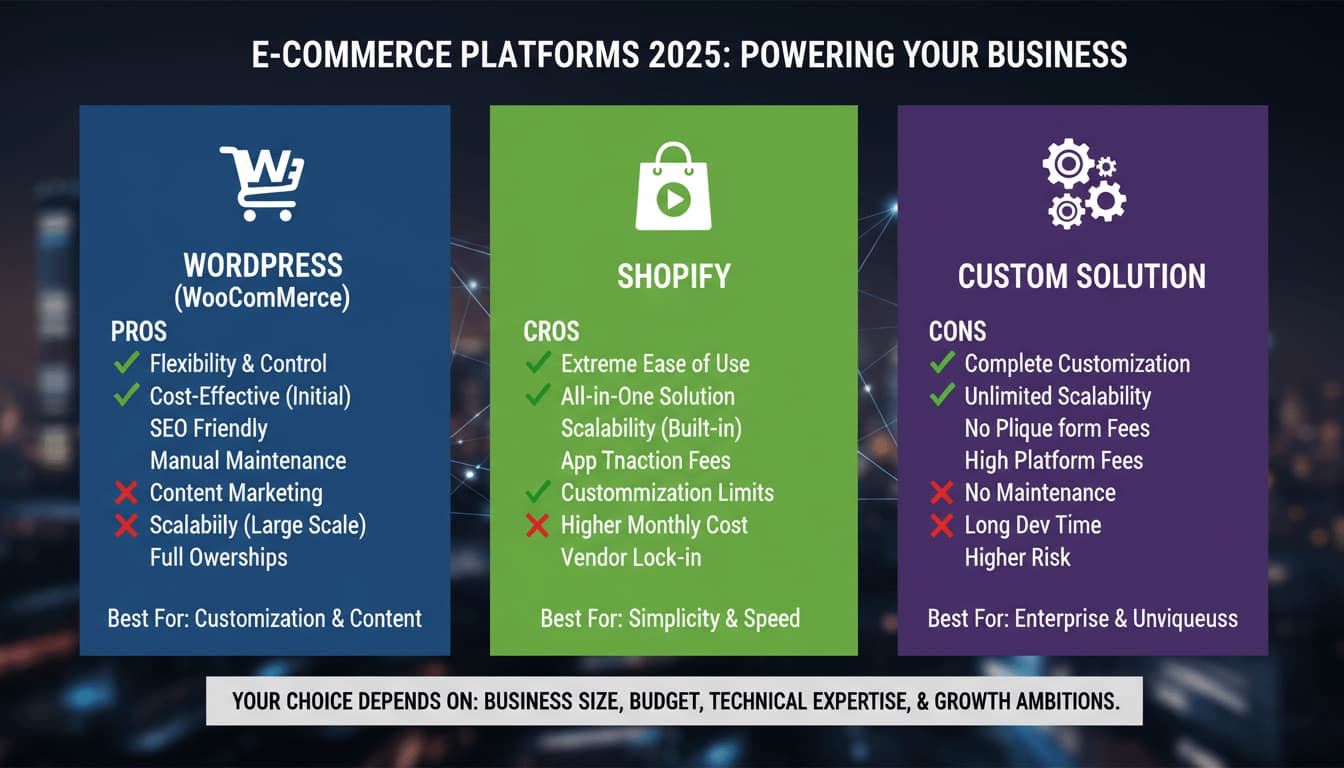
WordPress vs Shopify vs Custom: Which Platform Is Right for Your Business?
A practical comparison of WordPress, Shopify, and custom website development, with clear guidance on which platform fits different business goals, budgets, and growth plans.

Shopify Development Services by Zeroradius
Explore Shopify development services from Zeroradius, including store strategy, theme work, custom features, integrations, speed, SEO, and ongoing support.
13 Essential Elements Every High-Performing Online Store Needs in 2026
Learn the essential elements of a high-performing online store, from speed and mobile UX to trust signals, product pages, checkout, and post-launch optimization.

Why Your Business Needs an eCommerce Development Company in 2026
The eCommerce boom isn’t coming - it’s already here. By 2026, global online sales are projected to surpass $8.1 trillion, and businesses that fail to adapt risk being left behind.
How Much Does a WordPress Website Cost in 2026?
A practical guide to WordPress website pricing in 2026, including what affects cost, realistic project ranges, hidden expenses, and how businesses should think about budget and ROI.
Frequently Asked Questions
Need a more specific answer? Talk to us and we'll point you in the right direction.
WooCommerce API integration connects a WooCommerce store with external platforms, applications, or business systems so relevant data and functionality can be exchanged between them.
WooCommerce can be integrated with ERP platforms, CRM software, payment gateways, shipping providers, custom applications, inventory systems, and other platforms that provide suitable API capabilities.
Yes. WooCommerce ERP integration can connect relevant ecommerce and business data between WooCommerce and an ERP system, depending on the APIs and requirements of the systems involved.
Yes. WooCommerce CRM integration can connect relevant customer and ecommerce information with CRM software when the systems provide the required integration capabilities.
Yes. WooCommerce can be connected with third-party APIs to exchange data and support specific business workflows, provided the external service offers suitable API access.
Yes. WooCommerce payment gateway integration can connect a store with supported payment services and implement the required payment workflows based on the gateway's technical requirements.
Yes. WooCommerce shipping API integration can connect the store with shipping providers and support relevant shipping, fulfillment, rate, or delivery workflows.
Yes. Integration solutions can be designed to synchronize relevant WooCommerce data with connected platforms based on the required data fields, synchronization rules, and API capabilities.
Yes. Custom API development can be used when your business requires a specific data connection or functionality that is not adequately supported by an existing integration.
Yes. API integrations may require ongoing maintenance as WooCommerce, third-party platforms, APIs, authentication requirements, or business workflows change.
Plan your WooCommerce integration
Connect WooCommerce With the Systems You Use
Share your WooCommerce setup, existing systems, data requirements, and the workflow you want to automate or connect. Zeroradius can help plan and develop the right WooCommerce API integration solution.