
We assess your BigCommerce storefront to identify performance bottlenecks across page loading, assets, scripts, rendering, mobile performance, and other relevant areas.
BigCommerce Speed Optimization
Improve the performance of your BigCommerce storefront with optimization focused on page speed, mobile performance, rendering, JavaScript, and the overall customer experience.
Why BigCommerce Speed Optimization Matters for Your Business
Store performance affects how customers interact with your ecommerce website.
Slow-loading pages can make it harder for shoppers to browse products, navigate categories, and complete purchases.
BigCommerce speed optimization focuses on identifying the technical factors affecting storefront performance and addressing them based on your site's specific implementation.
It can help your business improve page loading, enhance mobile performance, reduce rendering and JavaScript overhead, support relevant Core Web Vitals, and create a smoother customer experience across important storefront journeys.

Technology benefits
Store performance affects how customers interact with your ecommerce website.
Our Process
We approach BigCommerce speed optimization as a structured performance review and implementation process so the right issues are prioritized and validated against the storefront experience.
We prioritize optimization opportunities based on their technical impact, implementation requirements, storefront importance, and business priorities.
We review images, stylesheets, scripts, fonts, and other frontend resources to identify opportunities to reduce unnecessary resource overhead and improve loading behavior.
We examine how storefront content is rendered and identify opportunities to improve the delivery and rendering of important page elements.
We review JavaScript execution, third-party scripts, theme functionality, and unnecessary code that may contribute to frontend performance issues.
Where appropriate, we implement techniques such as lazy loading and optimized resource loading to improve how non-critical content and assets are loaded.
We evaluate storefront performance across mobile experiences and address relevant layout, resource, rendering, and interaction issues.
We compare performance before and after optimization, validate important storefront pages, and review relevant performance metrics and customer-facing functionality.

Work With Zeroradius
Improve Your BigCommerce Store Performance
A fast ecommerce storefront depends on more than a single page-speed score. Theme code, images, JavaScript, third-party applications, rendering, mobile behavior, and other implementation details can all contribute to the overall experience.
Store performance affects how customers interact with your ecommerce website. Slow-loading pages can make it harder for shoppers to browse products, navigate categories, and complete purchases.
Insights
View All Articles
Featured Article
BigCommerce Development Services by Zeroradius
Explore BigCommerce development services from Zeroradius, including storefront UX, custom development, integrations, migration, SEO, and performance support.
Read Article
Why Businesses Choose Zeroradius for Ecommerce Development
Learn why businesses choose Zeroradius for ecommerce development, including strategy, platform selection, UX, custom development, performance, and support.


How Zeroradius Builds High-Converting Ecommerce Websites
See how Zeroradius approaches high-converting ecommerce websites through strategy, UX, performance, platform decisions, and continuous improvement.

Best Ecommerce Platforms Used by Ecommerce Development Companies in 2026
Compare the ecommerce platforms development companies use in 2026, including Shopify, WooCommerce, BigCommerce, headless commerce, and custom builds.

BigCommerce B2B Ecommerce Development Guide
A practical guide to BigCommerce B2B ecommerce development, covering buyer workflows, pricing logic, company accounts, reordering, integrations, and long-term scalability.

BigCommerce Development: How to Build a Scalable Ecommerce Store for Growth
A practical guide to BigCommerce development for growing brands, covering store structure, product pages, performance, B2B needs, SEO, and long-term scalability.

How AI Can Make WordPress Management More Efficient
A practical guide to using AI in WordPress management for content workflows, maintenance, monitoring, performance, and lead handling without over-automating the site.
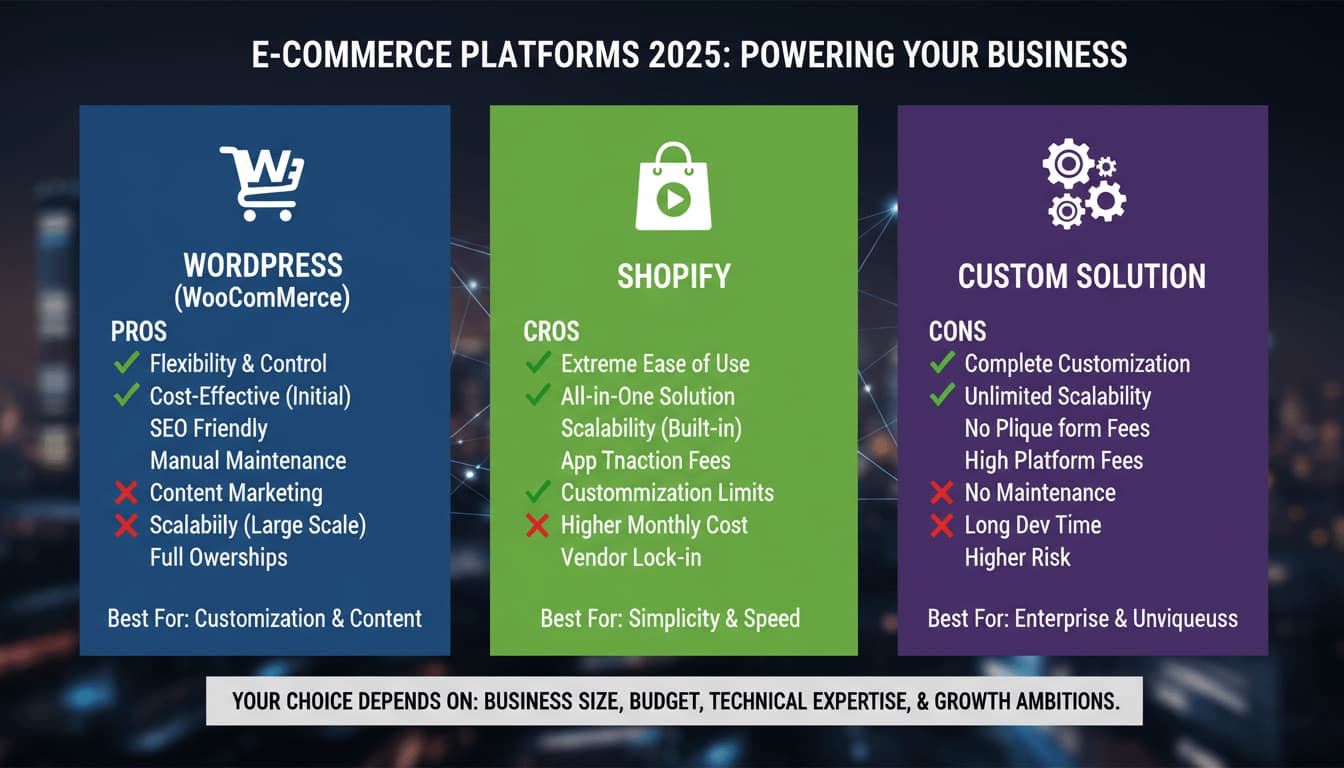
WordPress vs Shopify vs Custom: Which Platform Is Right for Your Business?
A practical comparison of WordPress, Shopify, and custom website development, with clear guidance on which platform fits different business goals, budgets, and growth plans.

WooCommerce Development Services by Zeroradius
Explore WooCommerce development services from Zeroradius, including custom stores, theme work, plugin support, integrations, migration, SEO, and maintenance.

Shopify Development Services by Zeroradius
Explore Shopify development services from Zeroradius, including store strategy, theme work, custom features, integrations, speed, SEO, and ongoing support.

13 Essential Elements Every High-Performing Online Store Needs in 2026
Learn the essential elements of a high-performing online store, from speed and mobile UX to trust signals, product pages, checkout, and post-launch optimization.
Frequently Asked Questions
Need a more specific answer? Talk to us and we'll point you in the right direction.
BigCommerce speed optimization is the process of identifying and addressing technical factors that affect the loading, rendering, responsiveness, and overall performance of a BigCommerce storefront.
Page speed can influence how quickly customers can access and interact with storefront content. Improving performance can contribute to a more responsive browsing experience, particularly on pages with significant resource requirements.
An audit can review page loading, theme implementation, JavaScript, images and other assets, third-party scripts, rendering, mobile performance, and relevant performance metrics.
Yes. BigCommerce load time optimization can involve reviewing assets, scripts, theme code, rendering behavior, third-party functionality, and other technical factors contributing to page load times.
Yes. Mobile performance can be assessed and optimized by reviewing resource loading, JavaScript, rendering, layout behavior, images, and other frontend factors affecting mobile storefront experiences.
Core Web Vitals are a set of web performance metrics used to assess aspects of loading performance, responsiveness, and visual stability. Their results can vary based on page implementation, device, network conditions, and other factors.
We can identify technical factors affecting relevant Core Web Vitals metrics and implement appropriate storefront improvements. Specific results depend on the existing implementation and other conditions affecting measurement.
Yes. Theme scripts, third-party applications, tracking scripts, and other JavaScript can contribute to frontend processing and loading overhead. Reviewing unnecessary or inefficient JavaScript can be part of a performance optimization project.
Third-party scripts can be reviewed to identify their impact on storefront performance. Available optimization options depend on how each application or service is implemented and what functionality the business requires.
Lazy loading is a technique that delays loading certain resources, such as eligible images, until they are needed or are closer to being viewed by the visitor.
Yes. Image optimization can include reviewing image dimensions, formats, compression, delivery, and loading behavior based on the storefront's requirements.
Theme implementation can affect storefront performance. Theme code, templates, scripts, styles, components, and third-party functionality can all contribute to the resources required to render and interact with pages.
Yes. An existing theme can be reviewed for performance bottlenecks and optimized where the implementation allows changes without compromising required storefront functionality.
Some applications may add scripts, resources, or functionality to storefront pages. Their performance impact depends on how the application is implemented and which pages or features it affects.
Speed optimization can address technical performance factors relevant to the website experience, but improved performance does not guarantee higher search rankings. Search visibility depends on many factors beyond page performance.
The timeline depends on the size and complexity of the storefront, number of templates, theme implementation, applications, third-party scripts, performance issues, and scope of optimization work.
The cost depends on the number of pages and templates, complexity of the theme, number of applications and scripts, depth of the performance issues, required development work, and testing scope.
Yes. Ongoing performance services can include monitoring, technical reviews, optimization work, theme improvements, and performance support as the storefront evolves.
Start your BigCommerce optimization project
Ready to Improve Your BigCommerce Store Speed?
Tell us about your BigCommerce store, the performance issues you're experiencing, and the pages or customer journeys that matter most. We can help identify bottlenecks and define the right optimization approach.