Animation can make a portfolio feel much more premium, but only when the motion serves a purpose. The best portfolio experiences do not move just to impress. They use motion to guide attention, control pacing, reveal work with confidence, and make the whole site feel more considered. When it is overused or poorly optimized, the opposite happens. The site becomes noisy, harder to navigate, and slower than it should be.
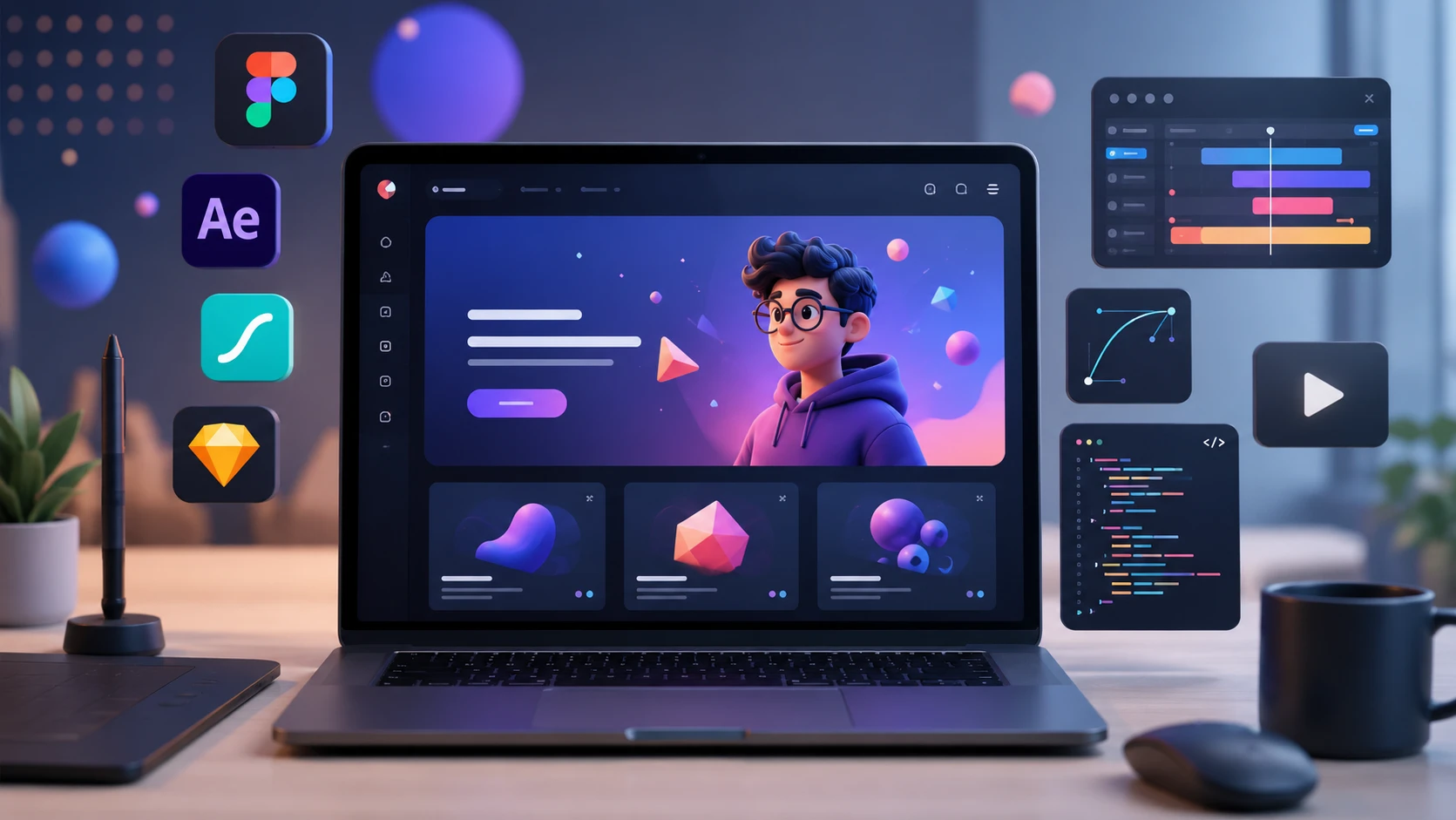
That is why choosing the right animation tools matters. Different tools are strong in different ways. Some are better for interactive vectors. Some are ideal for timeline-driven storytelling. Some work best inside React-based portfolios. Some help bring 3D scenes to the web more easily. The right stack depends on the kind of motion the portfolio actually needs.
Rive Is Strong for Interactive UI Motion
Rive is one of the most useful tools when a portfolio needs animated interface elements that respond to user behavior without carrying the weight of video exports. It works especially well for interactive icons, CTA animation, hover states, and brand moments that need to feel alive but still stay lightweight.
Its strength is not only visual quality. It is the fact that the animation remains dynamic instead of being flattened into a passive asset. That makes it ideal for small but meaningful interactions that help the portfolio feel more refined.
GSAP Remains One of the Best Tools for Motion Control
GSAP is still one of the most reliable choices for building sophisticated web motion because it gives developers a lot of control over timing, sequencing, and browser consistency. It is especially effective for scroll-based reveals, section transitions, staged entrances, and more cinematic portfolio behavior.
The reason it stays relevant is that it solves real implementation problems cleanly. When a portfolio needs motion that feels deliberate rather than decorative, GSAP is often a strong fit.
Theatre.js Is Useful for More Directed Storytelling
Theatre.js works well when the portfolio needs a more choreographed feel. It is particularly strong for hero sequences, 3D timing, and experiences where the designer or developer wants to shape movement almost like directing a scene. This makes it appealing for high-impact visual work where a more cinematic introduction supports the brand.
It is usually not the first tool needed for a simple portfolio, but it becomes interesting when the site itself is part of the creative statement.
Framer Motion Fits React and Next.js Portfolios Naturally
For portfolios built in React or Next.js, Framer Motion remains one of the most practical choices. It is especially good for page transitions, component-level animation, shared layout changes, and micro-interactions that need to feel smooth without becoming over-engineered.
This makes it a very natural tool for modern portfolio builds where the site needs to feel polished but still maintain a clean development workflow.
Spline Makes 3D More Accessible
Spline has made 3D much more approachable for portfolio work. When used carefully, it can add depth, atmosphere, and a more distinctive visual identity than flat layouts alone. It is particularly effective for background scenes, product-style presentation, and playful brand elements that need a stronger visual signature.
The caution is simple: 3D should support the portfolio, not overpower it. A heavy scene placed in the wrong part of the page can still hurt performance or distract from the work itself.
Animation Strategy Matters More Than Tool Choice Alone
Even the best tools can produce a weak portfolio if the motion lacks purpose. Animation should help users understand where to look, what to click, and how the work is being presented. It should support clarity, not compete with it. A subtle staggered project reveal or smooth page transition is often more effective than a dramatic effect that delays comprehension.
This is especially important for portfolios, because the site is supposed to showcase judgment. Motion becomes part of that judgment.
Performance and Accessibility Still Matter
Animation should never be treated separately from speed and accessibility. Heavy assets, layout-janking transitions, and motion without reduced-motion support can all damage the experience. Good animation feels smooth because it respects the medium, not because it ignores its limitations.
If a portfolio relies on motion, the build should still respect reduced-motion preferences, lazy-load heavier assets carefully, and avoid turning the first screen into a performance bottleneck.
Want a clearer user experience?
Improve the parts of your website users actually feel.
Get support with UX clarity, conversion flow, interface design, and website structure tailored to your goals.
Final Thoughts
The best tools for animated web portfolios are the ones that match the kind of motion the portfolio actually needs. Rive is excellent for interactive UI motion. GSAP is powerful for controlled sequencing. Theatre.js suits more directed experiences. Framer Motion fits modern React workflows. Spline helps bring 3D into the mix more accessibly.
But the bigger truth is that motion only works when it reinforces the quality of the portfolio itself. The strongest portfolios use animation to sharpen focus, communicate confidence, and make the experience feel more intentional from beginning to end.
Have questions?
Not when they are implemented well. Problems usually appear when animation blocks content, adds excessive weight, or hurts performance and usability.
Framer Motion is one of the best options for React and Next.js portfolios because it handles component and page-level animation cleanly.
It can be, especially when it supports the brand or the type of work being shown. It just needs to be used carefully so it does not overwhelm the portfolio or hurt performance.